EU Funds OceanEye Initiative
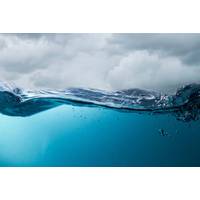
The European Commission has expanded the EU's role in ocean observation by adopting OceanEye.This initiative aims to position the EU as the world's leading provider of ocean intelligence by contributing to 35% of the global ocean observing system by 2035 and securing 35% of the market for ocean observation technologies.The ocean covers 70% of the Earth's surface, yet only 5% has been explored. Ocean observation is critical for ocean protection and restoration, climate forecasting, blue economy activities such as fisheries and aquaculture, offshore energy, and shipping, as well as maritime
Warming Intensifies Rainfall in North Atlantic Storms
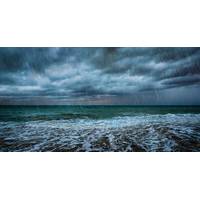
A new study led by Newcastle University using satellite data shows that tropical cyclones and their post-tropical cyclone counterparts are responding quite differently to surface warming. The findings reveal that during the tropical cyclone phase, warmer and more humid conditions are causing storm slowdown and strongly increasing rainfall intensity.Tropical cyclones are a major driver of very heavy rainfall in warm parts of the world. They can bring huge downpours that not only significantly add to total seasonal rainfall but also increase the risk of flash flooding. In the North Atlantic, these
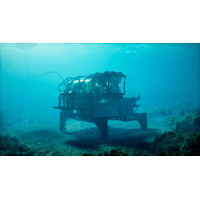
DEEP Selects Reef in Florida Keys for Habitat Deployment
DEEP’s pilot subsea human habitat, Vanguard, will be deployed at Tennessee Reef in the Florida Keys National Marine Sanctuary.Installation is planned for the end of April 2026. It will be the first subsea human habitat deployed in the United States in 40 years.First unveiled in Miami in October 2025, Vanguard is now in the final stages of commissioning, including final outfitting, subsystem testing, and integrated acceptance trials.Vanguard is designed to enable up to four crew members to live and work underwater for days at a time, enabling extended time on the seafloor for ocean science
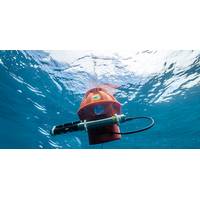
Scripps Awarded $15 Million for Environmental Surveys
Scripps Institution of Oceanography at the University of California San Diego has received a $15 million grant from the Fund for Science and Technology (FFST) to expand observational capabilities into parts of the ocean where data has historically been sparse or non-existent.FFST, a new private foundation funded by the estate of Microsoft co-founder Paul G. Allen, launched in 2025 with a commitment to invest at least $500 million over four years to propel transformative science and technology for people and the planet.The grant, the largest of its kind since Scripps became part of UC San Diego in 1960
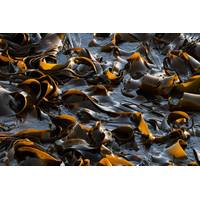
The Fate of Macroalgae and Why it Matters
Macroalgae, or seaweeds (including kelp), are highly productive coastal habitats capable of absorbing significant quantities of atmospheric carbon dioxide. Previous studies have estimated that globally, 4–44 teragrams (1Tg = one million metric tons) per year of macroalgal-derived carbon may reach depths of 200m, where it may be sequestered for at least 100 years.TheFebruary issue of Marine Technology Reporter magazine includes a feature on the fate of macroalgae in southwest Greenland. The study team, co-led by the Leibniz Institute for Baltic Sea Research Warnemünde and Helmholtz-Zentrum
CLS Group Strengthens Oceanography Capabilities with Akrocean Acquisition
and monitoring solutions, announced that it has entered into exclusive negotiations with Valemo and Geps Innov, shareholders of Akrocean, a specialist in turnkey ocean measurement services.This transaction forms part of CLS’ growth strategy aimed at strengthening its capabilities in operational oceanography and marine renewable energy. CLS supports offshore activities by combining metocean measurements, floating LiDAR solutions, and advanced underwater acoustics to secure offshore operations, optimize energy projects, and ensure environmental performance. The acquisition will enable CLS to offer
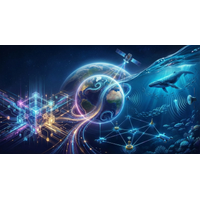
Taking Quantum Logic to the Edge
applicable to existing compute technologies.He and his team therefore turned their attention to using quantum logic. “We reframed the math into our own solvers that can solve massive problems on non-classical computer technology. We are now applying that to different applications, including oceanography and maritime security. We can bring together the best of breed sensors, whether they are quantum or not, and detect things that weren’t previously detectable – in a time that matters: real-time.”By non-classical computer technology, Turner means technologies such as graphics
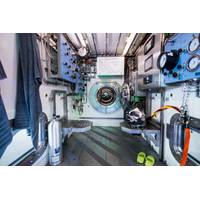
The Rise of the Aquanaut
The feeling of awe and planetary connection experienced by astronauts observing Earth from low space orbit is known as the “overview effect,” a term coined by Frank White, the author of numerous books on space exploration and science. Now researchers from Northeastern University have documented a similar cognitive shift among aquanauts, people who live and work under the sea. They call it the “underview effect.”Sharing that sense of wonder and kinship with nature with the public could be key to helping understand and conserve the ocean environment, according to the research
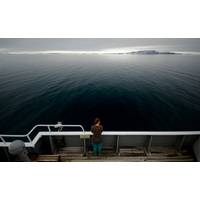
AquaTitans Joins Scottish Research Scheme
Subsea engineering company and ocean innovator AquaTitans is the latest business to sign up to the Scottish Association for Marine Science’s (SAMS) Ocean Changemakers scheme.The corporate membership scheme, which has a growing list of companies representing aquaculture to utilities, supports SAMS, as an ocean research charity, in advancing its understanding of marine environments.This newest sign-up reflects AquaTitans’ commitment to making a positive impact to sustainable oceans, by supporting a charity that is both geographically close and aligned with its own vision that understanding
 February 2026