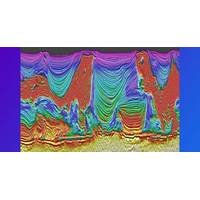
Viridien Teams Up with NVIDIA to Accelerate Seismic Imaging Workflows
Viridien has entered into a collaboration with NVIDIA to advance high-performance computing (HPC) capabilities for seismic imaging workflows, focusing on optimizing subsurface imaging technologies on NVIDIA accelerated computing platforms.The initiative will center on enhancing Viridien’s seismic imaging algorithms using NVIDIA HPC platforms, incorporating advanced features such as tensor cores and mixed-precision computing. The companies aim to improve system performance, imaging accuracy and operational efficiency for energy and geoscience clients worldwide.The collaboration combines Viridien&rs
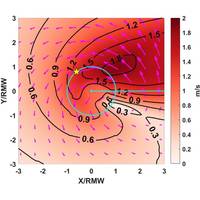
URI Computer Simulations Show How Strong Ocean Currents Reduce Size of Surface Waves
height—the average height of the highest one-third of waves—can be reduced by 0.4-2.2 meters, or roughly 1-7 feet, and the dominant wave period can be shortened by about 0.3-1.5 seconds.The simulations required a powerful computer, so the researchers remotely accessed URI’s high-performance computing nodes installed at the Massachusetts Green High Performance Computing Center in Holyoke, Massachusetts. URI formed a partnership with the computing center in 2021.Ginis is hopeful that the team’s research, which was funded by the National Oceanographic Partnership Program/Office of
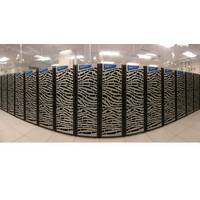
$100 Million Boost for NOAA’s High-Performance Computing: Introducing Rhea
innovative setup at NESCC will facilitate future expansions, allowing for additional modular data centers to be added, further enhancing NOAA’s HPC capabilities for both federal and private sector partners.Once operational, Rhea will join NOAA’s existing Research and Development High-Performance Computing System, which includes four other HPC centers located in Boulder, Colorado; Princeton, New Jersey; Oak Ridge, Tennessee; and Starkville, Mississippi. The addition of Rhea will increase NOAA’s R&D HPC capacity to approximately 43 petaflops, with another system at NESCC pushing the
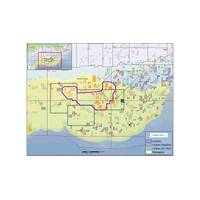
Viridien Starts Sparse OBN Project in the Gulf of Mexico
Sercel TPS™ (Tuned Pulsed Source), an environmentally friendly low-frequency marine seismic source.The technological breakthrough of the Tuned Pulsed Source, coupled with Viridien’s advanced imaging expertise, proprietary elastic full-waveform inversion (E-FWI) technology, and high-performance computing will maximize the uplift for subsalt imaging and reservoir delineation provided by the increased low-frequency content and improved signal-to-noise ratio.Dechun Lin, EVP, Earth Data, Viridien, said: “Our new Laconia OBN survey reflects Viridien’s ongoing commitment to support

CGG Rebrands to Viridien
in Oslo, further strengthening its focus across a portfolio of solutions including the core businesses of geoscience, earth data and sensing and monitoring.The company is planning new offerings in both the low carbon markets of minerals & mining and CCS, and markets beyond energy in high-performance computing (HPC) and infrastructure monitoring

Shell to Use New AI Technology in Deepwater Oil Exploration
;The technology would generate subsurface images using fewer seismic data scans than usual, helping with deep sea preservation, the companies said. Seismic technology sends sound waves to explore subsurface areas. Fewer seismic surveys accelerate exploration workflow and would save costs in high-performance computing, they added.(Reuters - Reporting by Stephanie Kelly; Editing by Richard Chang
CGG Joins UK Research Assessing Ecosystem Impact of Offshore Wind Farms
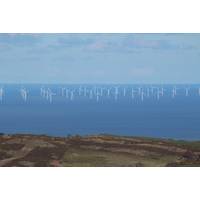
, among others. The £2M, four-year ECOWind-ACCELERATE project is funded by the UK Natural Environment Research Council (NERC) and The Crown Estate, with support from the Department for Environment, Food and Rural Affairs (Defra) as part of the ECOWind program.CGG will provide high-performance computing resources, from its global capacity of 310 petaflops, for complex climate and sediment transport modeling to determine the impact of offshore wind farms and climate change in the East Irish Sea.In addition, CGG will provide machine learning (ML) expertise drawing on experience from previous
Shearwater GeoServices, ConocoPhillips 'Reveal' Tech Collab
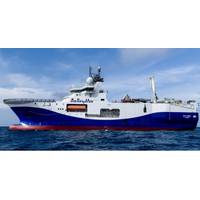
of Shearwater’s Reveal seismic processing and imaging software while Shearwater has committed to support future development and use of the CSI technology, and to provide ConocoPhillips with potential future seismic acquisition design and imaging services. The agreement also involves high-performance computing infrastructure with over 4,500 compute nodes and 50 Petabytes of storage, which will be deployed throughout Shearwater’s seismic acquisition fleet.According to Shearwater, CSI uses algorithms to optimize the process of selecting nonuniform data collection points instead of the traditional
Seismic Data Firm CGG Launches Pollution Monitoring Solution
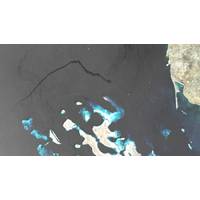
French firm CGG, best known for its seismic data services for oil and gas exploration, has now launched a maritime pollution monitoring solution named SeaScope."Combining expertise in remote sensing science, Earth observation data, machine learning and high-performance computing, SeaScope provides critical sea surface slick intelligence for a range of industries to strengthen situational awareness of the interaction between offshore assets, coastal facilities, local vessel activity and the natural marine environment," CGG said.For energy companies with offshore assets, CGG said, SeaScope&rsquo

 February 2026