Konowe, Celia
Contributing Author-
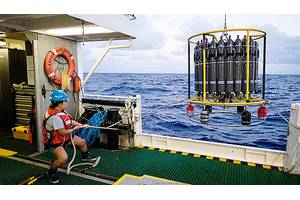
BIOS: North Atlantic Carbon Sink Shrinking Due to Warming
An analysis of North Atlantic Ocean water masses has made it clear that the effects of a warming planet extend beyond biology—they impact the physics of ocean circulation, too. The research, recently published in Nature Climate Change, was conducted by scientists from the University of British Colombia, the Bermuda Institute of Ocean Sciences (BIOS), the French Institute for Ocean Science at the University of Brest…
-
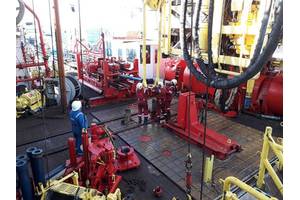
NIWA: Slow-slip Earthquake Research Gains Momentum
Two international scientific expeditions, undertaken in 2017 and 2018, have allowed scientists to study New Zealand’s largest earthquake fault in hopes of learning more about slow-slip earthquakes in subduction zones worldwide.The International Ocean Discovery Program (IODP) expeditions to the Hikurangi subduction zone off the east coast of the North Island were jointly led by researchers from the National Institute of Water and Atmospheric Research (NIWA)…
-
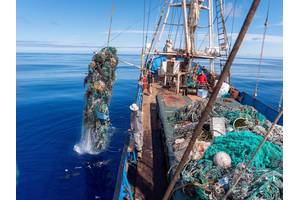
OVI: 103 Tons of Garbage Removed From North Pacific Gyre
Ocean Voyages Institute’s marine plastic recovery vessel, S/V KWAI, docked at the port of Honolulu at the end of June after a 48-day expedition successfully removing 103 tons (206,000 lbs.) of fishing nets and consumer plastics from the North Pacific Subtropical Convergence Zone (more commonly known as the Great Pacific Garbage Patch or Gyre).The Pacific Gyre, located halfway between Hawaii and California…
-
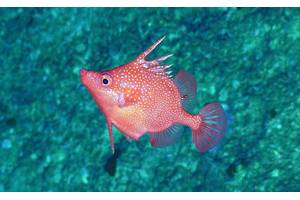
SOI: Amidst Pandemic, Seafloor Mapping Zooms Ahead
Scientists working remotely with Schmidt Ocean Institute (SOI) have completed a first look at deep waters in the Coral Sea, despite the continuing COVID-19 pandemic. As one of the only at-sea science expeditions to continue operations, the team has discovered the deepest living hard corals in Eastern Australian waters, sighted fish in new regions and identified up to 10 new marine species.SOI’s R/V Falkor spent the 46 days in the Coral Sea Marine Park…
-
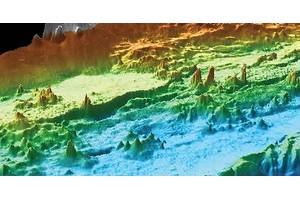
MBARI: Hydrothermal Mapping is Heating up
A recent paper by Monterey Bay Aquarium Research Institute (MBARI) has revealed almost 600 hydrothermal chimneys around the Endeavour Segment of the Juan de Fuca Ridge, about 350 kilometres (220 miles) northwest of Washington State. The vents, located in a valley about 14 kilometres (8.6 miles) long and 1.5 kilometres (0.9 miles) wide, has been studied previously, but never mapped until now because…
-
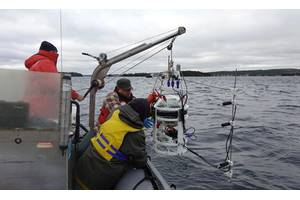
Dalhousie University: Quiet Oceans Speak Volumes During Lockdown
Research at Dalhousie University shows that a quieter ocean—courtesy of the current COVID-19 pandemic lockdown—can benefit marine life, particularly those listed on the endangered species list, like killer whales.David Barclay, an assistant professor in the Department of Oceanography, and researchers in his lab took advantage of the current lockdown to explore how the underwater soundscape has changed during the pandemic.
-
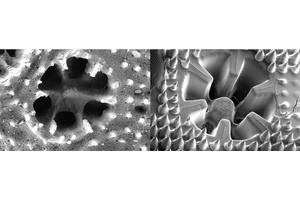
Scripps Institution of Oceanography: 3D-printed Coral Are Natural Producers of Biofuels
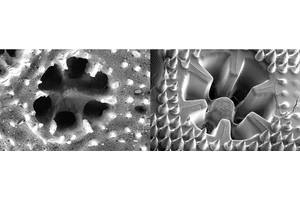
Researchers at the Scripps Institution of Oceanography and the Jacobs School of Engineering at UC San Diego, alongside the University of Cambridge, UK, have 3D printed coral-like structures capable of growing dense microscopic algae populations. The work is aimed at the development of compact, efficient bioreactors for producing algae-based biofuels and could lead to a better understanding of the coral-algae relationship…
-
Scripps Institution of Oceanography: 3D-printed Coral Are Natural Producers of Biofuels
Researchers at the Scripps Institution of Oceanography and the Jacobs School of Engineering at UC San Diego, alongside the University of Cambridge, UK, have 3D printed coral-like structures capable of growing dense microscopic algae populations. The work is aimed at the development of compact, efficient bioreactors for producing algae-based biofuels and could lead to a better understanding of the coral-algae relationship…
-
WHOI: Ocean “Pumped” to Capture More Atmospheric Carbon
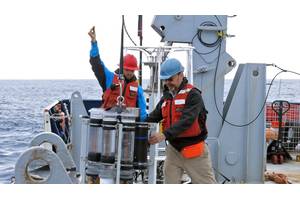
While scientists have long known the essential role that the ocean plays in capturing atmospheric carbon, a new study from Woods Hole Oceanographic Institution (WHOI) shows the efficiency of this natural pump has been underestimated.The ocean’s “biological pump” is a critical part of the global carbon cycle and relies on phytoplankton, single-cell organisms that use photosynthesis to turn light into energy—consuming carbon dioxide and releasing oxygen in the process.
 August 2026