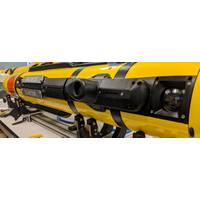
Voyis: Enabling Subsea Autonomy with Complete Optical Payloads
real-time processing capability to enable dependable automation.Voyis is delivering on these requirements by both removing noise from point cloud data with advanced filtering algorithms, and instantly enhancing and correcting images as they are collected. Our robust machine-learning-based colour correction algorithms help us to see consistent true-colour photos of subsea targets. When combined with navigational data, it is possible to deliver real-time geo-corrected laser models, and consistent images across incredibly long surveys. This uniformity produces wide area consistent image mosaics without
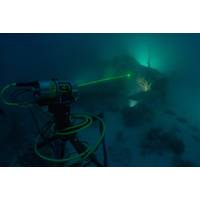
Subsea Wreck Brought to Life by Lasers
, 360 VR and stills were integrated into the designs to render an exact 3D model of the Devastator. Along with the laser LiDAR data, the team captured 1,398 still images with photogrammetry.“3D at Depth's underwater laser LiDAR technology utilizes our patented index of refraction correction algorithms to produce a true digital twin with accurate, precise, measurement,” stated Neil Manning Chief Operating Officer of 3D at Depth, Inc. “The fusion of those data outputs with 3D volumetric photogrammetry offers a revolutionary step towards accurate digital preservation and visualization
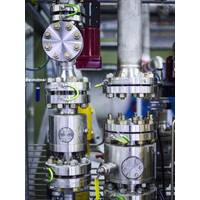
Industry Examines Flow Meter Accuracy
accurate allocation measurement results. Inaccurate results related to the oil flow can present both operational and financial risks by negatively influence decision making and understanding of operational efficiency. The JIP will therefore provide testing guidelines, a performance assessment and correction algorithms as a foundation for using Coriolis and ultrasonic flow meters for phase contaminated oil flows. “Accurate measurement of the production of oil fields is an important means of reducing the financial risks that Exploration & Production (E&P) companies face in allocation
DNV GL Initiative For Acceptance Of Ultrasonic Flow Meters For Wet Gas
wet gas. Biases will occur under wet-gas circumstances and therefore an accepted correction algorithm is required. This correction algorithm is seen as an important step toward qualifying ultrasonic flow meters for wet-gas metering. “The JIP will therefore provide testing guidelines and correction algorithms as a foundation for using ultrasonic flow meters for wet gas,” said Dennis van Putten, a multi-phase flow metering specialist with DNV GL Oil & Gas. To achieve this correction algorithm, a test program will be performed under conditions close to real field situations (natural gas/water/
 February 2026