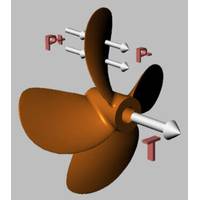
Underwater Vehicle Propulsion Tech: Tail Shape and Vehicle-Propulsor Performance
enhances this compression with a (more-or-less) conical inflow slope angle, we get a lot of convergence of water aft of the propeller leading to energy losses, cavitation, and hydroacoustic noise from a strong hub vortex.The practical considerations are actually due to a limitation in most propeller design tools, which are based on axial inflow. Special codes are needed that allow for conversion of the blade section foil geometry from circular to conical coordinate system.We can see how tail slope angle is (A) very steep with a short tail section, (B) reduced as the tail is lengthened, and (C) becomes
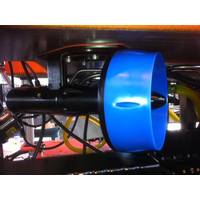
Thruster Design for Submersible Developers
prediction of the operating RPM and the required power.Tools for thruster component optimization will typically be a blade-element calculation for the propeller, with support for various styles of nozzles and shrouds. CFD and other such codes may be used, although propeller-specific wake-adapted design tools can offer a variety of technical, financial, and workflow benefits. These including a structured “extruded foil” framework for management of the design parameters, automatic solution of optimum pitch and camber for the design objective, and the ability to alter radial loading as needed
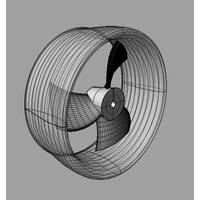
Contemporary UUV Propulsor Design
found on most UUVs and often called the vehicle’s “thruster”) is an interactive unit, the Propulsor. Propulsor design is a combination of finding the best propeller and nozzle (also called duct or shroud) while keeping track of their interaction. In other words, you must use design tools that include this interaction, such as NavCad for system modeling or PropElements® for propeller-nozzle component design.In all UUV propulsor design projects, one universal objective is to develop a geometry that generates the highest thrust-to-power ratio (its efficiency), which we achieve
SBM Offshore Wins AIP for Wind Floater Design from ABS
Front End Engineering Design (FEED) for all relevant extreme and fatigue load cases, using detailed wind and met-ocean conditions for a site offshore France.The complete design was developed in-house at SBM Offshore, in collaboration with our partner, IFP Energies Nouvelles (IFPEN), using proprietary design tools and the detailed wind turbine model, including the controller.The AIP verifies that the floater is feasible for the intended application and, in principle, in compliance with the applicable requirements of the ABS Guide for Building and Classing Floating Offshore Wind Turbine Installations and
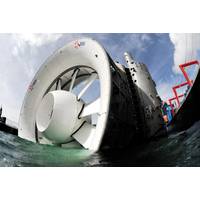
New Open Source Software for Designing Wave & Tidal Energy Arrays
A newly launched open source software package aims to assist project developers to design wave and tidal energy arrays by identifying optimal layouts, components and procedures. DTOcean, which stands for Optimal Design Tools for Ocean Energy Arrays, has been produced through a three-year collaborative project funded by the European Commission. The software package is now available as a free download along with manuals and tutorials from the European Commission’s Joint Research Center website. DTOcean work planning has been implemented as five content-orientated Work Packages
New Research to Examine Oil Spill Impacts
and elsewhere. All three Gulf Research Program grants awarded Thursday support projects that will generate new insights, address critical questions, or lead to new approaches to interpreting data by bringing together concepts and methods from different disciplines. The grants also advance study design, tools, models and technologies for assessing human exposure to environmental contaminants, including acute or chronic exposures related to oil spills and other sudden and large-scale environmental disasters, and related impacts on individuals and populations. “We’re pleased
Block Island’s Sandy Restoration Continues
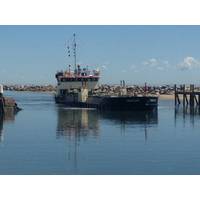
to maintain the channels and restore the beaches from Hurricane Sandy’s major damage and erosion. DREDGEPACK will allow the operator to monitor and record digging operations and allow the contractor to maximize digging efficiency while providing a record of digging operations. It provides the design tools to accurately model almost any dredge plan. HYPACK was used during the pre- and post-dredge operation to ensure the channel was dredged to ensure safe navigation of the channel used daily by commercial fishing boat, ferries and recreational boats. hypack.com
Tidal Energy Modelling Tool Launched
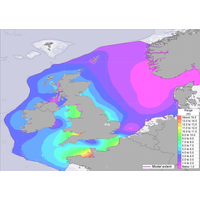
of energy extraction from potential sites without having the enormous investment in bespoke software models, hardware and license costs. “This software provides the most comprehensive regional description of potential marine energy resources in UK waters. It complements the device and array design tools now emerging on to the market from the ETI’s PerAWAT project. Our hope is that as an inexpensive and easily accessible tool it will help guide policy and planning decisions for future site leasing rounds and standardize the site selection process.” David Krohn, Wave and Tidal Development
LNG Offshore Mega-Project Contract for Phusion
sets of information to the Ichthys Operations team. This unique approach to the way data is collected on the project will replace the traditional “handover” stage when, traditionally, huge amounts of data are delivered to the client. Documents will be delivered as they are produced and design tools delivered monthly. This makes a big difference to operational staff as they can access data and own the design long before the plant is commissioned. In turn, this facilitates the commissioning and start-up phases, making a significant contribution to a reduction in handover costs

 February 2026