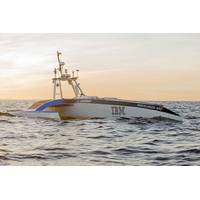
IMAS Technology Mitigates Risks for USVs
that bridges the awareness gap for remote operators during high-speed operations.IMAS technology integrates seamlessly with existing USV control systems to provide:Dynamic speed managementReal-time risk assessmentAs maritime authorities worldwide develop new regulations for USV operations, advanced safety systems like IMAS will be essential for meeting emerging compliance requirements, earning public trust, and enabling these vessels to reach their full potential. By addressing the unique challenges of high-speed, remote operations, IMAS not only supports regulatory compliance through comprehensive data
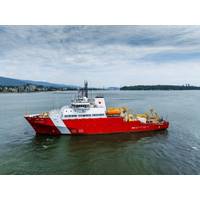
CCG's New Offshore Oceanographic Science Vessel Begins Sea Trials
, the Canadian Coast Guard and major equipment suppliers to test performance of key systems and seaworthiness. The tests ensure that the ship operates as designed and that all systems—including mechanical, electrical, hydraulics, scientific, communications, navigation, as well as fire and safety systems—are fully operational.On completion of sea trials, CCGS Naalak Nappaaluk will be prepared for delivery to the Canadian Coast Guard by the end of the summer, before sailing to the Bedford Institute of Oceanography in Halifax, NS, where the ship will be based.The OOSV will be Fisheries and
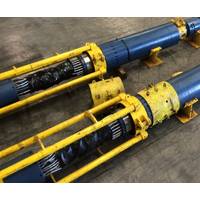
Expro Lands Contract to Support 52-Well P&A Campaign
Energy services provider Expro (NYSE: XPRO) has been awarded a contract valued at over $10 million for the provision of a well decommissioning solution in support of the 52-well plug and abandonment (P&A) campaign.The solution combines subsea safety systems and surface processing design to enable both safe entry to the well and effective management of well fluids.From its global support hub in Aberdeen, Expro will provide a surface fluid management package and its 7-3/8-inch large-bore subsea test tree assembly (SSTTA) with surface tree and controls, providing dual barrier and disconnect capability
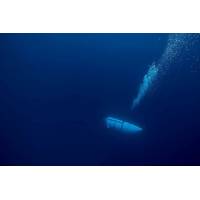
As the Clock Ticks on the Titan Sub, an Expert Explains What Safety Features a Submersible Should Have
specific verification (theoretical) and validation (tests) for the specific environment.Commercial off-the-shelf equipment can potentially fit onboard, if a demonstration of fitness for purpose is made for various scenarios. However, most of the external components (because of crushing pressure) and safety systems would warrant custom design.According to reports, the Titan was using certain “off-the-shelf” equipment, but it’s difficult to say whether this was certified for its intended use at these depths.Safety systemsIn the Titan’s case, a tether with the mothership would have
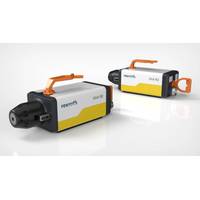
Bosch Rexroth Presents "Disruptive" Electric Subsea Valve Actuator
solution uses a great deal of energy in order to compensate for the cumulated losses and it cannot control the movement with precision, the company explains."To date, plant engineers and operators have still relied on hydraulic cylinders because they are the only components to offer field-proven safety systems with a mechanical spring in a compact design. The electric actuators which are currently available do not have such a safety function as this is not possible given the size and weight requirements," the company further says.Per Bosch Rexroth, approaches designed to ensure safety using subsea
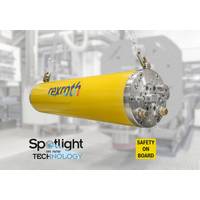
Subsea Valve Actuator certified for Safety Integrity Level 3
The new concept for Subsea Valve Actuators (SVA) from Bosch Rexroth has been certified by DNV GL for application in safety systems with up to Safety Integrity Level (SIL) 3 requirements. The SVA is a self-contained actuator for opening and closing process valves in the deep sea at depths down to 3000 meters and deeper. The system consists of an electrically controlled drive with a hydrostatic transmission.The patent-protected SVA is design to open and close process valves for oil and gas production or in CO2 storage systems in deep sea applications. A redundant design, for example of the safety
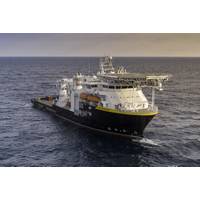
Support Vessel Delivered to Oceaneering
vessels design and construction was done with well stimulation and light well intervention in mind as a key capability. The underdeck storage capacity of up to 413 cubic meters of special products maximizes use of the critical deck space for pumping and intervention equipment. The vessel layout and safety systems meet ABS class requirements for a special well stimulation and well intervention notation.The vessel is equipped with two Oceaneering work class ROV systems. One 220-horsepower Millennium Plus and one 250-horsepower NEXXUS systems are on board, each with active heave compensated launch and recovery
BP Doubles Down on Deepwater
. Richard Sears - who served as chief scientist on the National Commission on the BP Deepwater Horizon Oil Spill and Offshore Drilling - said such projects can be managed safely at low oil prices. The causes of the BP disaster had more to do with poor decision-making and slipshod safety systems than cost-cutting, said Sears, who previously managed production projects at Shell. BP said it has bolstered safety operations globally since the spill, introducing a safety and operational risk staff with 800 positions and an internal global wells organization to standardize drilling
ABS Makes it Safer to ‘Walk to Work’
ABS announced the publication of The ABS Guide for Certification of Offshore Access Gangways. The new Guide addresses certification for safety systems used for “walk to work” (W2W) crew transfers. “As advanced crew transfer options become the norm in the offshore oil and gas industry, more and more companies want to benefit from W2W vessels and are looking to ABS for safety guidance,” says ABS Chief Technology Officer, Howard Fireman. “Our new guide provides the information the industry needs to execute safe personnel transfers.” Offshore access gangways with
 February 2026