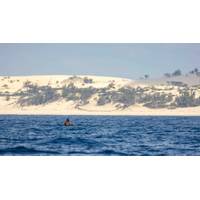
Bazaruto Center for Scientific Studies Publishes Eight Years of Continuous Ocean Data
climate systems, biodiversity and coastal economies. This makes the BCSS Ocean Observatory particularly significant, providing continuous data across six interconnected ecosystems, from mangroves and coral reefs to seamounts and the open ocean.Stretching along the East African coast from Somalia to South Africa and encompassing the waters around Madagascar, Comoros, Mauritius, Réunion and Seychelles, the Western Indian Ocean supports more than 60 million coastal people and a major Blue Economy market valued at $300 billion built around fisheries, tourism, marine resources and healthy coastal ecosystems
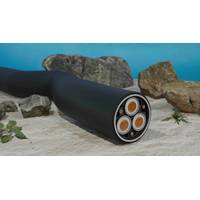
Orange, Free to Fund Subsea Cable Connecting La Reunion-South Africa
French telecoms operators Orange and Free have teamed up to fund a €93 million ($107.82 million) subsea cable connecting the French Indian Ocean island of Reunion with South Africa, the companies said on Wednesday.The cable is scheduled to enter service in 2028 and is intended to replace the SAFE cable commissioned in 2002.Orange will act as the landing party while subsidiary Orange Marine will deploy the infrastructure designed by Alcatel Submarine Networks.The companies did not disclose their respective shares in the project. The EU will contribute to the funding of the project
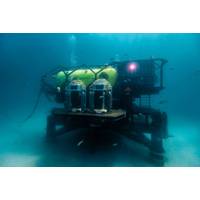
Unique Group Provides Subsea Engineering for Open-Ocean Human Habitat
refuges, the mooring spread and surface buoy umbilical. The company also delivered the bespoke interior fit-out, including furniture designed specifically for extended subsea occupancy.The project delivery drew upon Unique Group's engineering capability across the United Kingdom, United States, South Africa and the United Arab Emirates. The UK engineering hub led structural and habitat design and fabrication oversight; the US team in Louisiana managed fabrication and on-site execution; the team in South Africa designed and supplied the gas panel systems; and the effort was coordinated through Unique
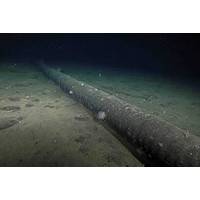
New Google Transatlantic Cable Connects Portugal with the US
strategic infrastructure underpinning the digital economy.Subsea cables form the backbone of the world wide web, carrying more than 95% of global data traffic.Two high-capacity subsea cables already link Portugal with other continents — the Google-owned Equiano cable that runs to South Africa via other African countries, and the EllaLink that runs to Brazil from Sines.State Reform and Innovation Minister Goncalo Matias said Nuvem was part of a broader strategy to make Portugal a hub for data centres, AI and innovation, while bolstering Europe's digital resilience and sovereignty
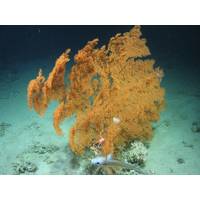
Research Team Launches Coral Cartography at AAORIA 2026
initiative launched in 2020 to fast-track solutions to protect the world’s corals, the project unites experts from nine countries across the Atlantic in image-based survey, coral taxonomy, mapping, management, and policy engagement, including Norway, UK, Portugal, Germany, Mauritania, Namibia, South Africa, Uruguay and Brazil.Cold-water corals (CWC) are a critical component of deep-sea ecosystems, facing growing threats from fishing, deep-sea mining, and climate change. While the North Atlantic benefits from relatively rich data on coral distribution, the Central and South Atlantic remain significantly
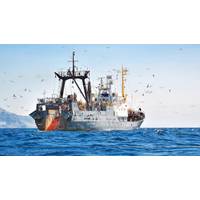
Argentina Accedes Cape Town Agreement, Entry into Force February 2027
, include: Argentina, Belgium, Belize, Congo, Cook Islands, Croatia, Denmark, Finland, France, Germany, Ghana, Iceland, Japan, Kenya, Namibia, Kingdom of the Netherlands, New Zealand, Nicaragua, Norway, Peru, Portugal, Republic of Korea, Saint Kitts and Nevis, Sao Tome and Principe, Solomon Islands, South Africa, Spain and Vanuatu.
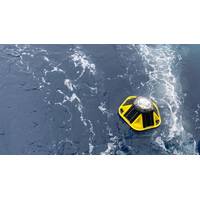
Australia Opens a Wave Data Portal
management of coastal resources by expanding the use of ocean buoys for recording wave data and making it freely-available. Most recently, they have advanced wave forecasting capabilities by deploying a fleet of 10 drifting wave buoys in the Southern Ocean between the Western Australian coast and South Africa. These small, solar-powered wave buoys are expected to float in ocean currents and collect wave data for several years.A network of wave buoys is helping researchers understand the processes and changes driven by waves in Australia’s coastal zone. Source: UWAResearch Fellow Marzieh Derkani
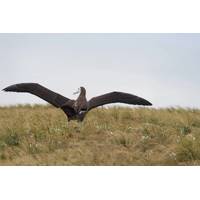
Study Identifies "Collision Map" For Birds, Boats to Support Conservation Efforts
include bird-scaring lines, branch-line weighting and night-setting.The study was a collaboration with the New Zealand Department of Conservation, Plymouth Marine Laboratory (PML) in the United Kingdom, The University of Queensland, Charles Sturt University, Halpin Wildlife Research in Canada, and South Africa’s Nelson Mandela Universit
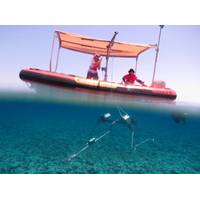
Lander Lab: Cost Efficiency of Baited Ocean Landers
crab pot and marked with a surface float. Images are often limited to daylight hours, so lights and batteries are not needed. These simple systems are known as “Baited Remote Underwater Video” (BRUV) platforms.Stereo Baited Remote Underwater Video (BRUV) at Rheeders' Reef, Tsitsikamma, South Africa. Photo by Peter Southwood, Used with PermissionThe use of BRUV systems is favored over extractive sampling methods such as trawling, as many species escape the nets, or are destroyed by capture. Because they are quiet and offer bait, the BRUVs provide a 40% more efficient approach to recording
 August 2026