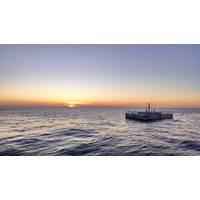
Eni Installs "World's First" Inertial Sea Wave Energy Converter Offshore Pantelleria
energy. "This experimental campaign, conducted under real operating conditions, will lead to useful results for developing the second-generation device currently under study," Eni said.ISWEC was developed by Eni in collaboration with the Politecnico di Torino and Wave for Energy s.r.l. (a spinoff of the university). It converts wave motion into electricity, which then supplies energy to offshore infrastructure, small off-grid islands, and coastal communities. ISWEC design can be optimized with reference to the metocean conditions of the site where it is installed by means of a
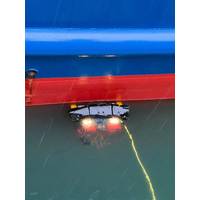
Armach Robotics Set to Take the Pole Position on Ship Hull Maintenance, Intelligence
Melding advanced software, intelligence, robotics and navigation, Armach Robotics – a spinoff of Greensea Systems – leads a step change in ship hull cleaning and maintenance with its Robotics as a Service model. Ben Kinnaman, the CEO of Greensea Systems, explains.Ben, to start us off, please give us a background on Armach Robotics? Where did the idea come from and where are we today?Greensea Systems is a software company, well-known for our software platform on ocean robotics. We're also well-known for our unique navigation and autonomy solutions. A few years ago we started a program
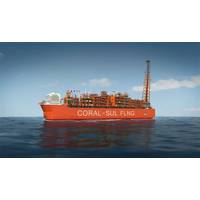
UTEC Nets Coral Sul Survey Work Offshore Mozambique
Heavy Industries in South Korea in cooperation with TechnipFMC and JGC Corp.Back in November 2020, Eni informed that the last of 13 topside modules had been lifted and installed aboard the Mozambique-bound unit.When it comes to the construction progress, Technip Energies, a newly created TechnipFMC spinoff, said via social media that the TJS consortium recently finalized the flare boom lifting for the Coral South FLNG project, with the height of the structure being 170 meters.The Coral Sul FLNG unit is expected to sail away this year, with gas production start-up expected in 2022
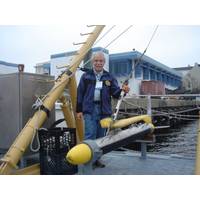
Klein's Side Scan Sonar, Then and Now
. The Sea Grant program is also 50 years old this year. And I’ve been involved with it in various ways since it began in 1967, especially at MIT and the University of New Hampshire. A lot of the autonomous vehicle technology was developed at MIT. The company Bluefin [Robotics] got its start as spinoff from MIT Sea Grant, and so I think that is making a big difference in our abilities to do ocean exploration. Are there any technologies in development now that you’re keeping an eye on or see as particularly exciting? MK: I keep an eye out all the time. I’m retired, but
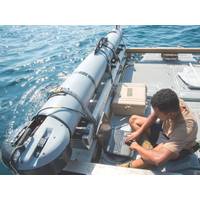
Unmanned Underwater Vehicles: Is Bigger Better?
. “It’s vital to be thinking ‘modular’ from the very beginning, so that when the time comes to adapt to a different mission or payload you don’t find yourself fighting against design decisions that only work for one.” Bluefin, which was an MIT spinoff in 1997 and was acquired by General Dynamics Mission Systems earlier this year, has integrated hundreds of different payloads into its vehicles, Butler said. Butler points out that while the Knifefish mine countermeasures UUV is a highly specialized instantiation of the company’s
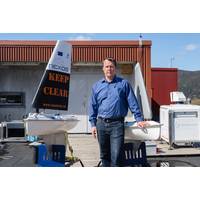
Sailbuoy Takes Off
large and small. MTR caught up with David Peddie, Manager of Offshore Sensing AS, to discuss his company’s unique Sailbuoy product. For MTR readers not familiar, can you provide a brief background on your company? Offshore Sensing was established in 2014 as a spinoff from Christian Michelsen Research Institute (CMR). CMR has a long history in producing both anchored and drifting buoys for the open-ocean and ice-infested waters. The Sailbuoy technology development started at CMR in 2005 based on the experience of CMR buoy production and development. After many
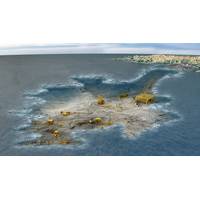
MTR100: The Norway Way
to the global oil and gas industry, providing consistent, integrated services within technical and marine assurance and advisory, risk management and offshore classification, to enable safe, reliable and enhanced performance in projects and operations. Computas AS Lysaker- based Computas, a 1985 spinoff from DNV Høvik, is a 100% employee-owned Norwegian IT consulting company that provides services and solutions for work processes, business systems and collaboration, with core competence in software development, architecture and integration, project management and consulting. With clients
Aasta Hansteen Project Creates 200 Jobs
The Aasta Hansteen and Polarled development projects will have significant spinoff effects in the north. So far the projects are set to ensure jobs for 200 people on the Helgeland coast. "Aasta Hansteen is a pioneer project in Northern Norway. It is the deepest field development on the Norwegian continental shelf. We employ new technology to produce the resources, building the world’s largest Spar platform. Aasta Hansteen is also a pioneer when it comes to creating local ripple effects in the development phase in Northern Norway,” said Torolf Christensen, head of the Aasta Hansteen

Rhode Island An Ocean of Opportunity
people jump back and forth between the different sectors of the heavily interlinked marine community throughout their careers. The result is both a rich pool of uniquely skilled, cross-disciplinary marine experts, and innumerable business opportunities, ranging from R&D partnerships to spinoffs out of Navy and University research projects, to new versions or applications of commercial technology. RI’s largest and most successful spinoff is ASA, a marine engineering services company, whose RI office alone had sales of $11 million before it was sold to RSB. Other spinoffs of
 February 2026