Marine Technology News Search
Search term • "advanced navigation"
Create an email alert for "advanced navigation"
Seals Have Preferences for Different Icebergs
Harbor seals in icy regions use icebergs shed by glaciers as safe platforms to give birth, care for young and molt. New research finds that as glaciers change with the climate, the resulting changes in size, speed and number of icebergs affect seals’ critical frozen habitat. Mother seals prefer stable, slower-moving bergs for giving birth and caring for newborn pups, while in the molting season, they and the rest of the seal population favor speedier ice near the best foraging grounds.
Exail Introduces New Transoceanic Uncrewed Surface Vessel
Exail has unveiled its new transoceanic Uncrewed Surface Vessel (USV), the DriX O-16.Benefitting from an autonomy of 2,500 Nm and a unique naval architecture that enables the USV to withstand the most severe ocean conditions, the new DriX O-16 has been designed for long-duration operations (up to 30 days) and can deploy multiple payloads and subsea assets.The new USV leverages the successful track record of the already existing DriX USV launched back in 2017 which has accumulated over 150…
Sapura Bolsters Subsea Capabilities with Exail Rovins INS
Sapura, a Brazilian provider of subsea services, has recently acquired eight units of Exail Rovins Nano Inertial Navigation Systems (INS) to enhance its ROV capabilities in offshore installation of subsea equipment.Integrated into Sapura's fleet of remotely operated vehicles (ROV), Exail INS will help Sapura to lay flex pipes and deploy subsea hardware onto the seabed, such as templates and manifolds…
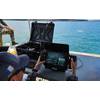
Greensea IQ and VideoRay Partner to Enhance ROV User Experience
Marine technology companies Greensea IQ and VideoRay announced they are expanding their partnership to enhance the user experience for remotely operated underwater vehicles (ROV).The renewed five-year, multi-million dollar agreement will aim to help improve the performance and dependability of their products, as well as fostering innovation within the inspection class ROV sector, including subsea defense and commercial customers.

C-LARS Delivers New Launch and Recovery System
C-LARS delivers its new Launch and Recovery System to Helix Robotics Solutions in the United States to elevate their current fleet of systems. This hydraulic system features multiple drive winch system (CTW513) with a Scantrol mTrack Active Heave Package, 300 horsepower electro-hydraulic power unit (CTH2300), and self-erecting LARS (CTA620)."We could have designed the same types of systems that all of our competitors have designed and built worldwide…
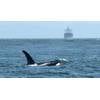
Ocean Wise, Trelleborg Advance Whale Protection Through Global Navigation Software Integration
Ocean Wise and Trelleborg Marine and Infrastructure announced an advancement in marine mammal protection through the international expansion of Ocean Wise’s Whale Report Alert System (WRAS), a real-time alerting tool designed to reduce the risk of ship strikes on whales. This expansion includes a new integration with Trelleborg’s SafePilot Pro software, a professional-grade navigation system used by marine pilots globally.The WRAS…

Canada’s Marine Carbon Removal Opportunities Could Be Worth Billions
A new report was released based on a study led by Canada’s Ocean Supercluster (OSC) assessing that Canada, with the world’s largest coastline, is positioned to be a global leader in the nascent marine carbon dioxide removal (mCDR) industry. With more research and investment, the industry could create 90,000 permanent jobs by 2050, increasing Canada’s GDP by $16 billion. The report also finds that the…
Deep Strike: Seabed Warfare Will Target More Than Cables and Pipelines
In March 2024, scientists with China’s Northwestern Polytechnical University published an article in the peer-reviewed journal Ships and Offshore Structures with the relatively benign title, “Numerical investigation for the blockade capability of the multi-BWBUG cooperative system.” In addition to analyzing self-organizing underwater mesh networks of blended wing body underwater gliders (BWBUGs), the…
Bot Catches an Underwater Wave, Jellyfish Next
Small autonomous underwater vehicles could be very useful for studying the depths of the ocean and monitoring its changing conditions. But such nautical mini bots can be easily overpowered by turbulent ocean currents.Caltech scientists led by John Dabiri, the Centennial Professor of Aeronautics and Mechanical Engineering, have been taking advantage of the natural ability of jellyfish to traverse and plumb the ocean…
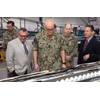
Undersea Warfighting Development Center Leadership Visits NUWC Division Newport
A constant co-evolution of technology and operational concepts is critical to providing the best warfighting capabilities possible to the U.S. Navy’s submarine fleet. In support of that mission, the Naval Undersea Warfare Center (NUWC) Division Newport and the Undersea Warfighting Development Center (UWDC) continue to have a strong working relationship.On March 31, the warfare center welcomed UWDC Commander Rear Adm. Michael R.
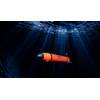
Good Undersea Vehicles Come in Small Packages
The holiday season has just passed, and many may have heard the phrase, “good things come in small packages.” Does this hold true for today’s undersea vehicles? Indeed it does. One of the most striking recent trends in the field is the proliferation of compact and affordable, yet highly effective, undersea vehicles. The past decade has seen new remotely operated vehicles (ROVs) and autonomous underwater vehicles (AUVs) produced that are easily carried and deployed by one person.
UK Ocean Technologies Expo Biggest Yet
Ocean Business 2013 at the National Oceanography Centre in Southampton will welcome 300+ worldwide companies to its upcomeng show. One of the most exciting elements of the show is that visitors can actually see equipment in action and ‘test-drive’ products before they purchase. This year’s Ocean Business is running an unmissable programme of free training and demonstrations, running over 180 hours where leading companies will introduce new products, technologies and techniques.
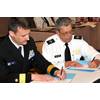
NOAA & US Power Squadrons Sign Agreement
NOAA’s Office of Coast Survey & US Power Squadrons sign a Memorandum of Agreement to improve cooperative charting program. Rear Adm. Gerd Glang, director of NOAA’s Office of Coast Survey, recently sat down with John Alter, chief commander of the U.S. Power Squadrons (USPS) to sign up to a collaboration that began fifty years ago. The USPS is a nonprofit organization dedicated to safe boating through instruction in seamanship, navigation, and related subjects.
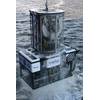
SMD Integrate SeeByte Software in ROV System
Soil Machine Dynamics & Seebyte announce successful integration of SeeTrack CoPilot to SMD's work-class ROV system. The integration and trials, which took place in Fort William, Scotland, in mid-January, saw SeeByte’s SeeTrack CoPilot Software system for dynamic positioning and real-time monitoring of work class ROVs, successfully carry out a number of survey missions using the software’s easy to use, point-and-click interface.
Advanced Offshore Flow Measurement Solutions
McCrometer offers advanced flow meter technology measurement solutions for the industry’s challenging, highly space- and weight-constrained offshore oil and gas production environments. Subsea modules, Offshore Platforms and FPSO Vessels necessitate flow meters that can maintain accuracy under rugged, crowded, high pressure conditions. Already cramped installations are further complicated by the extensive…
Straightpoint Launches Subsea Link
Force measurement equipment manufacturer Straightpoint (SP), a Crosby Group company, has launched the Subsea Link, a standard product for applications up to 2,000m (6,562 feet) beneath the water’s surface.The product can be rigged with Crosby’s remotely operated underwater vehicle (ROV) shackles (tested to the same depths) and the company’s Trawlex shackle range, amongst others. The IP68 / NEMA 6P-rated Subsea Link also boasts components from SubConn…
IQUA Robotics: SPARUS II AUV Tackles Multimodal Mapping for Exploration and Inspection
Micro and small-sized AUVs can integrate a wide range of sensors and navigation systems, making them ideal for applications in littoral waters with to their ease of deployment and operation. However, effectively exploring, locating, and mapping survey targets often requires combining multiple sensing techniques. Additionally, close-range, high-resolution inspection—traditionally performed by a secondary…
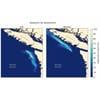
NOAA: Operational Forecast System Informs Shipwreck Oil Spill Scenarios
During World War II, the 334-foot, 5,350-ton SS Coast Trader was hit by a torpedo and sank off the coast of Cape Flattery, Washington. Resting almost 500 feet below the surface, the Coast Trader has an estimated 542 tons of heavy fuel oil remaining in the fuel tanks. The quantity onboard the Coast Trader is equivalent to 60% of the volume of fuel spilled into the Pacific Ocean near Grays Harbor by the barge Nestucca in 1988…
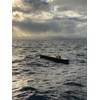
AutoNaut Completes a 16-week, 4,000-mile Mission on the Atlantic continental shelf break
AutoNaut ‘Oban’ arrives quietly into Penzance after waiting out Storm Arwen off Mount’s Bay. The 115-day voyage covered 4,000 nautical miles gathering data on the Atlantic shelf break from the Hebrides to Cornwall.A proving trial for ‘AutoNaut for Extreme Environments’ in autumn 2021 saw the 5m uncrewed surface vessel (USV) spend 16 weeks at sea and cover over 4,000 nautical miles on the continental shelf break in the Atlantic.
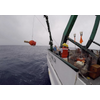
NOAA, Vulcan to Explore and Map the Deep Ocean
NOAA has forged a formal agreement with Vulcan Inc. to share data resulting from the two organization’s ocean work.Both NOAA and Vulcan share a mission to advance the public’s understanding of the value and importance of the global ocean. Through a new memorandum of understanding, NOAA and Vulcan intend to deepen their current work together through additional collaborative opportunities.“The future of ocean science and exploration is partnerships…

 February 2026