
Come In, the Water’s Just Fine: How the UK Maritime Innovation Hub Embraces Innovation, Not Just Regulation


-
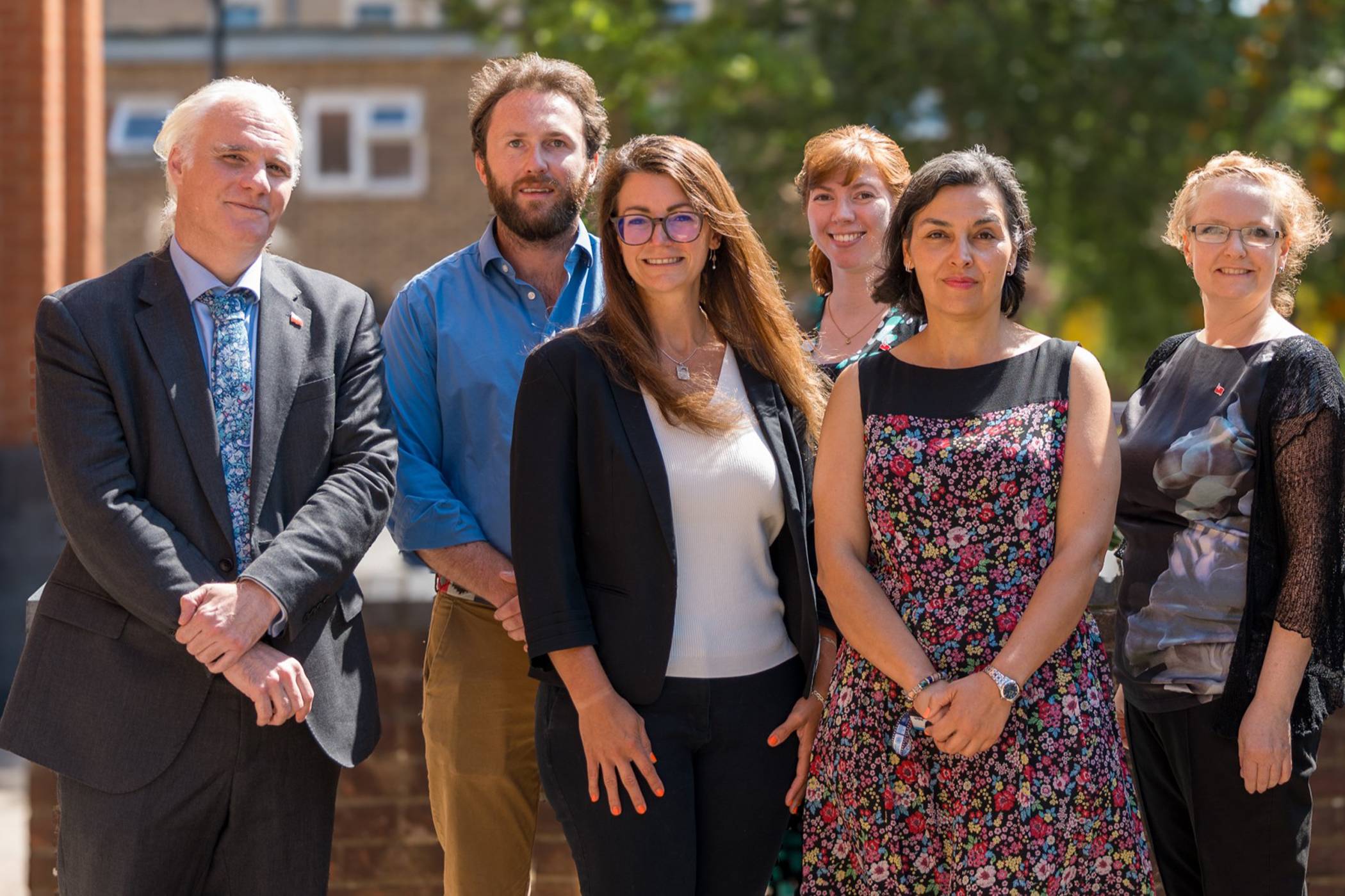
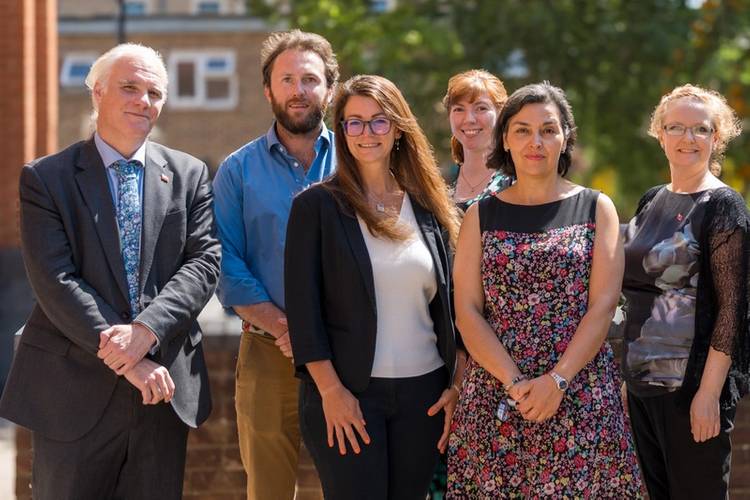 Left to right: Jonathan Simpson, Senior Technical Advisor; Bertie Sorensen-Pound, Maritime Digitalisation Lead; Dr Kassie Cigliana, Maritime Digitalisation Lead; Lucy Corcoran, Customer Engagement Lead; Yildiz Williams, Senior Technical Advisor; Susie Smith, Head of Marketing and Communications. Credit: Maritime and Coastguard Agency
-
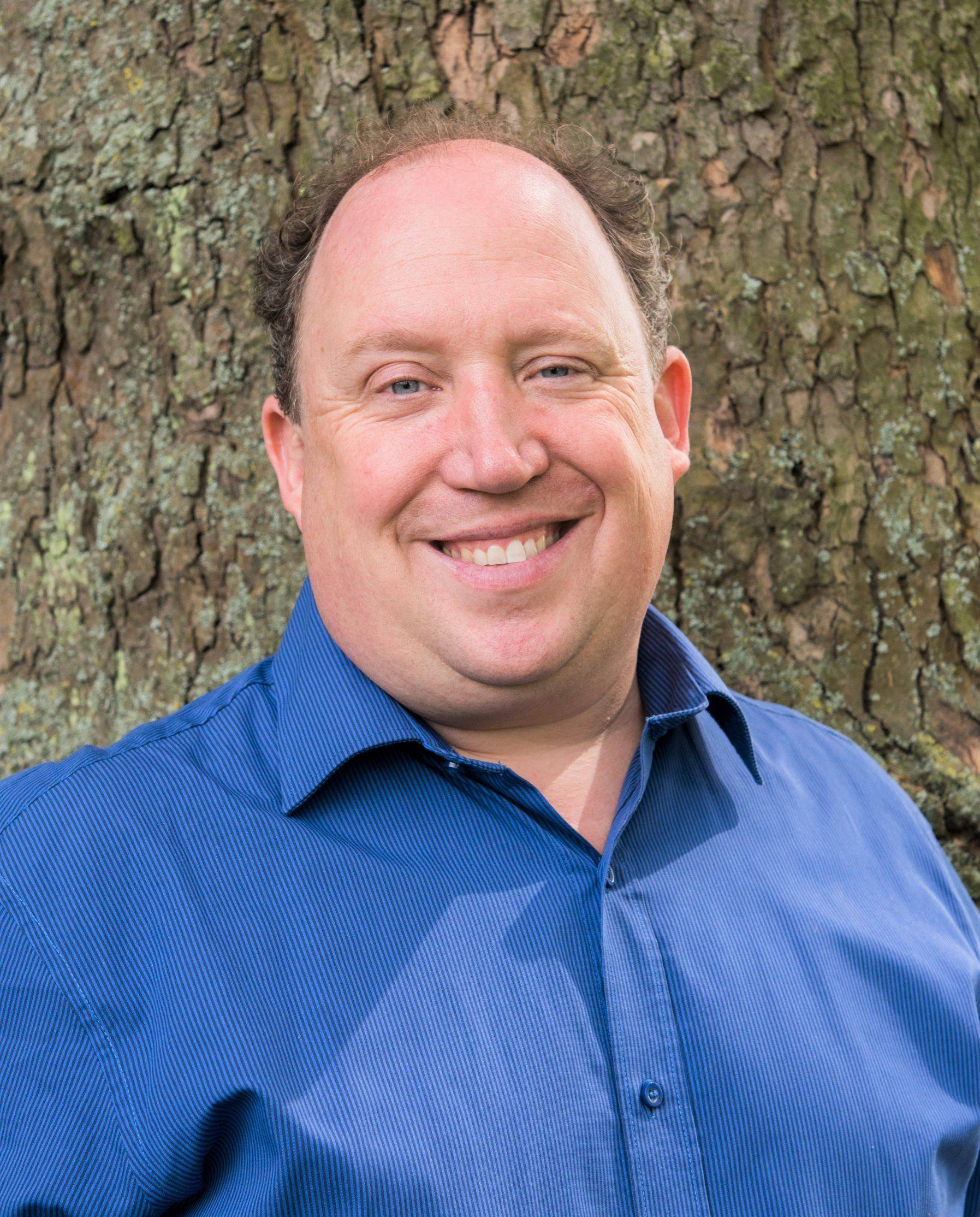
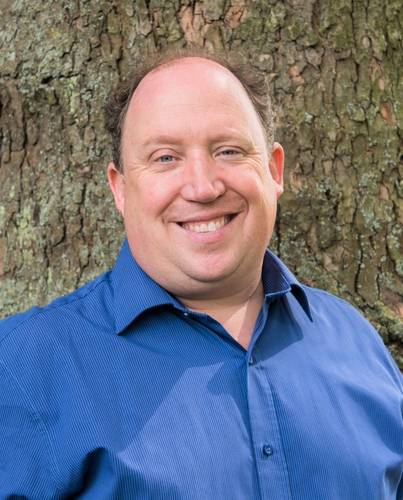 Jonty Slater, assistant director at the UKMIH. Credit: Jonty Slater/Maritime and Coastguard Agency
Marine technology advances driven by rapid innovation represent commercial and scientific opportunities, but also an evolving oversight challenge for regulators that must find a balance between progress, safety and international guideline compliance. For the United Kingdom, this responsibility falls to the Maritime and Coastguard Agency (MCA), which has created the UK Maritime Innovation Hub (UKMIH), a function designed to bring innovators and regulators together early in the development process.
The UKMIH covers four areas, including decarbonization, Maritime Autonomous Surface Ships (MASS), digitization and digital systems, as well as nuclear propulsion. Near the top sits Jonty Slater, assistant director at the UKMIH, who started his role 10 months ago alongside the program itself, with the goal of improving regulatory accessibility and collaboration.
"I think the key part is how can we move the perception of the MCA in the past as an organization that may have been known to say, "no," to yes. If you can give us the safety information, if you can give us an understanding of why you believe that you're going to be safe, we will look at it in a proper and clear way. That was the bigger thing that we took into this," he explained. This change in mindset is supported by the teams that make up the UKMIH, which bring together industry, civil service and consultancy experience to provide increased engagement and accessibility.
Early engagement
Regulatory accessibility for innovators isn't new to the MCA, Slater emphasized, but how the organization engages with industry has changed. "Previously, the MCA would have waited for industry to come to it with a design at a later stage and say, 'OK, now regulate me.' Instead, we have gone out and said, 'We are here to engage early.'"
Additionally, most of the work would have been chargeable, according to the MCA's statutory duty. Now, Slater and his team work on a nonchargeable basis, providing advice and guidance as a non-statutory function, allowing for even earlier engagement when vessels or systems are still on the drawing board and can incorporate regulatory feedback.
Despite being a newly established function, UKMIH is already tracking performance indicators and seeing positive results. Success was once measured in the number of inquiries received on a weekly basis. Now, the MCA is moving into tracking how many projects are successful in their outcome. "Either we can say to the innovator, 'We're not going to regulate you,' or 'This is your regulatory path,' and hand them off to another part of the MCA. Or we need to hold their hand through the regulatory pathway so that they can understand and they have a single touch point where they can come back to it all times," he explained.
These indicators also represent a positive understanding of the industry and its needs. "Especially in the MASS space," Slater added. "In terms of mapping the ecosystem and engaging with our international partners, it's been really valuable among our colleagues to actually be able to support their work. They can come to us and say, 'We've been hearing about this; what's actually happening?' And they can know that we are a voice that can help support the wider work and make sure the MCA understands what the industry actually needs."
Charting the course
The UK maritime industry plays a unique regulatory role, he noted, setting the standard for vessels with specific, well-defined guidance and leadership stance. "We know that there are a number of countries around the world that look at those regulations and say, 'How can we incorporate some or all of those regulations in our country?' Others have looked at it and asked, 'Do we need to have that level of regulation?'"
The UK's dedication to maritime regulation stems from its busy waters; a high number of vessels requires safety standards for all on the water. "The MCA's role," Slater clarified, "is to regulate the vessels, not the waters. We regulate the vessels to make sure they are safe for other water users." The MCA also only regulates surface vessels, as opposed to subsurface ones.
The UK's waters are home to a variety of vessels, from small ones measuring under two meters to 36 meters and beyond, all with varying levels of autonomy. "The majority of are remote control...But we're seeing a number of players now wanting to have conversations about higher levels of autonomy and what does that mean?"
 Designated trial areas for prototype vessels using innovative technology in Plymouth Harbour. Credit: Maritime and Coastguard Agency
IMO MASS Code
Regulation looks a bit different, however, for MASS, where it's crucial to understand the entire system and not just the vessel, explained Slater. "We've had to go to that second stage where we have to understand the whole system, even in terms of how the remote operations centers (ROCs) are being managed and developed." The MCA is also one of the key authors of the International Maritime Organization's (IMO) MASS Code, adopted in May 2026.
While the Code is currently non-mandatory, Slater sees the MCA's involvement, including current involvement, as crucial. "We need to look at our existing regulations and how we would implement the MASS Code...The only way it works is if there's data collected to support the work—how our vessels are going to abide by it, what are the concerns around it, and how well it works." The industry will need to convert the MASS Code's current goal-based structure into regulations that can support the transition, balancing safety and innovation.
"I think how we deal with people and how we make sure that these vessels are appropriate for mixing with manned vessels is something that we, and everybody, are still learning," he added. "There will be vessels that are two meters and there will be huge tanker vessels, at some point, that will be under remote control or some level of autonomy beyond what they're doing at the moment. And how can all that still sit within the MASS Code?"
With size comes the desire for autonomous dual and multipurpose vessels, posing new challenges for MASS regulation. Ship operators are looking away from limited fuel supplies and towards remote-controlled options, stretching the time possible at sea. "That can be done with the level of technology we have," Slater acknowledged.
Demystifying digitization
Beyond MASS, the MCA and UKMIH are also at the forefront of industry-wide trends like decarbonization and artificial intelligence (AI). "In terms of decarbonization, there are a lot of shore-based projects that are coming through for the electrification of ports and vessels, but also looking at alternative fuels—how those will be used and how they can be more efficient—and energy efficiency technologies like carbon capture or wind assist. Those are at a volume that we didn't expect," Slater said. A surprising new angle is the rapid increase in discussions around nuclear power.
"We've had more inquiries around AI in the last few months than we expected. That's why the UKMIH's four of the areas are really, really important...We need to understand what is being done around software assurance and digitization. Is it actually AI actually on board, or are we just talking very, very intelligent pieces of software? What does that actually mean? And what's beyond the marketing? Sometimes you look under the hood and you're like, 'We're okay with this because actually it's an automated control system with a little bit of some brains attached to it.'"
"That makes it less scary," he admitted. "That is something that we're all learning from a regulatory point of view. Where is the point that we regulate? How do we regulate it? That is something that's coming up time and time again. We're very, very lucky in that our parent ministry, the Department of Transport, wants us to engage...Those are very clear conversations that are ongoing."
Innovators welcome
Getting involved with UKMIH is simple, Slater encouraged. Innovators can expect a nine-step process, from initial contact to triage and engagement. "We bring it all together so that at the end, they come out with a successful project or a certification, and they feel like they've actually been listened to."
"The value that the MCA has worldwide is we've been known to be part of the UK flag, but also beyond, in terms of our regulations. If somebody wants to engage with the UK market or wants to have a UK level of certification for their project or vessel, having a conversation with us will allow just that."
"The UK has been supporting innovation for hundreds of years," Slated added. "That isn't changing. It's something that the UK is open to, from an MCA point of view—especially being open to innovators to have conversations about bringing their business and vessels to UK waters."



 August 2026