Aramid hybrid rope cuts snap-back risk and deck contamination on 6,000m OSV

Aramid hybrid rope cuts snap-back risk and deck contamination on 6,000m OSV
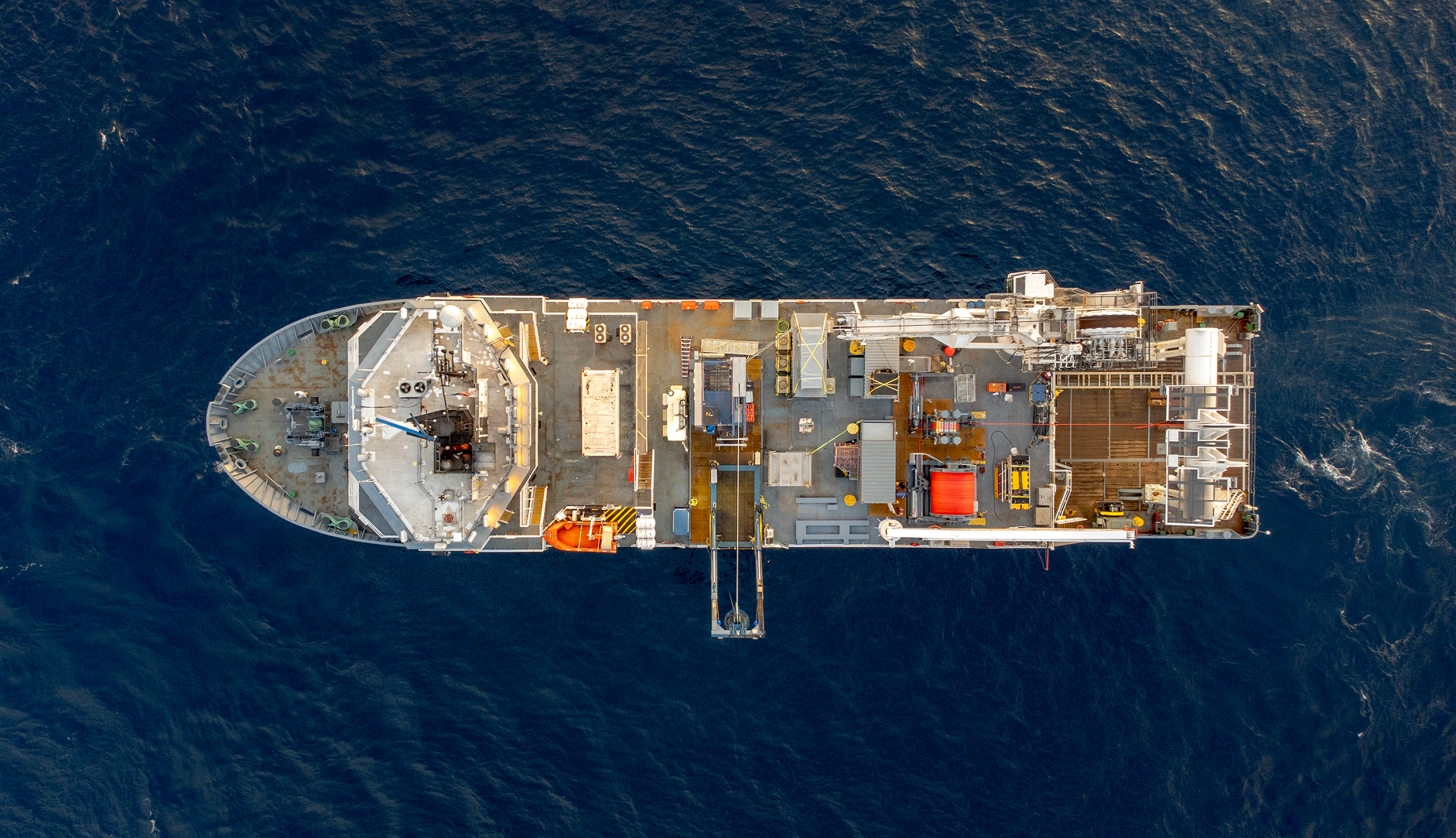
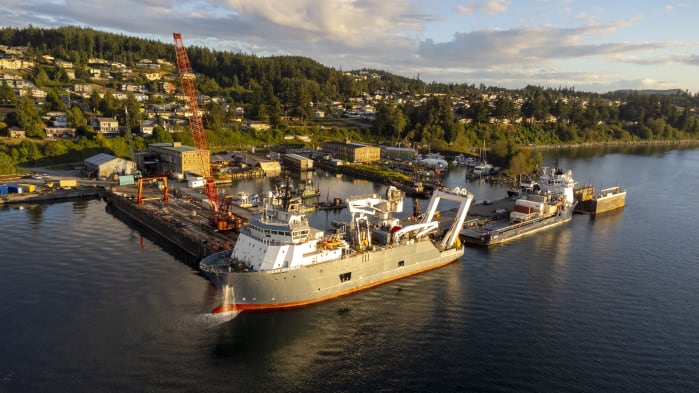
When Stabbert Maritime configured its multipurpose support vessel Ocean Guardian for continuous deepwater operations, the company expected the lifting system to be a workhorse. What it got, initially, was a constraint. Steel wire rope at 6,000-meter operating depths generates snap-back energy that forces crews into permanent exclusion zones during operations, transfers lubricant onto deck surfaces with every load cycle, and accumulates enough self-weight that routine spooling and empty-hook recovery push safe handling further from the line. On a vessel where lifting happens daily rather than occasionally, those properties stop being manageable inconveniences and start reshaping every operational decision on deck.
The solution Stabbert Maritime reached for was TechIce®, a hybrid synthetic hoisting rope from Hampidjan built around Technora® para-aramid fibers from Teijin Aramid, paired with a fully electric deepwater capstan winch designed by Parkburn. The combination has now been in continuous service on Ocean Guardian through subsea, survey, and scientific support missions, and the results are being watched closely by operators facing the same scaling problem.
Why aramid, and why hybrid
Technora® is a co-polyaramid fiber produced by Teijin Aramid. In a hoisting rope, it contributes high tensile strength at low mass, thermal stability under cyclic bending loads, and fatigue resistance over repeated bend-over-sheave cycles. TechIce® uses a hybrid construction that combines the aramid fiber core with other materials to manage the complex mechanical demands of deepwater hoisting: variable tension as load transitions from full depth to surface, continuous bending over sheave and drum, heat generation during active heave compensation, and the cumulative fatigue of daily operational cycles across months of continuous duty.
The absence of lubrication is a direct consequence of the fiber system. Steel wire rope requires lubricant to manage internal wire-on-wire friction under load. That lubricant migrates outward during use. At deepwater lifting frequencies, the deck area around the winch requires regular cleaning and containment attention. TechIce®'s construction eliminates that mechanism.
System architecture: separating traction from storage
Parkburn's winch design reflects a different set of mechanical assumptions than a conventional steel wire winch. In a capstan architecture, traction and storage are separated: the capstan head grips and drives the rope under tension, while a separate storage drum holds the rope without managing the load directly. This approach allows the winch to handle the required pull force within a smaller physical envelope and at lower installed power than a direct-drive drum winch would need for the same duty.
For synthetic rope specifically, the architecture matters because it avoids the high bending loads that a conventional drum imposes on a rope under tension. Sam Bull, business consultant at Parkburn, said the engineering approach came from looking at the full operating environment rather than the rope's rated performance in isolation. "Real performance is governed by the entire operating environment: winch type, sheave geometry, spoolers, fleeting angles, bearing surfaces, system dynamics such as speed and active heave compensation, and ultimately the unknown conditions delivered by mother nature," he said.
That framing set the parameters for the independent testing programme that followed.
Bend-over-sheave testing at NORCE
To characterise TechIce®'s behaviour under the specific degradation mechanisms relevant to deepwater hoisting, Hampidjan commissioned independent cyclic bend-over-sheave (CBoS) testing through NORCE Research at the Mechatronics Innovation Lab in Norway. The test methodology applied repeated bending cycles at a defined speed and elevated ambient temperature, without external cooling, to replicate the thermal loading generated during sustained deepwater operations and active heave compensation.
Ellen Nordgård-Hansen, senior researcher at NORCE, said the programme was structured around comparison rather than absolute qualification. "Cyclic bending and heat are the primary drivers of hoisting rope degradation in practice," she said. "That is why the analysis concentrated on strain development, thermal response, and fatigue progression during prolonged cycling." By tracking multiple response parameters across the test duration, the programme could assess how different rope designs and construction approaches behaved as degradation progressed, rather than extracting a single limit value from peak-load testing.
The data gave Parkburn's winch design a measured baseline to work from, and gave Stabbert Maritime independent evidence that the rope's behaviour under system-level loading matched what the system architecture was designed to manage.
Operational results
Aboard Ocean Guardian, the crew noticed the difference in how the system ran between lifts, not just during them. Spooling and empty-hook recovery became consistent routine tasks. Line behaviour remained stable across load changes. During active heave compensation at depth, the rope did not generate the heat accumulation or deck contamination that steel wire produces under equivalent conditions.
Daniel Stabbert, CTO of Stabbert Maritime, said the system's defining quality was how little active management it required once running. "We weren't constantly adjusting how we worked around it," he said. The lifting area no longer required repeated clearance between operations, and tasks that would have been re-sequenced around hoisting activity in a steel wire configuration ran concurrently instead.
For operators assessing the economics of deepwater lifting systems, the Stabbert Maritime experience points to a metric that rated capacity and depth specifications don't capture: the degree to which a hoisting system integrates quietly into daily vessel operations, or continuously taxes the crew and deck management around it. At 6,000 meters and daily lifting cycles, that distinction compounds.
TechIce® is manufactured by Hampidjan and incorporates Technora® aramid fibers from Teijin Aramid. Independent CBoS testing was conducted by NORCE Research at the Mechatronics Innovation Lab, Norway. The deepwater capstan winch was designed and supplied by Parkburn.

 August 2026