
DOI Begins Transition to Establish Marine Minerals Administration
coordination and increase efficiencies across offshore leasing, permitting, inspections and environmental oversight, while maintaining all existing regulatory protections and rigorous safety standards, said the Department in a statement.This streamlined approach reflects the evolution of offshore energy development and the need for a more integrated approach to managing conventional and emerging resources such as critical minerals. By aligning planning, leasing and oversight functions, the Department is positioning the agency to better meet current and future energy demands.“President Trump has
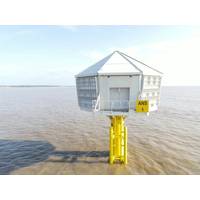
Offshore Wind: Building the UK’s First Nearshore Artificial Nesting Structures
.Artificial habitats such as these can help maintain ecological balance by ensuring that critical life stages, such as breeding and chick rearing, can continue undisturbed by the expansion of human activity at sea.Nature-positive SolutionsThe Hornsea 3 nesting project demonstrates how renewable energy development can coexist with biodiversity protection, creating the infrastructure needed for the energy transition while creating a safe haven for vulnerable species. By embedding conservation measures into the core of engineering and construction processes, industry leaders are showing that climate action
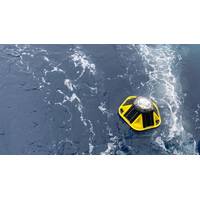
Australia Opens a Wave Data Portal
network operated by the university consisting of either Sofar Spotters, Sofar Smart Moorings, or Datawell Waverider Mk4 units. This network is currently supporting a range of research projects focused on improving wave forecasting, coastal dynamics along reef-fronted coasts, marine heatwaves, wave energy development, and the long-term Western Australian wave climate.With investment from Australia’s Integrated Marine Observing System (IMOS), Dr Mike Cuttler and Professor Ryan Lowe recently deployed 23 new wave buoys at coastal sites around the country, with at least one new wave buoy in every state

The Fleet of the Future: How Oceaneering is Redefining Offshore Operations
As offshore energy development confronts more applications, increasingly complex operating environments, and a turbulent global market, adaptability and integrated offerings may be the solution. At the center of this vortex is Oceaneering International’s Offshore Projects Group (OPG) and Vice President Dan Vela, who shared insights with MTR about the operations of a multi-vessel, multi-mission fleet.Dynamic flexibilityDan’s wide-ranging career in oil and gas has spanned from an offshore technician to sales, account management and now operations. He’s held his current role as vice
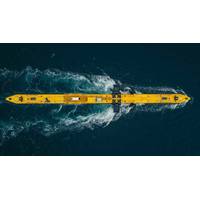
Canada’s First Tidal Energy Array Authorized Using Adaptive Regulatory Framework
a Fisheries Act Authorization to Eauclaire Tidal Ltd. to deploy up to three Orbital Marine Power Ltd (Orbital) O2-X tidal energy devices at the Fundy Ocean Research Centre for Energy (FORCE). This marks the first project to proceed under Canada’s revised, staged approach for tidal stream energy development—an adaptive regulatory framework designed to ensure both environmental protection and investor clarity.DFO’s Staged Approach, resulting from the federal Tidal Task Force on Sustainable Tidal Energy Development led by DFO and Natural Resources Canada, enables projects to begin with
COAST, University of Victoria Join to Launch the BC Marine Energy and Decarbonization Hub
of marine renewable energy alone is insufficient to comprehensively decarbonize Canada’s ocean industries.The systems and supply chain surrounding ocean sector activities must also evolve from storage capacity to energy distribution; maritime decarbonization must complement renewable energy development. To facilitate engagement with the most apt technologies, the Hub will issue Innovation Challenges in partnership with key regional stakeholders. Companies will respond to these calls for innovation and propose their technology as a potential solution. The first of these challenges will be
White House Aims to Eliminate NOAA Climate Research
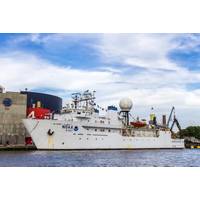
The administration of President Donald Trump aims to eliminate the arm of the National Oceanic and Atmospheric Administration (NOAA) that oversees research on climate change and refocus the U.S. fisheries service to support energy development, according to a draft White House budget document seen by Reuters.The moves are part of a plan to downsize NOAA dramatically, slashing agency funding by around $1.67 billion, or 27%, according to the proposal.The Office of Oceanic and Atmospheric Research, known also as NOAA Research, would be closed under the proposal, along with $480 million in funding for
SeaTrac USV Completes GoM Data Harvesting Project
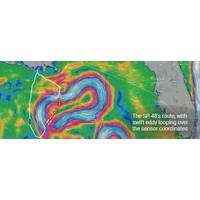
propulsion to navigate through and hold station in currents exceeding three knots during the data harvesting.The data collected will provide valuable insights into the LCS and its impact on marine life and operations. This data will be used to inform decision-making in areas such as offshore energy development, fisheries management, coastal planning and other ocean interests.“The use of a fully solar-powered USV for a data gathering operation of this scale is a key moment in marine robotics. The Gulf of Mexico presents some of the most challenging ocean currents for any vessel, not least an
Fugro to Perform Fully Remote Subsea Surveys for Petrobras Off Brazil
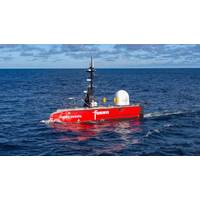
.It also provides clients with near real-time access to project data, to accelerate decision-making process.Fugro’s Remote Operations Center (ROC) in Rio das Ostras will support the upcoming inspection work.“This fully remote solution aligns with our shared commitment to responsible energy development and builds upon recent collaborations to introduce remote survey techniques in the region.“Conducting offshore work from the safety and comfort of an onshore office environment, allows us to reduce our environmental impact and enhance our operational safety while delivering high-quality

 August 2026