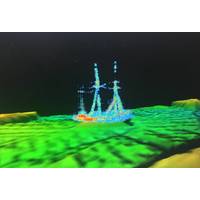
Discovery: Historic Shipwreck Found in Lake Huron
looks almost ready to load cargo.Project PartnersNOAA and the state of Michigan jointly manage Thunder Bay National Marine Sanctuary. This project was made possible with the support of Ocean Exploration Trust and with technologies from the Center for Coastal and Ocean Mapping, the Great Lakes Environmental Research Laboratory, the University of North Carolina's Undersea Vehicle Program, and the Great Lakes Water Studies Institute at Northwestern Michigan College. The documentation of the shipwreck Ironton would not have been possible without the dedication of the United States Coast Guard.Stephanie
New Under-ice Observing Capabilities Could Lead to New Discoveries in the Great Lakes
During the dog days of summer here in the Great Lakes, scientists at NOAA’s Great Lakes Environmental Research Laboratory (GLERL) are already thinking about the ice that will form on the lakes this winter.This year, NOAA GLERL and a team of federal, university, and industry partners are conducting test deployments of an autonomous underwater vehicle (AUV) in Lake Michigan, with the ultimate goal of using it under lake ice during winter to collect ecological and water quality data. Observations of winter ecology are difficult to obtain compared to observations in the ice-free season, when most
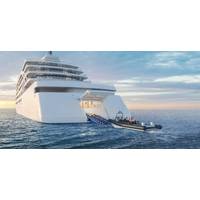
NOAA-Viking Public Private Partnership, a Win-win for Research
the Celebrity cruise ship Flora, when it sails to the Galapagos Islands.“We are very excited about the ways that our scientists can expand their research in the Great Lakes with sensors and testing aboard the new (Viking) ship,” said Deborah Lee, director of NOAA’s Great Lakes Environmental Research Laboratory. “We also welcome the chance to help people learn about the richness and maritime heritage of the Great Lakes as well as the environmental challenges it faces.”NOAA’s new partnership aligns with its Ships of Opportunity (SOPs) or Volunteer Observing Ships (VOSs)
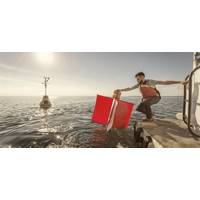
NOAA Scientists Honored for Innovative Research
administrator. “I am proud of the scientific leadership they have brought to their respective fields, and I am confident they will move NOAA and the Nation forward by advancing science and technology.”Meet the winners:Eric Anderson, a physical scientist at NOAA’s Great Lakes Environmental Research Laboratory, in Ann Arbor, Michigan, for leading innovative research in hydrodynamic forecasting to address many of the Great Lakes’ most pressing issues, including harmful algal blooms, extreme storm conditions, and oil spill response.Michelle Barbieri, a veterinary medical officer
Two Shipwrecks Found in Lake Huron
;s cold, freshwater, the shipwrecks will be nominated for listing on the National Register of Historic Places. Funded by a grant from NOAA’s Office of Ocean Exploration and Research, the project was made possible through research partnerships with NOAA’s Great Lakes Environmental Research Laboratory, University of Delaware, Michigan Technological University, Northwest Michigan College, and the Michigan Department of Natural Resources.
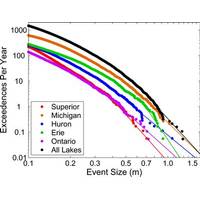
Meteotsunamis: An Underrated Hazard in the Great Lakes
. The model can provide real-time meteotsunami warnings to help mitigate the threat to property and life on the Great Lakes. In addition to researchers at UW-Madison, the team includes David Kristovich, University of Illinois at Urbana-Champaign; Eric Anderson, NOAA’s Great Lakes Environmental Research Laboratory; David Schwab, University of Michigan; and Alexander Rabinovich, Russian Academy of Sciences in Moscow. Funding for the project came from Wisconsin Sea Grant, the National Science Foundation, the Cooperative Institute for Limnology and Ecosystems Research Long-term Great
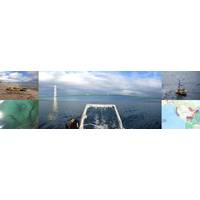
IOOS Awards $31 Mln for Ocean Observation
, NOAA Fisheries (NMFS), NOAA’s Office of Coast Survey (OCS), NOAA’s Office for Coastal Management, NOAA’s National Centers for Coastal Ocean Science (NCCOS), NOAA’s Satellite and Information Service (NESDIS), the U.S. Geological Survey (USGS), NOAA’s Great Lakes Environmental Research Laboratory (GLERL), and the IOOS Association. Some additional funding is directed through the Ocean Technology Transition (OTT) project at IOOS, which sponsors the transition of emerging technologies to operational mode. Goals for these new agreements are wide ranging, but focus
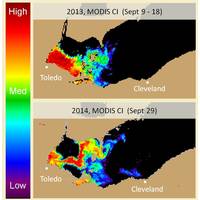
Severe Algal Bloom Predicted for Lake Erie
outlook for western Lake Erie. Models were developed by scientists at NOAA’s National Centers for Coastal Ocean Science (NCCOS), the University of Michigan, LimnoTech, the University of Michigan Cooperative Institute for Limnology and Ecosystems Research, and the NOAA Great Lakes Environmental Research Laboratory (GLERL). The models use nutrient load data collected by Heidelberg University’s National Center for Water Quality Research. “Last summer’s Toledo water crisis was a wake-up call to the serious nature of harmful algal blooms in America’s waters
Ice Coverage on Great Lakes 89 pct: NOAA
percent, reveals high resolution satellites images from National Oceanic and Atmospheric Administration (NOAA). The entire Great Lakes is at 88.8 percent ice coverage, with the highest totals coming from Lake Huron and Lake Erie at about 96 percent ice coverage according to Great Lakes Environmental Research Laboratory, part of NOAA. The Laboratory, which monitors the ice coverage of the five Great Lakes, updated some satellite images Saturday showing how much ice is actually covering the Great Lakes. Lake Superior is close behind those two with 95 percent coverage, followed
 February 2026