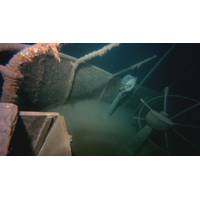
Imaging 100-Year-Old Shipwrecks Under 800 Feet of Water
Jerry Eliason, a lifelong shipwreck hunter from Cloquet, Minnesota, has become one of the most respected figures in the quest to locate and document lost ships beneath the depths of the Great Lakes. Eliason’s decades-long dedication and innovative use of technology have led to some of the region’s most significant underwater discoveries, including the Henry B. Smith and the record-breaking Scotiadoc wrecks.A critical enabler of Eliason’s work has been his use of specialized imaging tools tailored for extreme underwater environments. Chief among these is Theia Technologies’
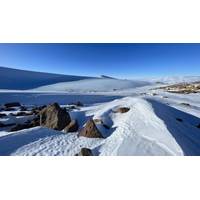
Scientists Discover Six Million Year Old Ice in Antarctica, Offers Unprecedented Window into a Warmer Earth
Schauer, University of Washington; Sarah Aarons, Jacob Morgan and Jeff Severinghaus of Scripps Institution of Oceanography at University of California, San Diego; Andrei V. Kurbatov and Douglas Introne of the University of Maine; Yuzhen Yan of Tongji University; and Peter Neff of the University of Minnesota.COLDEX is supported by the NSF Office of Polar Programs; the Science and Technology Center Program at the NSF Office of Integrative Activities; and Oregon State University. Fieldwork in Antarctica is supported by the U.S. Antarctic Program and funded by NSF. Ice drilling support is provided by
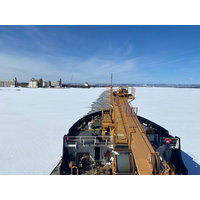
NOAA, Coast Guard to Collect Data from a Great Lakes Icebreaker
This week, NOAA's Office of Response and Restoration (OR&R) scientists worked with the U.S. Coast Guard during ice-breaking in Lake Superior Harbor in Duluth, Minnesota, aboard the Coast Guard Cutter Spar. This project is the first set of experiments funded by the newly developed Great Lakes Center of Expertise.Teams from both Coast Guard District 9 and NOAA deployed uncrewed aircraft system (UAS) with multispectral, thermal and LIDAR sensors to collect data while the Spar was breaking ice in the harbor. The team collaborated to develop data and mapping products that will advance our ability
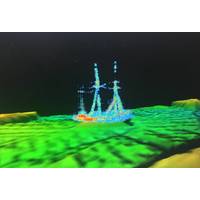
Discovery: Historic Shipwreck Found in Lake Huron
up the vessel's auxiliary steam engine to help set the struggling ship's sails. Despite their efforts, Ironton, propelled by the wind from astern, veered off course into the path of the southbound steamer Ohio. The 203-foot wooden freighter Ohio was headed to Ogdensburg, New York, from Duluth, Minnesota, loaded with 1,000 tons of grain.By the time Ironton's crew spotted the approaching Ohio through the darkness, it was too late—a head-on collision with the steamer was unavoidable. In an interview published by the Duluth News Tribune the following day, William Wooley of Cleveland, Ohio
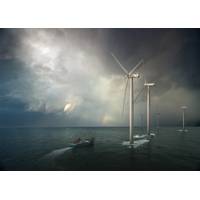
VA Offshore Wind: A Strong Foundation
lists, very briefly, engineering capabilities, equipment resources, manufacturing abilities, marine services and a brief description of specialized offerings. In mid-February the Directory included 92 companies. Most were from Virginia, but there were also companies listed from Louisiana, Minnesota and Ohio.The Directory raises two important questions: (1) Who’s looking at the Directory and (2) How will it be used to help build out and operate this massive new energy system? A Directory is of little value if it just languishes somewhere on some obscure website. These questions
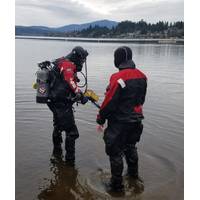
JW Fishers’ Pulse 8X Continues to Outperform
U.S. Customs and Border Patrol, Connecticut State Police, Swedish Coast Guard, Royal Canadian Mounted Police, US Naval Surface Warfare Center, Texas Highway Patrol, New Jersey State Police, Policia de Puerto Rico, Ottawa Police Service in Canada, Oklahoma Highway Patrol, Olmstead Sheriffs Dive Team in Minnesota, Maine State Police, and the U.S. Navy Expeditionary Combat Command and their Facilities Engineering Service Center in California
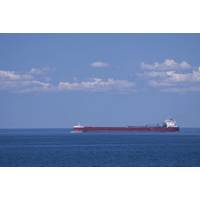
Study: Nonnative Species Carried in Lakers' Ballast Water
by The Great Waters Research Collaborative (GWRC), a project of the University of Wisconsin-Superior’s Lake Superior Research Institute (LSRI), builds on work conducted by others in the Great Lakes in recent years.The ships’ operators proposed the study as a means of complying with Minnesota Pollution Control Agency ballast water permitting requirements, and approached GWRC to undertake the scientific research. The U.S. Environmental Protection Agency (EPA) paid for the study via the U.S. Maritime Administration (MARAD) portion of the Great Lakes Restoration Initiative.Ten U.S. and
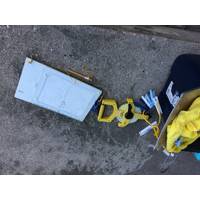
Revving Up a New ROV
online expedition diary.Johns’ comments pretty well sum up this demonstration of cross-border camaraderie, which had its origins aboard the replica three-masted wooden schooner out of Milwaukee, the Denis Sullivan. Last summer, Kurth and Nelson met as part of an educator workshop sponsored by the Minnesota and Wisconsin Sea Grant programs and with financial support from the Center for Great Lakes Literacy. Kurth was not only a dab hand on the boat, having participated in previous sails, but also an enthusiastic mentor for Nelson as they both strive to bring the Great Lakes alive in their classrooms
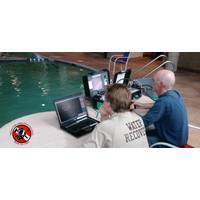
Public Safety Dive Teams: Always Ready
that could support public safety dive teams in the Midwest by opening communications to share information training, equipment, operations and policies. In 2015, the Association held its first annual conference in Stevens Point, Wis. More than 70 public safety divers from Wisconsin, Iowa and Minnesota were in attendance. This group represented several law enforcement, fire and rescue teams from across the region. The conference showcased expositions such as forensic autopsies for drowning victims, local case reviews on recoveries of homicide victims, underwater evidence collection and examples
 December 2025