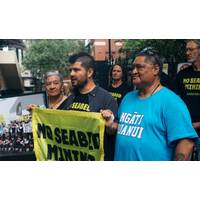



NOAA-Led Expedition Maps Cook Islands’ Exclusive Economic Zone
publicly available data will help inform and advance the responsible management of marine resources in the region.The mission concluded with a port event hosted by the Cook Islands Government, showcasing the expedition’s findings to the local community. U.S. representatives, including Embassy New Zealand Chargé d’Affaires David Gehrenbeck, NOAA Principal Deputy Assistant Secretary for Oceans and Atmosphere Erik Noble, and International Trade Administration Deputy Assistant Secretary for Textiles, Consumer Goods, Materials, Critical Minerals & Metals Joshua Kroon, joined Cook Island
Kraken Robotics Appoints BlueZone Group as Sales Representative for Australia, New Zealand
Kraken Robotics Inc. announced the appointment of BlueZone Group as an authorized reseller of Kraken Synthetic Aperture Sonar (SAS) and the KATFISH towed SAS platform in Australia and New Zealand.This year, Kraken partnered with BlueZone Group to service the Royal Australian Navy’s (RAN’s) KATFISH and ISO20 LARS aboard HMAS Leeuwin. The system is now operational under the management of RAN’s Hydrographic Service. Together, Kraken and BlueZone delivered the first Depot-Level Maintenance service on the KATFISH towed SAS system in under one month, demonstrating the value of in-country
Money Pours in for Hull Cleaning Technology
, image processing technology adapted for turbidity, particulate matter, and other undersea conditions, and real-time self-position estimation systems.Meanwhile, the Port of Auckland is in the final stages of developing an in-port biofouling solution to clean niche areas of ships in partnership with New Zealand Diving and Salvage Limited. The technology is new and Port of Auckland and NZDS are keeping the details of how it works under wraps while it seeks IP protection
CCAMLR Talks End Without Consensus on Krill Fishing
Coalition (ASOC). “Key proponents refused to compromise on science, stood united in defense of marine life, and sent a clear signal that CCAMLR’s founding purpose of conservation must come first.”A strong show of unity from Chile, Argentina, the European Union and its member states, New Zealand, the Republic of Korea, and other members, successfully resisted attempts to expand krill fishing in predator-rich areas without safeguards for penguins, seals, and whales.At the heart of the meeting were two intertwined issues: the proposed marine protected area (MPA) for the Antarctic Peninsula
One Fish, Two Fish
algorithms for seven species: Atlantic salmon (Salmo salar), cobia (Rachycentron canadum), European sea bass (Dicentrarchus labrax), gilthead seabream (Sparus aurata), king salmon (Oncorhynchus tshawytscha), red snapper (Lutjanus peru), and yellowtail (Seriola rivoliana).Innovasea collaborated with New Zealand King Salmon, the largest producer of farmed King Salmon – supplying over 50% of the world’s species. New Zealand King Salmon routinely tracks fish growth to meet critical production benchmarks in advance of each harvest. Doing so requires meticulously tracking their different strategies
Down Under
samples, water column or backscatter data. “Sending a vessel out to capture this data is expensive, so it’s absolutely critical to understand where the priority areas are, who needs the data, and what types of data need to be collected in order to maximize value,” says Hurst.WASSPIn New Zealand, WASSP Ltd offers a multibeam sonar solution that is now widely adopted in hydrographic and survey operations, offering wide swath coverage, real-time 3D seabed mapping and efficient shallow-water performance.“WASSP multibeam solutions are operating in over 40 countries. Over the last three
Redwing Glider Successfully Launched in Global Ocean Mission
on the five-year Sentinel Mission, where it will become the first autonomous underwater vehicle (AUV) to circumnavigate the globe.Redwing’s journey will take it across the Gulf Stream towards Europe, then south to Gran Canaria, onward to Cape Town, across the Indian Ocean to Australia and New Zealand, through the Antarctic Circumpolar Current, and eventually back to the Atlantic via the Falkland Islands, Brazil, and the Caribbean.The mission is a collaboration between Teledyne Marine and Rutgers University. Engineers from Teledyne, alongside more than 50 students from Rutgers University -
Underwater Autonomous Glider Departs to Circumnavigate the Globe
ride the Gulf Stream south of Martha’s Vineyard toward Europe, before sweeping south to stop at Gran Canaria off the coast of North West Africa. Its next leg will take it to Cape town in South Africa, before crossing the Indian Ocean to stop at Perth in Western Australia, then on to Wellington, New Zealand. It will then navigate the Antarctic Circumpolar Current — the most powerful current on Earth — taking it on its longest leg to the Falkland Islands. From here there will be possible stops in Brazil and the Caribbean before heading back to Cape Cod in the U.S.Transmitting information
Seismometers Retrieved for Slow-Slip Earthquake Study
A major three-year international scientific experiment to monitor slow slip earthquake activity at the Hikurangi subduction zone off the East Coast of New Zealand has concluded, with the retrieval of 52 ocean bottom seismometers using New Zealand’s Research Vessel Tangaroa.Subduction zones are where one tectonic plate “dives” or subducts beneath another. These dangerous fault lines produce the world’s largest earthquakes and tsunamis, such as the 8.8 magnitude earthquake offshore Kamchatka earlier this year.Beginning in late 2022, an international group of scientists from New
August 2025