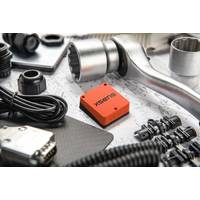
Xsens Announces New OEM Inertial Measurement Unit
kit or an external transceiver.Xsens has integrated a new generation of sensing components in the Avior, as well as advanced analog filtering for higher stability and noise reduction, resulting in substantially better performance compared to the previous generation product. Heading accuracy is 1° RMS and roll and pitch accuracy is 0.2° RMS. Stability is also enhanced in the Xsens Avior: in-run bias stability in the gyroscope is 8°/hr, and accelerometer in-run bias stability is 15μg.Weighing 35.2g, the Xsens Avior is enclosed in a robust aluminum housing and has a rating of IP51 and
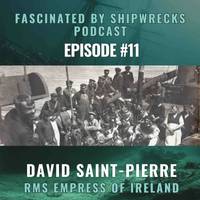
Fascinated by Shipwrecks Podcast Episode 11: Historian David Saint-Pierre
The RMS Empress of Ireland ocean liner sank in just 14 minutes in the St. Lawrence River near Rimouski, Quebec, Canada, on May 29, 1914, after a collision in the fog. More than 60 percent of her passengers died in the early hours. Almost immediately salvage efforts began.“For three and a half months, up till mid-September, they worked over the wreck of the Empress, bringing up bodies of the victims, bringing up the mailbags that they could reach, bringing up a large purser's safe, and salvaging also, 251 silver bars that the Empress carried," said David Saint-Pierre.In this episode

PODCAST: The Adriatic Affair - Finding the 1856 Le Lyonnais Wreck
, hosted by Kathy A. Smith, is dedicated to the People & the Science of Maritime Archaeology.The Adriatic Affair: Finding the 1856 Le Lyonnais Wreck“Of the people on the ship, 114 died and only 18 survived. Those that did lived through extraordinary conditions in the North Atlantic. Storms. Dehydration. Starvation. Bitter, freezing temperatures until they were eventually rescued by a passing ship.” - Jennifer SellittiOn November 2, 1856, the French passenger steamship, Le Lyonnais, sank after colliding with the American sailing vessel Adriatic off the coast of Nantucket.
Podcast: Fascinated by Shipwrecks; USS Monitor Digitally Reimagined
the Florida Keys, the Great Lakes, California, the Northwestern Hawaiian Islands, Alaska, and USS Monitor. He’s also participated in projects including a sunken Boeing B-29 Superfortress in Lake Mead, a Civil War blockade runner in Bermuda, USS Arizona, and was most recently part of an expedition to RMS Titanic. Tane’s projects have used technical diving, remotely operated vehicles (ROVs), autonomous underwater vehicles (AUVs), and manned submersibles. Watch Fascinated by Shipwrecks, Episode 5, here
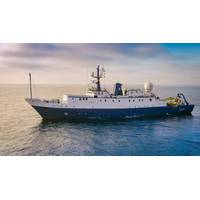
Ocean Exploration taps Leeway Marine to Manage Ship
The Ocean Exploration Trust (OET) has selected LeeWay Marine to step into the vital role of vessel manager.LeeWay will be responsible for crewing the vessel and overseeing the technical support and operational planning required to complete the critical missions scheduled for their Exploration Vessel Nautilus (E/V Nautilus).Established by American oceanographer Dr. Robert Ballard, best known for discovering “black smoker” hydrothermal vents and the final resting place of R.M.S. Titanic, OET makes ocean exploration possible, providing hands-on and remote learning opportunities for scientists
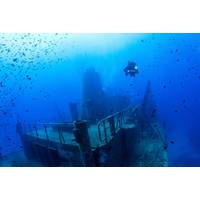
Shipwrecks Teem with Underwater Life, from Microbes to Sharks
have sailed the world’s oceans for thousands of years, but they haven’t all reached port. Researchers estimate that there are some three million shipwrecks worldwide, resting in shallow rivers and bays, coastal waters and the deep ocean. Many sank during catastrophes – some during storms or after running aground, others in battle or collisions with other vessels.Shipwrecks like the RMS Titanic, RMS Lusitania and USS Monitor conjure tales of human courage and sacrifice, sunken treasure and unsolved mysteries. But there’s another angle to their stories that doesn’t feature
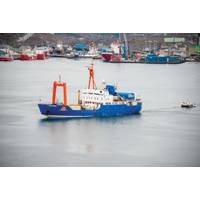
Op/Ed: We Cannot Let the OceanGate Tragedy Put a Pause on Ocean Exploration
In the wake of the catastrophic implosion of OceanGate’s Titan submersible during a dive on the wreck of RMS Titanic, the marine technology community continues to question how to prevent such a tragedy from recurring. An obvious option is to impose international safety regulations regarding such expeditions.For manned submersibles, there is merit in considering restrictions based upon technical criteria. OceanGate refused to obtain DVL certification for Titan. This was one of several safety concerns raised by the manned underwater vehicles committee of the Marine Technology
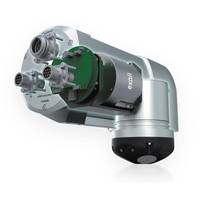
Exail Launches All-in-one INS and DVL System
velocity, and attitude information, even in challenging subsea environments, Exail said. This new all-in-one system is suited for subsea companies looking to maximize efficiency, and allows for higher levels of reliability, with a position accuracy of up to 0.02%TD and a heading accuracy of up to 0.01°RMS, according to the manufacturer."By merging the INS and DVL complementary measurements, the resulting navigation data becomes much more precise and accurate than either system used alone. The ability to connect external sensors such as pressure sensors through the satellite connectors available
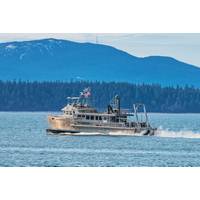
AAM Delivers Survey Vessel for NV5-Geodynamics
Shackleford’s primary IMU / multibeam reference systems, and a network of discrete benchmarks set within the vessel’s reference frame allowing accurate and repeatable lever arm calculations to all survey sensors. Coordinate Uncertainty Analysis of the final DimCon survey establishes an overall RMS of 0.0001 meters between all established points within the network.“To achieve the highest level of data accuracy day in and day out, our model over the last two decades is simple: we consider the boat as a precision survey instrument, purpose built for the specific survey environment and then
 February 2026