Caribbean-Led Expedition Explores Deep Sea Offshore Trinidad and Tobago


-
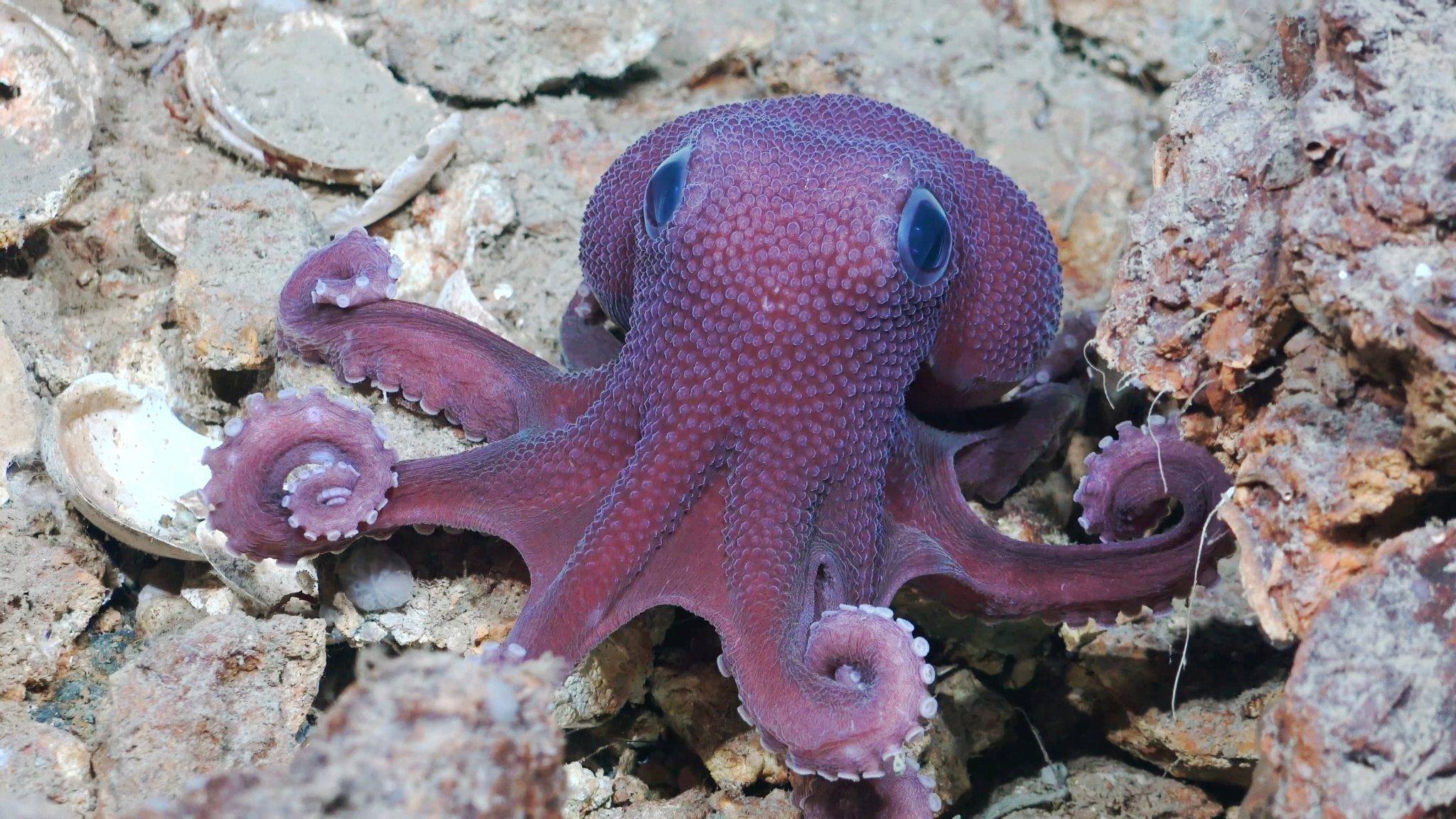
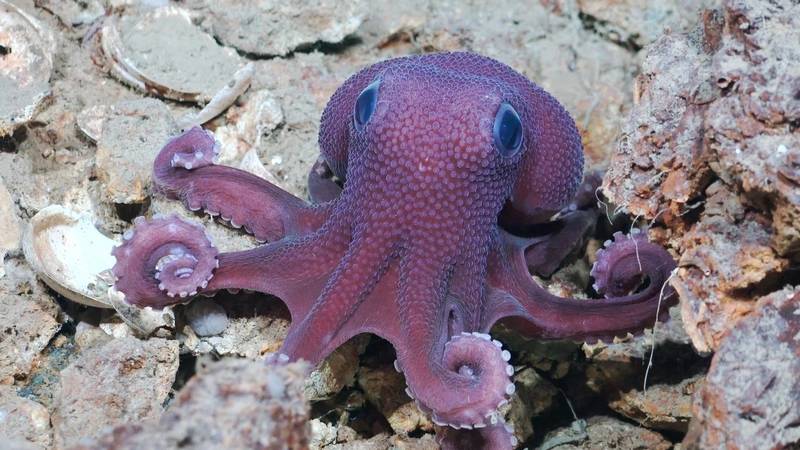 A Graneledone octopus, a suspected new species, moves across the seafloor during a deep-sea ocean expedition off the coast of Trinidad and Tobago. This species was first observed during an expedition Dr. Diva Amon (SpeSeas) participated in 2014, but was not confirmed or collected until this mission. Researchers made dozens of other discoveries on the trip, including at least 20 suspected new species, three of which may be new genera. © ROV SuBastian / Schmidt Ocean Institute
-
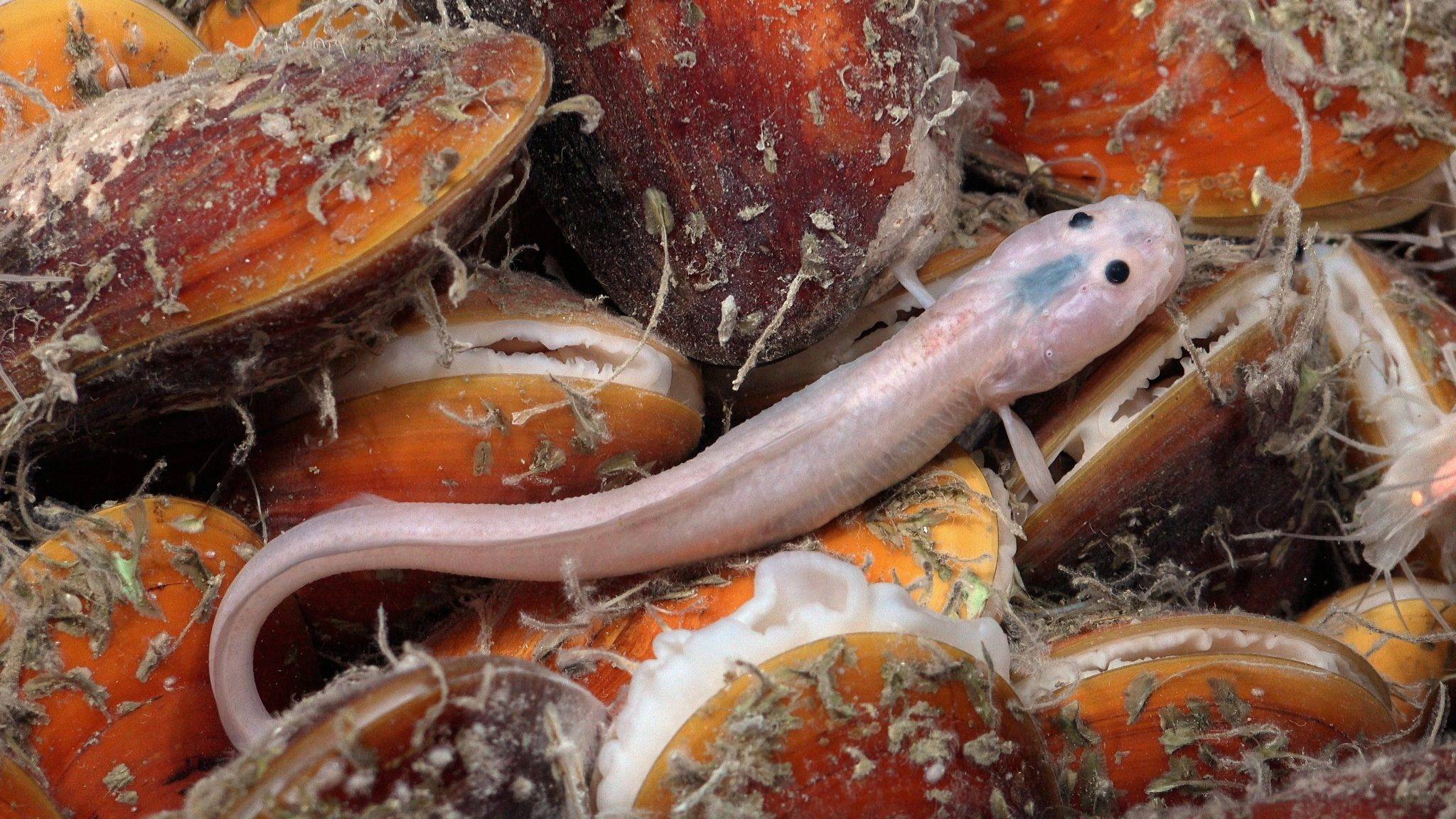
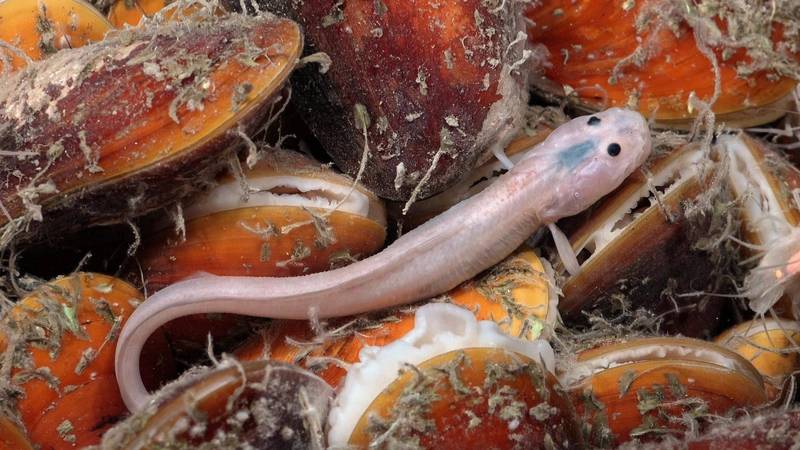 An eelpout (Pachycara caribbaeum) lies on a bed of chemosynthetic mussels (Gigantidas childressi) off the coast of Trinidad and Tobago. Ninety-three percent of Trinidad and Tobago lies below recreational scuba depths, placing its largest ecosystems in the mesophotic zone (between 30 and 199 meters) and the deep ocean. The geological setting of the two islands is ideal for supporting chemosynthetic habitats. © ROV SuBastian / Schmidt Ocean Institute
-
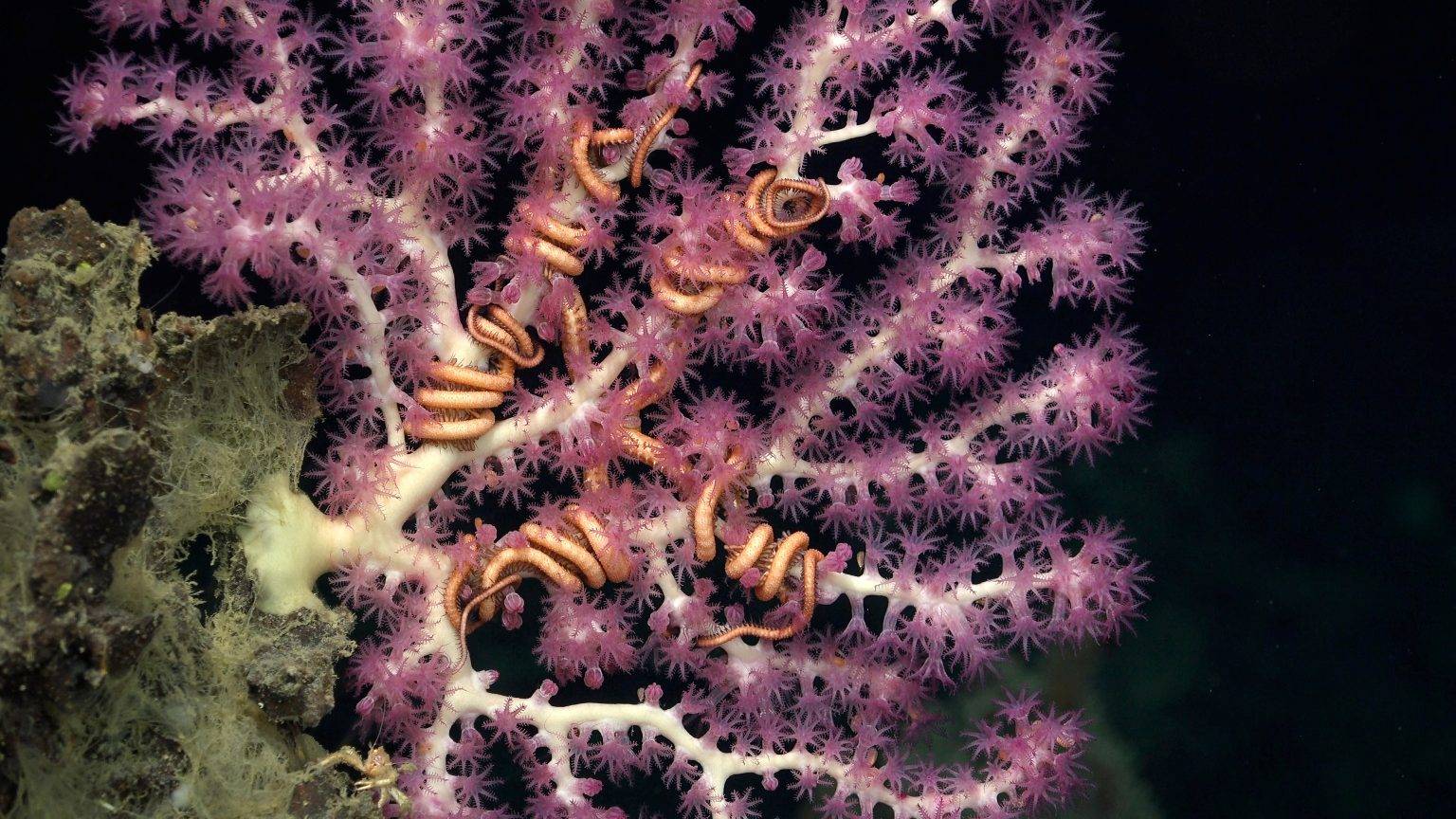
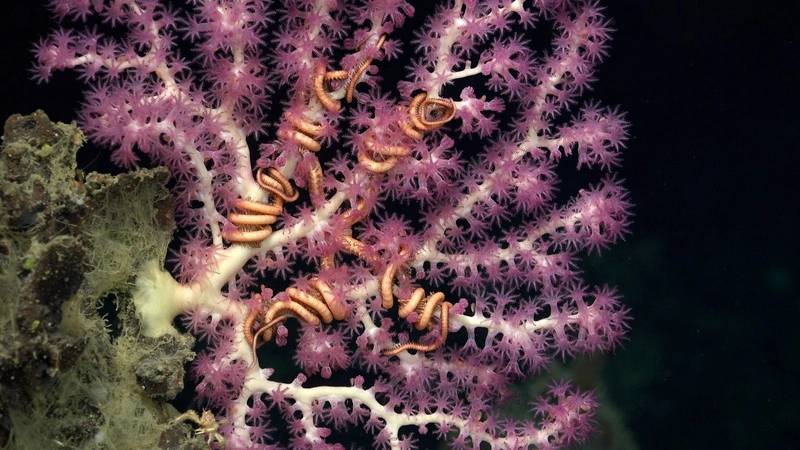 Symbiotic brittle stars cling to a deep-sea coral off the coast of Trinidad and Tobago. A research team led by marine biologist Dr. Diva Amon (SpeSeas), composed largely of Trinbagonian scientists, surveyed the island nation’s deep-water territory to document rare ecosystems and guide local conservation efforts. © ROV SuBastian / Schmidt Ocean Institute
Marine scientists from Trinidad and Tobago recently conducted the first locally led and most comprehensive deep-sea survey of the islands’ surrounding ocean during an expedition aboard Schmidt Ocean Institute’s R/V Falkor (too). During the month-long expedition in July, the team located over 25 active cold seeps, discovered 20 suspected new species, and mapped approximately 13% of the country’s marine territory.
The potential new species include an octopus first discovered during a 2014 expedition, in which the expedition’s Chief Scientist, Dr. Diva Amon, participated. The scientists did not have the required data to confirm whether it was a new species in 2014, but will be able to confirm this with the data collected on the latest expedition.
They also discovered corals, carnivorous sponges, and squat lobsters, among other animals. Over 700 specimens were collected, all of which will be housed at the Zoology Museum at the University of the West Indies, St. Augustine, in Trinidad and Tobago, increasing the size of the museum’s deep-sea collection twelve-fold.
“As the first locally led deep-sea expedition in Trinidad and Tobago’s history, these discoveries are proof that Caribbean scientists can uncover our own deep-sea backyard,” said Amon, who also serves as co-director of the non-profit SpeSeas. “Every new discovery we make, whether ecosystem, species or behavior, deepens our understanding of what’s at stake and strengthens our ability to be true stewards of this largely unseen but critical part of our country.”
Over 11,335 square kilometers of Trinidad and Tobago’s uncharted seafloor was mapped. The scientists used this data to locate 219 bubble streams, indicators of possible cold-seep sites. Powered by chemical energy such as methane bubbling from the ocean floor, cold seep ecosystems support marine life—including mussels, clams, and tubeworms—through chemosynthetic bacteria rather than sunlight.
The team used the bubble streams to visually confirm 25 cold seep ecosystems with Schmidt Ocean Institute’s remotely operated vehicle (ROV), SuBastian. The largest cold seep is half an acre, less than one-third the size of a World Cup football field, and covered in mussels and tubeworms. All the data collected, from mapping to biological data, will contribute to future marine governance and spatial planning efforts within Trinidad and Tobago, including the establishment of marine protected areas, said Amon.
The team also tested a novel cryoprotectant for preserving living animal tissues. The cryoprotectant freezes tissue without damaging it, as is common with other deep-freezing methods like liquid nitrogen, ensuring that collected specimens retain their biological integrity for future research.
Other encounters on this expedition included a rare manta ray fall – a Mobula carcass resting on the seafloor – providing food for deep-sea animals such as crabs and worms. They also collected high-quality footage of a black swallower fish with a distended stomach, a natural phenomenon that occurs after the fish eats meals much larger than itself.
At least 54 species that had never been observed before in the country’s waters, including ghost sharks and zombie worms, were seen. Amongst all of the deep-sea discoveries was evidence of human-made trash, a reminder that places where humans have never been still bear our impacts, said Amon.
The scientists also engaged with the public before and during the expedition to raise awareness of the deep sea among local and Caribbean residents. They engaged over 2,000 people via Schmidt Ocean Institute’s Ship-to-Shore program, from young students to non-profit organizations, universities, and government officials, and over 1,000 people through in-person visits to schools and universities before the expedition.



 August 2026