
Scientists Demonstrate Technology Reuse Program for Marine Monitoring


-
 © Bazaruto Center for Scientific Studies
-
 © Bazaruto Center for Scientific Studies
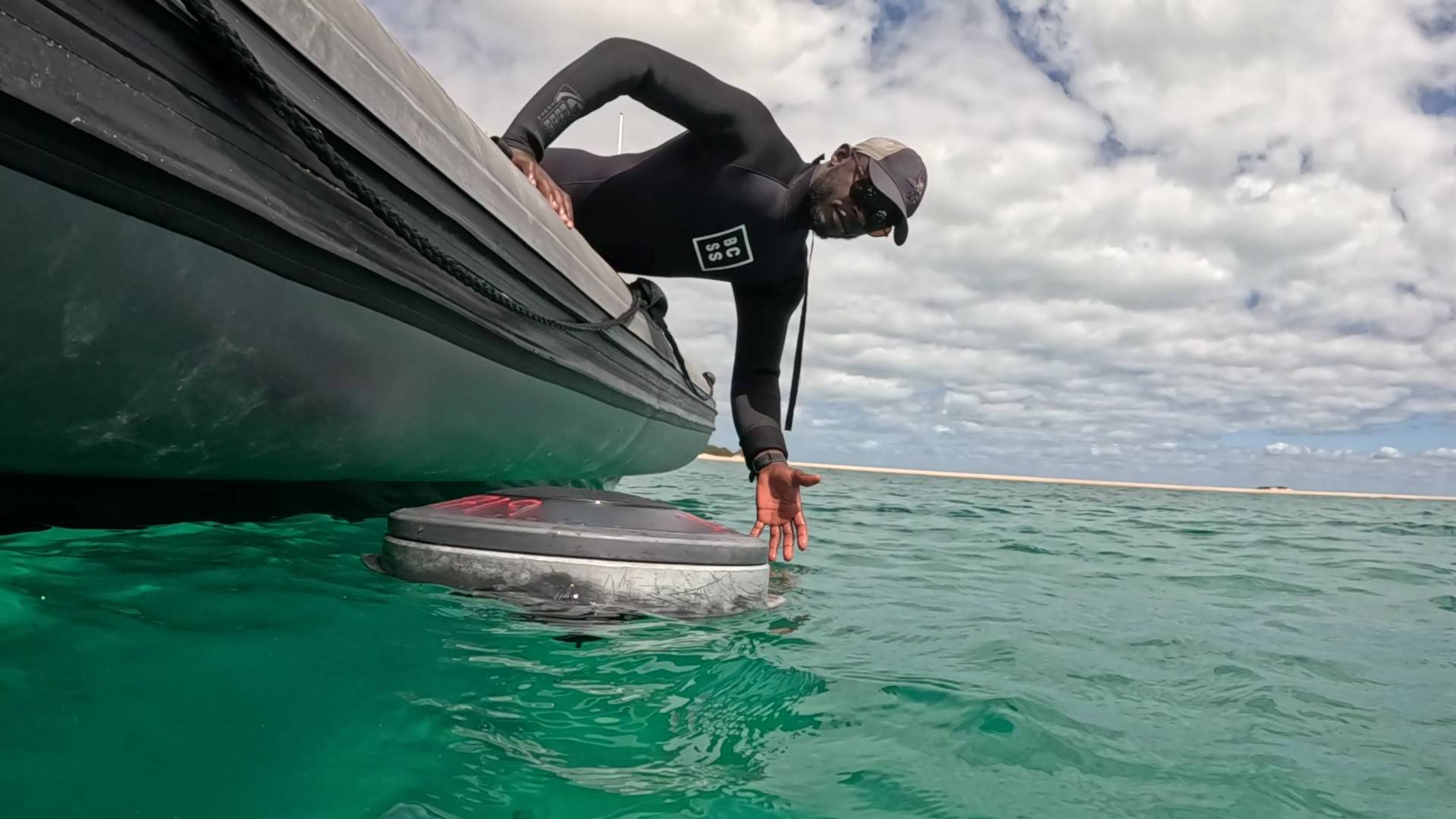
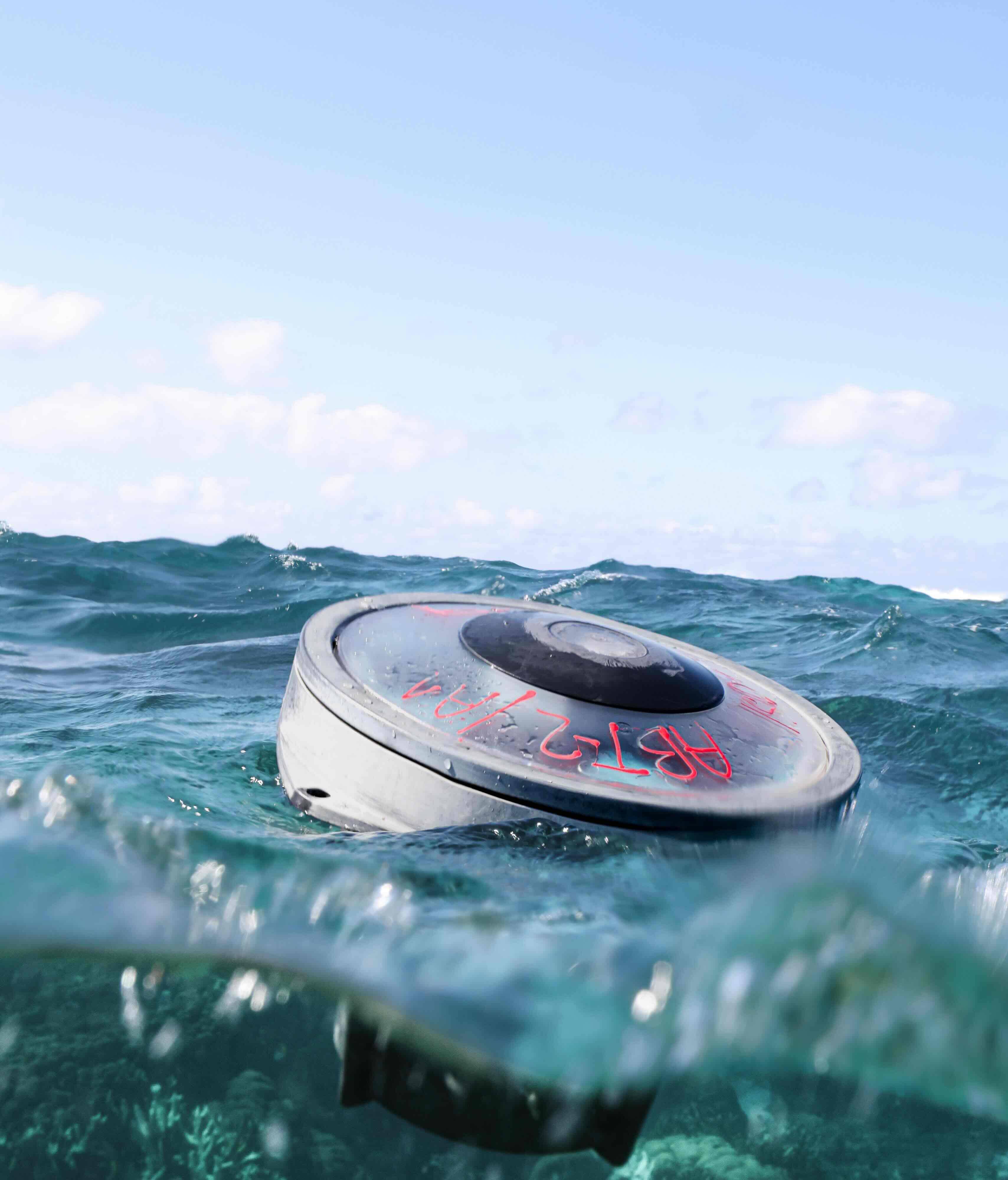
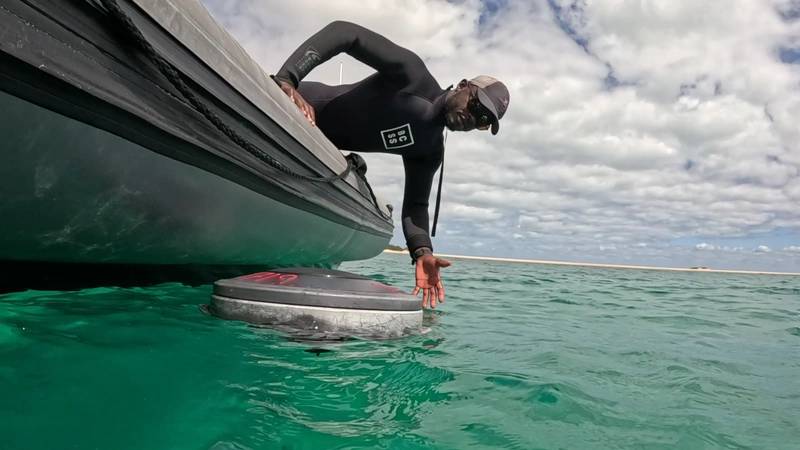
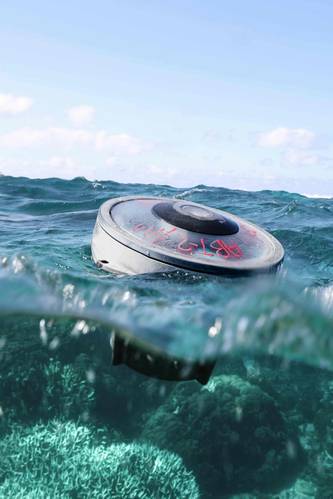
A scientific breakthrough is giving smart buoys originally developed to locate fish for the global tuna industry a second life within an Ocean Observatory, demonstrating how industrial technology transfer and reuse can transform marine ecosystem monitoring, advance ocean conservation and sustainability, and open new opportunities to measure, monitor and verify conservation interventions across the global blue economy.
A new study published today in Scientific Reports by scientists at the Bazaruto Center for Scientific Studies (BCSS) Ocean Observatory and Spanish ocean-technology companies Satlink and Universal Plastic (UP) is believed to be the first to show how repurposed fishing echosounder buoys can be integrated into an ocean observatory for marine conservation monitoring. The research represents a proof of concept for converting existing industrial technology into scalable marine conservation infrastructure, creating opportunities for accessible, frequent and geographically distributed monitoring across the world's oceans.
Beyond monitoring marine life, the technology could eventually provide a new source of environmental evidence for assessing marine protected area performance, measuring fisheries and habitat restoration outcomes, supporting conservation investment and developing monitoring, reporting and verification (MRV) systems for the growing blue economy. Such applications would require longer deployments, independent biological calibration and standardized monitoring protocols.
The global tuna industry represents a market worth approximately $45 billion annually, according to the Food and Agriculture Organization of the United Nations (FAO). This industry uses satellite connected smart-buoys attached to their drifting Fish Aggregating Devices to monitor the location of these devices and enhance traceability. These smart buoys carry a number of sensors, such as built-in echosounders, which then feed valuable data back to the fleets using them, by satellite. While this data has typically been tailored to use in fishing applications, its potential also extends into science and ocean knowledge.
Technology transfer for a sustainable ocean
Project ReCon, Satlink's circular-economy program, gives these end-of-use fishing buoys a second purpose. Launched in Australia in 2022, the initiative now reaches 25 countries and territories and more than 75,000 km of coastline, with 25 fishing companies taking part. BCSS became a member in 2024 and is now ReCon's partner across five East African countries.
Satlink provides the smart-buoy technology, acoustic processing, satellite connectivity and software infrastructure, while its Project ReCon enables the recovery and reuse of industrial fishing equipment for scientific and environmental applications. BCSS Ocean Observatory contributes the scientific expertise and infrastructure to integrate these technologies into its long-term Ocean Observatory, bridging industrial fisheries and marine conservation.
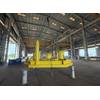
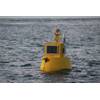
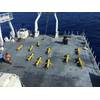
More than 20 Satlink buoys were recovered along the coastlines of South Africa, Mozambique, Tanzania, Kenya and Madagascar, with support from local communities, and refurbished at the BCSS research station on Benguerra Island. During June and July 2025, the team deployed buoys across coral reefs, seamounts, pinnacles and a shelf test site in the Bazaruto Archipelago, combining fixed stations and controlled drifting surveys. Their echosounders monitored relative acoustic biomass signals down to 115 meters, transmitting observations via satellite in near real-time.
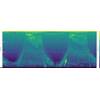
The study generated 393 acoustic records and 1,281 depth-layer observations, revealing consistently 20–40% stronger nighttime acoustic signals. These were integrated with more than 20 environmental variables from the BCSS Ocean Observatory and independent scuba surveys documenting 14–20 marine megafauna taxa per main site.
Although the acoustic signals were not independently calibrated to absolute fish biomass or individual species, the findings demonstrate a new monitoring capability and establish a scientific foundation for scalable, long-term ocean-observation networks supporting marine conservation and future environmental verification.
Expanding marine monitoring from local observatories to global networks
This approach could complement research vessels, underwater gliders and satellites, helping to fill the gaps between more occasional surveys. In the same way that the global Argo float network transformed our understanding of ocean temperature and salinity, networks of repurposed smart buoys could help make biological monitoring more continuous and accessible.
The researchers envision a modular monitoring framework in which repurposed smart-buoys operate alongside other scientific technologies, including underwater hydrophones, remotely operated cameras, environmental sensors, biodiversity surveys and potentially future species-identification systems. Integrated together, these technologies could collect complementary information on marine biomass, biodiversity, habitat conditions, underwater soundscapes and environmental change.
The system could be expanded from individual reefs and marine protected areas to island archipelagos, national waters and ultimately regional ocean-observation networks. Its reliance on existing industrial hardware, satellite communications and digital data infrastructure offers an opportunity to explore more cost-effective monitoring solutions, particularly in developing regions where conventional marine research infrastructure is limited.
The partnership between BCSS and Satlink provides an initial model for this expansion in the Western Indian Ocean, combining regional recovery networks with established local scientific infrastructure and a global ocean-technology provider.
Circular innovation, sustainability and the future of plastic pollution monitoring
The study was co-funded by Universal Plastic, a science and technology company based in Gijón, Spain, through the EU’s NextGenerationEU program (project SEDIA). Building on the proof of concept, researchers at BCSS are now exploring how repurposed buoy networks could support a wider range of marine monitoring, including plastic pollution alongside marine life and ocean conditions. Working with BCSS, Universal Plastic is exploring how expanded sensing capabilities, and the integration of complementary technologies could support additional forms of ocean observation, including marine plastic pollution monitoring and the assessment of environmental pressures.
The BCSS Ocean Observatory has collected continuous oceanographic, weather and marine-life observations in the Bazaruto Archipelago since 2017 and provides open-access scientific datasets. Its predominantly Mozambican team operates through an innovative Resort-to-Research (R2R) partnership with Kisawa Sanctuary, connecting long-term marine science, conservation, community engagement and sustainable tourism.
The smart-buoy study adds a new technological dimension to this long-term research platform, demonstrating how collaborations between marine technology companies, scientific institutions and sustainability-focused enterprises can generate scientific knowledge alongside potential environmental and economic applications.




 August 2026