Teledyne Valeport Sensors Support Water Quality Monitoring Pilot
© Teledyne Valeport
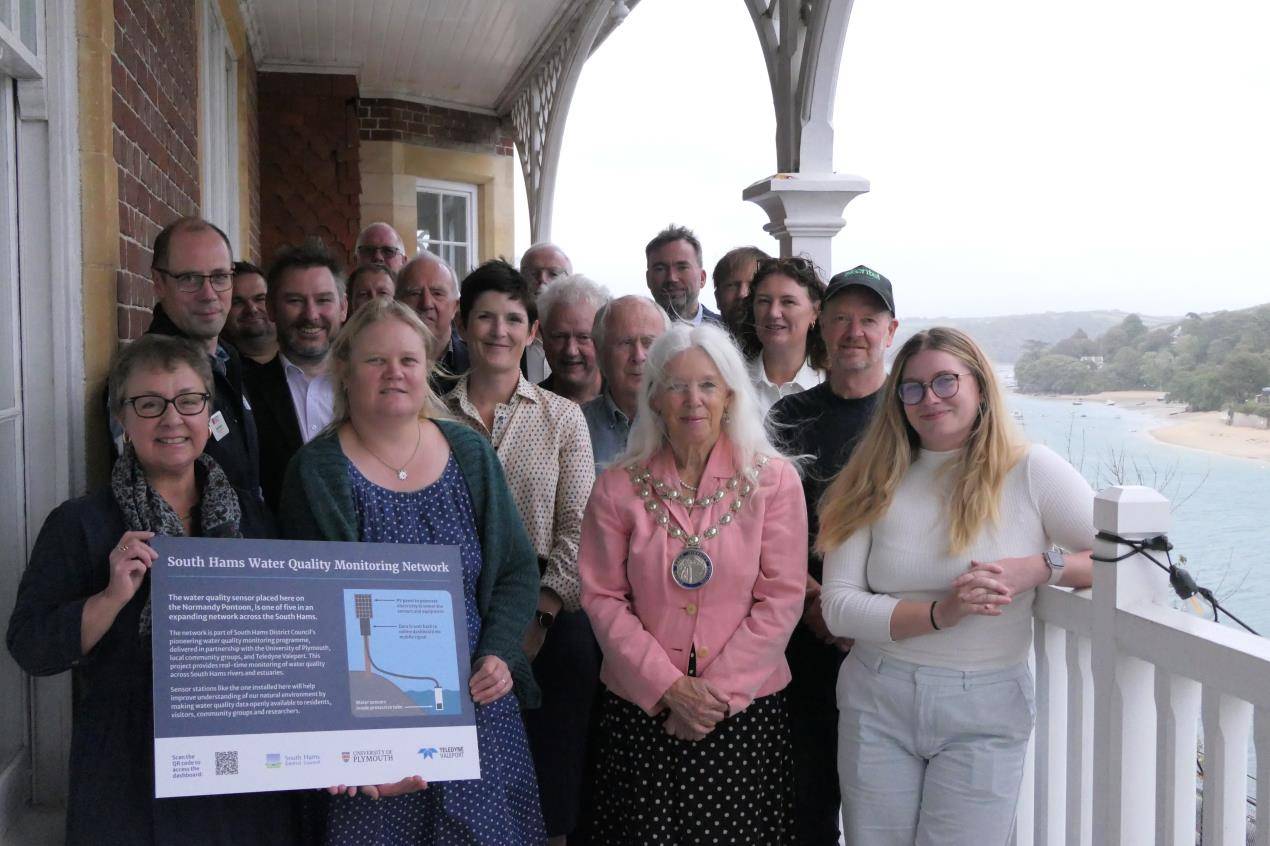
Teledyne Valeport, designer and manufacturer of hydrographic and environmental monitoring instruments, is supporting South Hams District Council (SDHC) with a new water quality monitoring pilot that will give residents and water users access to real-time information about the conditions of the rivers and estuaries across the South Hams. As the project's sensor technology partner, Teledyne Valeport has helped specify, deploy and evaluate the monitoring systems used throughout the pilot.
Launched on October 9, 2026, the pilot brings together four monitoring stations across the district, with data from the sites being made available to the public through an online dashboard. The aim is to make information about local water quality more accessible and easier for the public to understand.
The four initial monitoring stations are located at Dartington Pontoon on the River Dart, Sequers Bridge on the River Erme, Hatch Bridge on the River Avon, and Normandy Pontoon on the Salcombe Kingsbridge Estuary.
Teledyne Valeport has played a key role in defining the monitoring requirements for each location, supplying the sensor technology and technical expertise needed to develop a robust, long-term monitoring solution tailored to local environmental conditions.
Three of the monitoring stations use a core configuration of a miniCT - a conductivity and temperature sensor, alongside Hyperion optical sensors measuring fDOM, tryptophan, and turbidity. The fourth uses the same configuration, but with the addition of pH monitoring. Conductivity, temperature and pH help identify environmental shifts in the water, while turbidity, fDOM and tryptophan provide indicators of suspended material, organic matter and potential wastewater influence within the waterways.
Together, these measurements provide a more detailed picture of changing water quality conditions. The flexibility of the system also means additional parameters could be monitored in future, depending on the requirements of individual sites.
The first sensors were installed in September 2025. The project has acted as a long-term field trial, providing operational feedback that would be difficult to replicate through laboratory testing alone.
The monitoring stations have operated continuously through a wide range of environmental conditions, including severe winter weather during late 2025. This has provided valuable insights into sensor performance, system resilience, deployment methods and power management in challenging field conditions.
Lessons learned during the deployment have informed refinements to both the monitoring systems and sensor technologies, helping improve long-term reliability for future environmental monitoring projects.
The government funded project brings together several other partners. Skentel is providing the stations’ power and communications infrastructure, including mains, solar and battery power, as well as 4G telemetry. It also provides and hosts the online dashboard which will be made available to the public.
The University of Plymouth has contributed to sensor and site selection, data analysis and installation of the equipment, as well as the development of how data is presented through the dashboard. Feedback from the project team and user groups has helped inform how the information is displayed, with the aim of making the data accessible to the public.
The duration of the pilot is currently dependent on future government funding to maintain the monitoring stations.
The public online dashboard, the project will give residents, water users and other interested groups a clearer picture of the condition of the district’s rivers and estuaries. The approach could also provide a model for how similar monitoring systems could help communities access more timely water quality information elsewhere in the UK.





 August 2026