
Coast Guard Wraps Up Seasonal Great Lakes USV Evaluation
Credit: Adobe Stock/Selene Miller
The U.S. Coast Guard is concluding its scheduled 2026 seasonal evaluation of six Saildrone Voyager Unmanned Surface Vehicles (USVs) on the Great Lakes this week ahead of forecasted winter icing conditions. Following the completion of this seasonal evaluation, the Coast Guard intends to conduct an additional test and evaluation period in the spring of 2027 as part of a service-wide effort to evaluate how autonomous technologies enhance Coast Guard missions and assist operators.
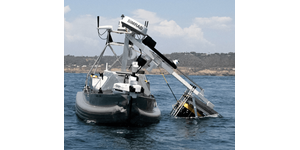
Deployed between April and November 2026 across the Great Lakes, the six 33-foot, wind- and solar-powered vessels provided Coast Guard command centers and boat stations with real-time offshore weather data and operational insight across thousands of square miles of open water.
Rather than replacing Coast Guard personnel, autonomous surface vessels act as force multipliers that assist in Coast Guard mission execution so cutters, boats, and aircraft can focus on high-priority lifesaving and law enforcement missions:
- Real-Time Weather and Wave Forecasting for Search and Rescue: Weather on the Great Lakes can turn dangerous in minutes. By measuring wind speed, wave height, water temperature, and barometric pressure out on open water, these floating sensors tell Coast Guard rescue crews what conditions a stranded boater or capsized kayaker is facing before a rescue boat even leaves the pier.
- Spotting Emergencies Faster Across 94,000 Square Miles: Understanding normal seasonal boating and commercial shipping traffic on the Great Lakes helps Coast Guard watchstanders immediately identify when something is out of place—such as a disabled vessel drifting toward shoals, a navigation hazard, or unsafe activity after dark.
- Protecting Local Fisheries: Maintaining visibility along the international maritime boundary line helps fisheries enforcement officers ensure commercial fishing vessels remain on their respective side of the border, protecting local sportsmen, charter captains, and domestic fisheries.
- Helping Human Crews Work Smarter Alongside Canadian Partners: Instead of resourcing a Coast Guard boat and crew to observe open water or check weather conditions miles offshore, a wind-powered sensor sailboat handles routine observation so Coast Guard men and women are ready to launch the moment someone calls for help.
Each 33-foot Saildrone Voyager is propelled by the wind with an auxiliary 4 kW electric motor and is equipped with marine radar, an Automatic Identification System (AIS) transceiver, meteorological instruments, and an optical camera.
To guarantee safe navigation around recreational and commercial vessels, every USV is remotely piloted 24/7 by human operators in mission control centers distributed across three time zones.
This Great Lakes deployment builds upon previous Coast Guard autonomous evaluations in the Southeast, Southwest, and Northeast districts, as well as historic capital investments to modernize the Service's fleet and technology. By testing autonomous systems across various geographic environments, the Coast Guard ensures its operating force remains agile, capable, and responsive to evolving mission demands.



 August 2026