CCGS Amundsen Wraps Up CASCADES Research Program
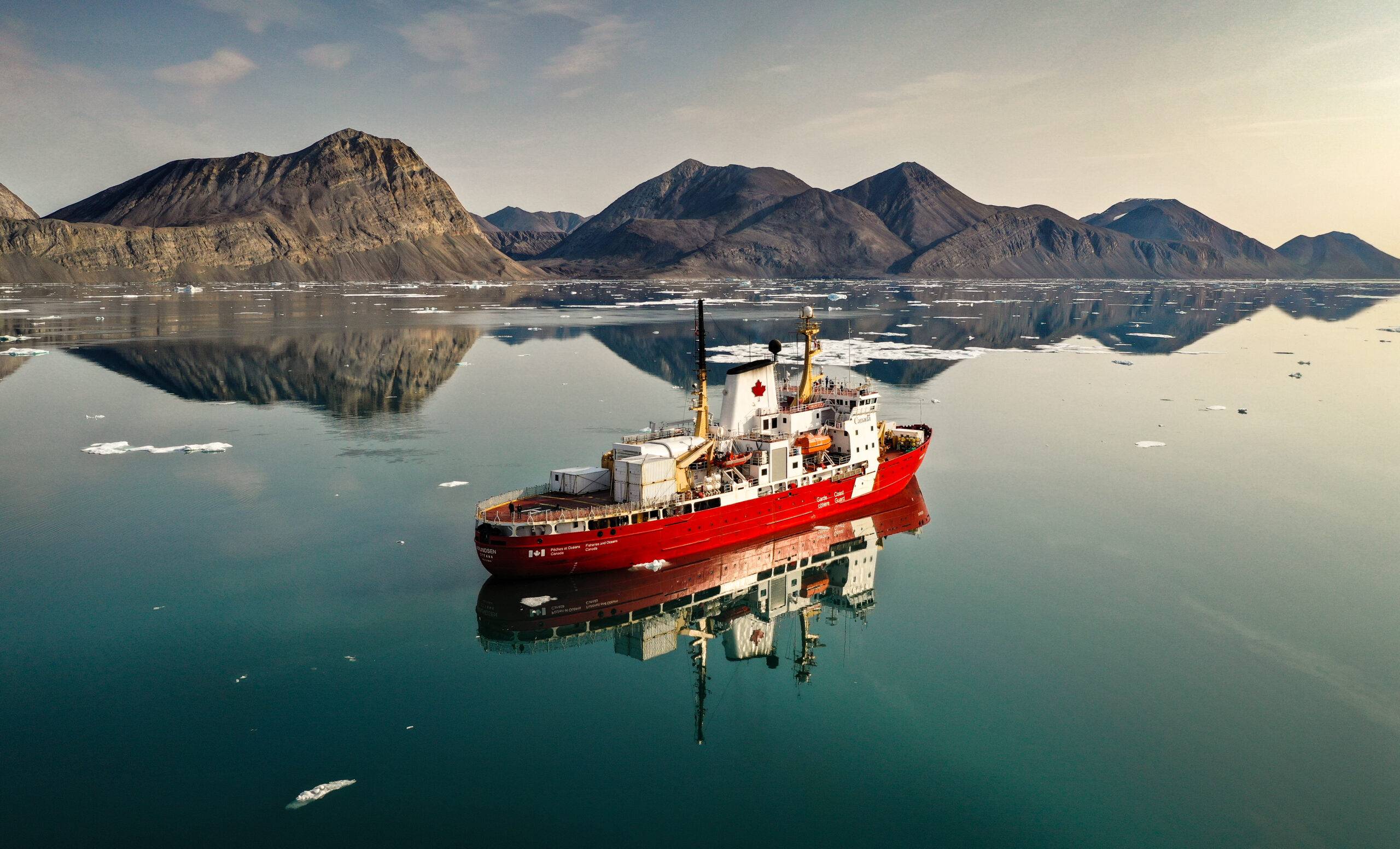
© Elie Dumas-Lefebvre, Amundsen Science
The Canadian research icebreaker CCGS Amundsen is preparing to return to the Port of Québec City, carrying scientists who took part in the second phase of the CASCADES research and expedition program. To mark the occasion, the Institut nordique du Québec (INQ), Amundsen Science and their partners, the Consulate General of France in Quebec City, the Embassy and Consulate of Switzerland, and the Government of Québec, are inviting members of the media to visit the Canadian Coast Guard wharf in Québec City on November 25 to get a behind-the-scenes look at this scientific mission.
The event will provide an opportunity to meet the scientists on board and learn more about the research conducted as part of the international CASCADES Expedition, which brought together research teams from Canada, Switzerland, France and Greenland.
This year, more than 200 scientists from nearly 50 Canadian and international institutions took part in the full expedition aboard the CCGS Amundsen. Over 139 days of scientific operations in the Canadian Arctic, the Labrador Sea and Greenlandic waters, a wide range of activities enabled the collection of data and samples of water, sediment, ice and marine biological species.
Among the scientific initiatives conducted aboard the Amundsen, the CASCADES Expedition aims to improve our understanding of changes affecting glaciers and sea ice in Greenland, as well as the impacts of these changes on the ocean and coastal communities. Conducted aboard the Amundsen research vessel, the expedition brought together nearly 80 scientists and 13 research projects from Canada, Switzerland, France and Greenland over 56 days at sea, divided into two phases. The first phase, carried out in August 2026, focused on summer melting in Baffin Bay and along Greenland's west coast, while the second phase, which began on October 29, focuses on sea ice formation in western Baffin Bay.
While the vessel's return marks the end of field operations, it also ushers in a new phase of collaboration as research teams move forward with data analysis. The teams will continue their joint efforts to deepen our understanding of Arctic transformations. In the face of global climate challenges, it is through collective efforts and shared expertise that the knowledge needed to guide decision-makers toward choices informed by science and local knowledge can be developed.
Coordinated jointly by the Institut nordique du Québec (INQ), the Swiss Polar Institute (SPl) and the French Polar Institute Paul-Émile Victor (IPEV), the CASCADES Expedition received support from Amundsen Science and the Canadian Apogée program Transforming Climate Action (TCA).
It is also an endorsed action of the United Nations Decade of Ocean Science for Sustainable Development.



 August 2026