Coast Guard Wraps Up Seasonal Great Lakes USV Evaluation
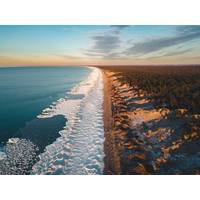
miles offshore, a wind-powered sensor sailboat handles routine observation so Coast Guard men and women are ready to launch the moment someone calls for help.Each 33-foot Saildrone Voyager is propelled by the wind with an auxiliary 4 kW electric motor and is equipped with marine radar, an Automatic Identification System (AIS) transceiver, meteorological instruments, and an optical camera.To guarantee safe navigation around recreational and commercial vessels, every USV is remotely piloted 24/7 by human operators in mission control centers distributed across three time zones.This Great Lakes deployment
From Radar Returns to Safe Decisions: Radar Processing for Maritime Autonomy
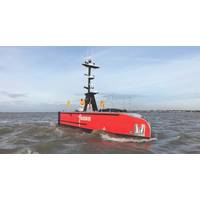
operator needs the maritime picture presented as clearly as possible to aid decision-making and reduce cognitive load. In both cases, a suite of sensors, with data processed and fused into usable information, is ideal.Why radar remains importantAn autonomous vessel may carry cameras, an Automatic Identification System (AIS) receiver, Global Navigation Satellite System (GNSS) receivers, LiDAR, sonar, and other sensors. Cameras can help identify an object, while AIS can provide a transmitting vessel's declared identity, position, course, and speed. However, neither alone provides a complete picture

Seasats Completes First Autonomous Transit of the Taiwan Strait
monitoring surface vessel traffic. The Lightfish encountered multiple Chinese warships, including a People's Liberation Army Navy (PLAN) Type 056 corvette.These vessels were operating well within Taiwan's exclusive economic zone (EEZ) without transmitting their identity via the Automatic Identification System (AIS). The Lightfish was able to track these vessels and capture images confirming their type and origin."This isn't our vessel's first run-in with a Chinese warship," says Seasats CEO Mike Flanigan, "but the location and timing make this encounter notable. It'
Study Identifies "Collision Map" For Birds, Boats to Support Conservation Efforts
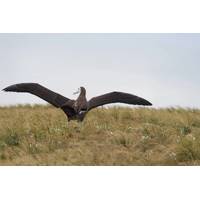
– males and females, juveniles and adults, breeding and non-breeding individuals – were fitted with tiny satellite transmitters. The full scope of the birds’ movements across the vast Southern Ocean was then overlaid with precise fishing vessel locations from the Automatic Identification System (AIS), which tracks commercial ships. This showed where birds and boats crossed paths – the basic “collision map.” A third layer was then added: oceanographic data. PML’s expertise in Earth observation was used to examine how physical ocean features shape

Teledyne Expands Maritime Tech Solutions Portfolio with Latest Acquisition
;s Raymarine, FLIR Marine, ChartWorld and Teledyne CARIS brands, broadening the group’s maritime technology solutions.Based outside of Linköping Sweden, the company will market its products and solutions as FLIR TransponderTech.The brand will continue developing and delivering Automatic Identification System (AIS), VHF Data Exchange System (VDES), and Global Navigation Satellite System (GNSS) technologies for civil and military customers in shipping, marine traffic, airborne and space segments. “We are delighted to welcome the TransponderTech team to the Teledyne family. From
Teledyne to Acquire TransponderTech from Saab
Teledyne Technologies Incorporated announced that it has entered into an agreement to acquire the TransponderTech business from Saab AB. The acquisition includes a portfolio of connected commercial maritime products, including Automatic Identification System (AIS), VHF Data Exchange System (VDES), and Global Navigation Satellite System (GNSS) technologies.Based in Sweden, TransponderTech provides class-leading, SOLAS (Safety of Life at Sea)-certified communications and navigation solutions for commercial maritime, military, and airborne applications. The company is known for its high quality, accurate

Saildrone: USVs Have Only Scratched the Surface of Maritime Security
at Saildrone exceeded the capabilities of the Explorer due to power or speed or size constraints. or all three."Next came Voyager, a 10-meter diesel-hybrid USV that serves as the primary platform for maritime security and shallow water mapping. It features a high-powered radar, automatic identification system (AIS) and a pan-tilt-zoom flare camera. It can also be equipped with shallow-water multi-beam sonar and a sub-bottom profiler. "That's what really gives us that large area coverage; we can conduct geophysical surveys, safety of navigation, offshore energy projects, and subsea
Struggles to Secure Baltic Sea Dominates NATO's 'Freezing Winds '24'
, Commander Pal Bratbak, said onboard the Weilheim, stressing the growing power of technology.NATO's Center for Maritime Research and Experimentation in Italy is launching software that will combine private and military data and imagery from hydrophones, radars, satellites, vessels' Automatic Identification System (AIS) and fibres with Distributed Acoustic Sensing (DAS), which private telecom companies use to localise cuts in their cables."If we have a good picture of what's going on, then we can deploy units to verify what the system tells us," Bratbak said.German Lieutenant-General
Maritime Risk Symposium 2024 – Great Power Competition and Gray Zone Engagement
conflict, making attribution and response difficult. Artificial intelligence (AI) offers promising solutions to enhance the detection, analysis and mitigation of gray zone cyber threats in the maritime sector. This panel will explore the potential of AI to counter tactics like GPS spoofing, Automatic Identification System manipulation and attacks against port infrastructure. It will examine how machine learning-based systems can identify anomalies in network behavior, detect subtle patterns associated with gray zone activities and automate threat intelligence analysis. The panel will also address the
 August 2026