LARS: Not Just a Simple Handling Tool
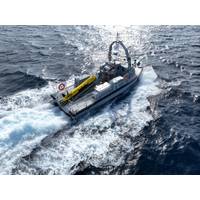
KATFISH autopilot will bring the KATFISH up to a safe depth below the vessel. These autonomous safety features built into our LARS allow for safe remote operation of the systems over low bandwidth data links.”DeepOcean's patented LARS has been specifically developed for the 24-meter long USV Challenger. Unlike conventional moonpool or A-frame systems used on larger vessels, it launches and recovers a ROV over the stern while the vessel remains in motion. The LARS consists of an electrical winch, a sheave wheel trolley, kicker and rear hatch. When launching, the ROV is simply pushed in. When recovering
DeepOcean Bolsters Subsea Robotics Fleet with Eight New ROVs
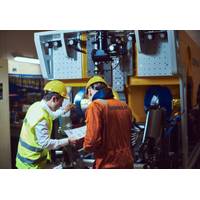
mobilized on board the newbuild REM Ocean in 2027. In addition, the agreement includes options for eight electric WROVs and five observation ROVs.DeepOcean’s first electric work class ROV was delivered early May from Argus Remote Systems and will be installed on the uncrewed surface vessel, USV Challenger.Newbuild USV Challenger Getting Ready for Remote-Controlled Subsea WorkThis is a fully electric WROV with hydraulic capabilities that is capable of operating down to 1,500 meters water depth, plus a sizeable tool package that will allow the ROV to perform a wide range of subsea operations, operated
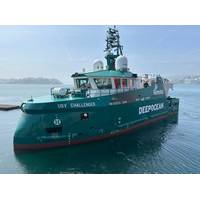
Newbuild USV Challenger Getting Ready for Remote-Controlled Subsea Work
DeepOcean, with its joint venture partners Solstad Offshore and Østensjø Rederi, has taken delivery of a newbuild uncrewed surface vessel (USV), which will be used for subsea survey, inspection, maintenance and repair (IMR) work across offshore energy industries.The vessel - named USV Challenger - will shortly arrive at DeepOcean’s subsea base at Killingøy in Norway, where it will undergo trials of its launch and recovery system (LARS) for the onboard ROV.The USV Challenger is 24 meters long and 7.5 meters wide. It is equipped with a hybrid diesel-electric propulsion system
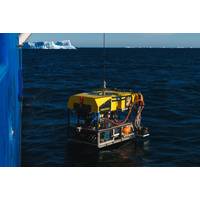
Study of Newly Exposed Sea Floor Reveals Flourishing Ecosystems
and geological samples, the team deployed autonomous gliders to study the impacts of glacial meltwater on the physical and chemical properties of the region. Preliminary data suggest high biological productivity and a strong meltwater flow from the George IV ice shelf.The expedition was part of Challenger 150, a global cooperative focused on deep-sea biological research and endorsed by the Intergovernmental Oceanographic Commission of UNESCO (IOC/UNESCO) as an Ocean Decade Action
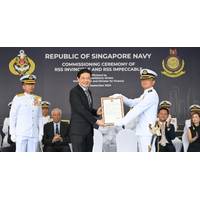
Singapore Boosts Undersea Might with Two New Submarines
which experts said would range beyond the waters of the tiny city-state to keep tabs on the region.The country's fifth and sixth submarines, the Invincible and the Impeccable, were ordered from Germany's ThyssenKrupp Marine Systems in 2013 in a 1-billion-euro deal, and join older Archer- and Challenger-class boats.They represent a technological step forward for Singapore's fleet, experts say, allowing the wealthy Southeast Asian nation to operate farther from shore using fewer sailors, and making its craft among the quietest in the region."They are an excellent force multiplier,"

MTS, SUT to Honor Marty Klein with Capt. Don Walsh Award for Ocean Exploration
, honoring his son’s memory and supporting future ocean professionals. Upon receiving the news of the award, Marty said, “I am humbled and honored. When I was a student at MIT, I read with fascination the Life Magazine cover story about the historic deep dive to 35,813 feet in the Challenger Deep/Mariana Trench by Jacques Piccard and Don Walsh in the Bathyscaph Trieste. Little could I know that three years later, just as I was beginning my career, the nuclear submarine USS Thresher would sink, the Trieste would be called from San Diego to assist the project, and I would become intimately
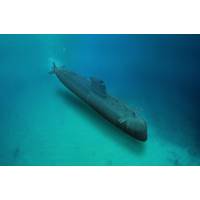
U.S. Revives Cold War Submarine Spy Program to Counter China
Beijing and its neighbors. China is also building a fleet of underwater and surface sea drones to scour for enemy submarines, the two people said.The Chinese push extends far into the Pacific. The state-run China Academy of Sciences said in 2018 it was operating two underwater sensors: one in Challenger Deep in the Mariana Trench, the deepest known point on earth; the other near Yap, an island in the Federated States of Micronesia. Though China says these sensors are used for scientific purposes, they could detect submarine movements near the U.S. naval base on Guam, a Pacific island territory
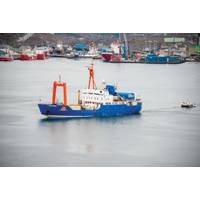
Op/Ed: We Cannot Let the OceanGate Tragedy Put a Pause on Ocean Exploration
this vehicle class in the SOLAS convention itselfAt the same time, we must ensure any international regulations acknowledge the stellar track record of both manned and unmanned ocean exploration. Record-setting explorer Victor Vescovo, for example, has completed 15 successful submersible dives to Challenger Deep in the DNV-certified submersible Limiting Factor, in addition to reaching all four of the ocean's 10,000+ meter deepest points. In the case of unmanned exploration, during my tenure with the National Oceanic and Atmospheric Administration’s (NOAA), I initiated the 2020 national strategy
They Say We Know More About the Moon Than About the Deep Sea. They’re Wrong
of visitorsAnother related and incorrect comparison is that more people have set foot on the Moon than have visited the deepest place on Earth.This statement is difficult to substantiate. “The deepest place on Earth” could refer to the Mariana Trench, or just the deepest part of it (the Challenger Deep, named for the British survey ship HMS Challenger).The bathyscaphe Trieste was the first crewed vessel to reach Challenger Deep, in 1960. US NavyNevertheless, at least 27 and as many as 40 or more people have visited the Challenger Deep as of early 2023. On the other hand, only 12 people have

 February 2026