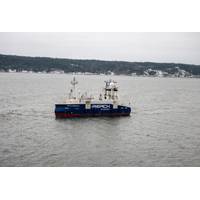
Reach Subsea Secures Equinor Contracts for Uncrewed Vessel Operations
Reach Subsea has secured two new contract call-offs from Equinor covering gas reservoir monitoring and subsea inspection, maintenance and repair (IMR) work on the Norwegian Continental Shelf.Both contracts will be carried out using the uncrewed surface vessel (USV) Reach Remote 1, the company said.The first call-off covers gas reservoir monitoring at the Troll field and includes options for additional survey work. The campaign will use Reach Subsea’s proprietary gWatch technology, which is deployed across several Norwegian gas fields.The second contract involves IMR work, including detailed
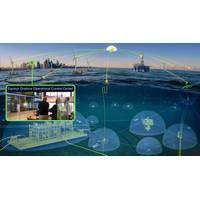
Hydromea, Equinor Achieve World’s First Wireless Broadband Data Transfer from Seabed to Cloud
Hydromea, together with Equinor, has announced the world’s first demonstration of real-time, high-bandwidth wireless data transmission from the ocean floor directly to the cloud. This milestone marks an advancement in subsea asset monitoring and the digitalization of the offshore energy sector.Hydromea’s SWiG-ready LUMA Free-Space Optical (FSO) devices successfully transmitted data from the seabed to Equinor’s cloud infrastructure using Equinor’s proprietary DEEPNET network. This is the first known instance where high volume of data collected at the bottom of the ocean can be
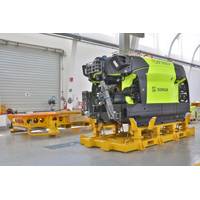
Saipem’s Underwater Drone Carries Out Autonomous Survey at Njord Field
without cables or surface vessel support.Hydrone-R Underwater Intervention Drone carried out the mission independently, contributing to seabed monitoring and the protection of marine ecosystems through the use of underwater robotics.The activity forms part of a 10-year contract signed in 2019 with Equinor, described as the first global service agreement for underwater drones in the offshore energy sector.Under the contract, the drone performs inspections and interventions on subsea assets to provide data on potential hazards and support the integrity and safety of Equinor’s subsea systems.Since
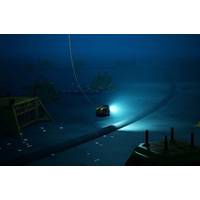
Offshore Industry Majors Join Forces for Next-Gen Subsea Flowline Tech
A consortium of offshore energy companies including TotalEnergies, Equinor, Aker BP, DeepOcean, Tenaris, and LS Cable & System has launched a joint industry project to commercialize a new subsea flowline heating technology designed to cut costs and carbon emissions related to deepwater oil and gas subsea tie-back projects.The system, named FlowHeat, aims to lower manufacturing and installation costs by up to 35% and reduce carbon emissions by 30% through separating pipeline and heating installation processes.Subsea tiebacks are key to connecting remote wells to processing facilities, but cold
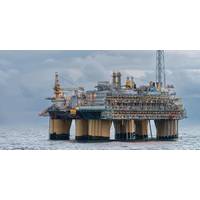
Equinor, Partners Bolster Åsgard Production with Subsea Compressors Upgrade
Equinor and partners in Åsgard and Mikkel licenses have started the second phase of Åsgard subsea compression in the Norwegian Sea, with the aim to maintain production from the field by increasing the pressure in the pipelines between the wells and the Åsgard B platform.The first plan for development and operation (PDO) of Åsgard was approved in 1996. The field came on stream with Åsgard A in 1999 and Åsgard B in 2000. In 2012, the PDO for Åsgard subsea compression was approved by the authorities, and the first phase of Åsgard subsea compression came on
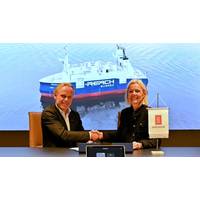
Reach Subsea Orders Two More USVs from Kongsberg Maritime
through the technical qualification program and recent operational experience.To remind, Reach Remote 1 and 2 were delivered earlier this year and are now in commercial operation.Reach Remote 1 is currently completing a series of fully remote-controlled offshore deployments off the coast of Norway for Equinor, TotalEnergies and Shell. Reach Remote 2 is in route to Australia to deliver services for Woodside Energy.These deployments represent a major step forward in Reach Subsea’s development of remote operations architecture.Reach Remote 1 USV (Credit: Reach Subsea)"The Reach Remote program
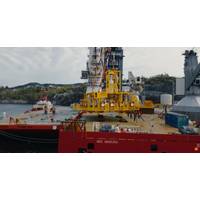
Deepest-Ever Subsea Compression Systems Come Online Offshore Norway (Video)
gas field located in the Norwegian Sea, 120 km from the onshore processing and export facility at Nyhamna. The gas is exported to European markets through Langeled and the Norwegian gas export system.Shell is the operator (17.8%) of the Ormen Lange field, with Vår Energi (6.3%), Petoro (36.5%), Equinor Energy (25.3%) and Orlen Upstream Norway (14%) as partners.Shell Boosts Production from Norway’s Ormen Lange Offshore Fiel
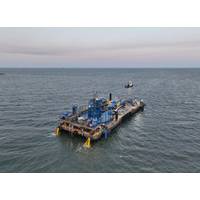
Nexans, Crowley Wind Services to Build Cable Lay Barge for US Ops
conditions. The barge boasts a 3,500-ton capacity carousel to lay and bury subsea cable using burial tools such as a vertical injector, a jet sled, or a jetting ROV, with the potential to be upgraded to 7,000 tons with two carousels for bundle cable lay and burial.The barge is positioned to support Equinor’s Empire Wind offshore wind farm for New York and can be configured to lay or repair cable for a multitude of other subsea applications."This barge will support our existing fleet of cable laying vessels, the Nexans CLV Aurora, Nexans C/S Skagerrak and Nexans CLV Electra, and we are pleased
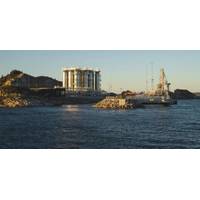
TGS to Provide Tech Set to Optimize Northern Lights CCS Operations
Norwegian data and intelligence firm TGS has signed a collaboration agreement with Equinor, aimed at advancing the digitalization of carbon capture and storage (CCS) operations at Northern Lights project.The agreement strengthens the ongoing cooperation with Equinor by integrating cutting-edge technology to optimize field operations.Northern Lights will integrate TGS’ Prediktor Data Gateway into its digital system to enhance management of the full CO2 value chain, from the receiving terminal to permanent storage.By delivering real-time data, the software enables more efficient operations and

 February 2026