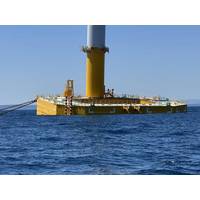
BW Ideol, NGE Join Forces on Floating Wind Factory in France
its AO10 offshore wind tender, which is expected to increase the country's planned floating offshore wind capacity to more than 5 GW, including 3.7 GW in the Mediterranean.The project secured up to $143.5 million in public support last year, comprising a grant of up to $84.3 million from the European Union's Innovation Fund and a tax credit of up to $59.2 million euros under France's green industry investment scheme.BW Ideol said the Fos3F facility is expected to support the supply of more than 200 floating foundations between 2030 and 2037 and create more than 1,300 direct jobs in the
Batteries at Sea: Not All-Electric, Not Everywhere but Increasingly Essential
international shipping by or around 2050. A 2030 ambition is for zero or near-zero GHG technologies, fuels, and energy sources to represent at least 5%, striving for 10%, of energy used by international shipping.Compliance is becoming a material cost line item.Under current and emerging IMO and European Union (EU) regulations, including the EU Emissions Trading Scheme (EU ETS) and the Fuel EU Maritime Regulation, compliance costs are projected to reach around $600/tMGO by 2030 and above $1,000/tMGO by 2035 (Figure 1), while world bunker prices stand at about $700-800/MT. That makes electrification
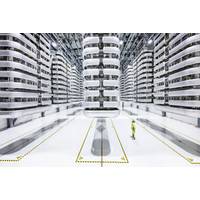
Hitachi Energy Nets $873M Deal for Italy-Tunisia Power Link Converter Stations
African countries.The project has a total investment of $1.61 billion (€1.42 billion), of which $348 million (€307 million) has been allocated by the European Commission through the Connecting Europe Facility grant programme managed by CINEA.According to Terna, this is the first time the European Union has financed a project involving a non-member country.The project is also supported on the Tunisian side by the World Bank, the European Investment Bank, the European Bank for Reconstruction and Development and KfW
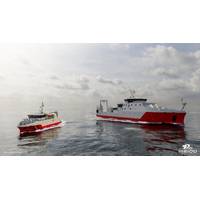
BRIN Taps Shipbuilder PIRIOU for Research Vessel Pair
. Inti Wikanestri, Deputy for Human Development, Society, and Culture, Ministry of National Development Planning (BAPPENAS); Mr. Amarulla Octavian, Vice Chairman of BRIN; Mr. Yann Martres, Director of AFD Indonesia; Ms. Ari Auria, Commitment Making Officer at BRIN; Mr. Denis Chaibi, Ambassador of the European Union; Mr. Stéphane Burgaud, Commercial Director, Piriou; Mr. Arif Satria, Chairman of BRIN; Mr. Fabrice Fize, First Secretary, French Embassy in Indonesia. © BRINThe CRV will complement this scientific capability by supporting coastal operations andregional research missions, particularly
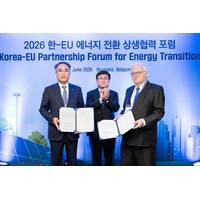
Taihan Cable Signs HVDC Cooperation Deals with Jan De Nul and Boskalis
were signed at the Korea-EU Energy Transition Cooperation Forum in Brussels and focus on cooperation in HVDC submarine cables and related infrastructure.The forum was organized by South Korea's Ministry of Climate, Energy and Environment during President Lee Jae-myung's state visit to the European Union and aimed to expand cooperation opportunities in renewable energy and power grid infrastructure.Jan De Nul and Boskalis are active in offshore wind, marine infrastructure and subsea cable installation projects in Europe and international markets.Taihan Cable is building a second subsea cable
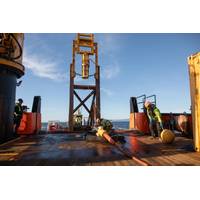
Apollo’s Floating Wind Quick Connector Gets Closer to Commercial Rollout
the need for personnel transfer during cable operations.The technology was originally developed through a Wave Energy Scotland program and has since undergone offshore trials and adaptation for floating offshore wind applications.Apollo plans additional subsea electrical trials in 2027 as part of a European Union Horizon project led by the European Marine Energy Centre.“This milestone is another important step towards commercial deployment of our PALM QCS technology, crucially helping demonstrate the bankability of the system.“Working with Bureau Veritas has been a pleasure. We were pleased
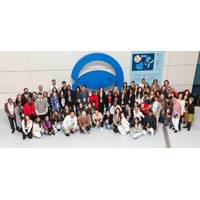
International Youth Ocean Leadership and Advocacy Program Arrives in Poland
and communicating ocean and climate challenges. It marks the second pilot edition of YOLA youth training, following its launch in Boulognesur-Mer, France, and continues to develop interdisciplinary approaches connecting science, creativity and civic engagement.Co-funded by the Erasmus+ program of the European Union, YOLA empowers young people to engage with ocean conservation and climate challenges through ocean literacy, leadership, creative exchange and participatory environmental action.Three days of YOLA Activities in Sopot and GdyniaAcross three days, the YOLA program will create a space for exchange
UK Firm Installs Floating OTEC Prototype in Atlantic Ocean
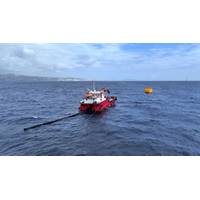
technology to a powerful resource. We now have a new class of standardized and replicable baseload power on a learning curve akin to wind, solar, and batteries,” said Dan Grech, Founder and CEO of Global OTEC.The prototype forms part of a $4.1 million (€3.5 million) project funded by the European Union’s Horizon Europe programme and led by Global OTEC.The company said offshore validation is now underway, with plans to deploy an OTEC Power Module in Hawaii as part of further development efforts.Global OTEC claims the technology could provide continuous baseload power for tropical island
Research Team Launches Coral Cartography at AAORIA 2026
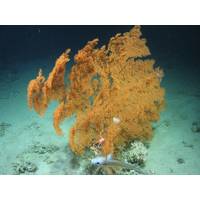
. which brings together the Atlantic community to advance ocean science, international cooperation, and collaborative action. The Forum advances the All-Atlantic Declaration, signed in 2022 by Argentina, Brazil, Cabo Verde, Canada, Morocco, South Africa, the United States of America, and the European Union, with growing support from further countries and partners.The project is being led by Plymouth Marine Laboratory (PML) alongside 11 project partners, including University of Plymouth (UK), University of Aveiro (Portugal), Mauritanian Institute of Oceanographic and Fisheries Research (Mauritania)
 August 2026