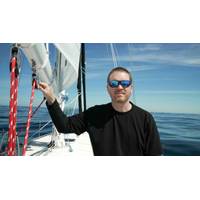
Explorer to Attempt Solo Unassisted Nonstop Circumnavigation of the Arctic Ocean
. As glaciers retreat, fjords respond to changes in freshwater and nutrient availability that directly affect phytoplankton blooms and the coastal Arctic's role as a global carbon sink hotspot. Phytoplankton produce roughly half of the world's oxygen and form the base of the entire marine food chain. Their productivity accounts for 11 percent of annual ocean carbon burial along glaciated coastlines
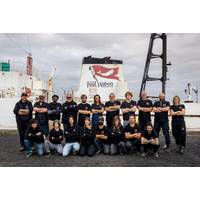
Activist Vessel Collides with Krill Harvesting Vessel off Antarctica
Paul Watson Foundation, set up in 2022 by Canadian anti-whaling activist Paul Watson, said it was trying to disrupt krill fishing in the feeding grounds of whales, seals and penguins."Krill are a foundational species, serving as the primary food for most marine life. Without krill the entire food chain would collapse," it added.The foundation said Aker QRILL was the largest harvester of Antarctic krill, accounting for more than 60% of the total catch quota.Barstad, however, said industrial vessels harvest only a small fraction of krill stocks.The incident occurred more than 500 miles (805
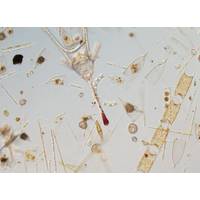
Harnessing Plankton Research Is Crucial to Inform Climate Models
30 international experts argue that plankton models need updating to reflect contemporary knowledge, requiring urgent joint attention from both empiricists and modelers. “Plankton are mainly microscopic organisms that grow in the ocean (and also in inland waters) that support the base of the food chain. No plankton—no fish, no sharks, no whales, no seals, no coral, etc. However, the diversity of the plankton is critical; that biodiversity cannot be best compressed into just a few groups, yet invariably that is what happens in models," said Flynn.“Additionally, photosynthetic
Strong Winds, Calm Seas
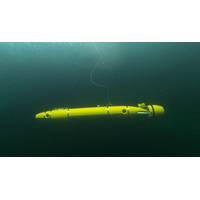
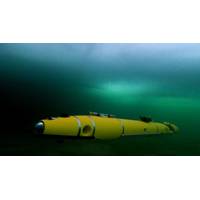
ecosystem by collecting physical and biological data. Parameters like temperature, salinity and oxygen may identify changes in the distribution and abundance of species, stated a press release from RWE. This includes critical contributors like phyto and zooplankton, which play fundamental roles in the food chain but are often overlooked.The demands of the SeaMe project require multiple partners with varied expertise, each covering a special task within the wind farm’s ecosystem, explained Marius Wirtz, Dipl.-Ing. (FH), Engineer at the German Research Center for Artificial Intelligence (DFKI) and
SeaMe Project to Leverage AUVs, AI to 'Stand Watch' in Offshore Wind Farms
the impact on marine life.The simultaneous collection of physical and biological data allows for a comprehensive assessment of the marine ecosystem. This includes often overlooked components such as phytoplankton (microscopic algae) and zooplankton (e.g. krill), which play a crucial role in the marine food chain.Further development of the AUV DeepLengIn SeaMe, the DFKI Robotics Innovation Center is further developing the autonomous underwater vehicle (AUV) “DeepLeng” to optimize it for monitoring offshore environments. To achieve this, the researchers in Bremen are equipping the AUV with
South African Drought Dust Fueled Record Ocean Bloom
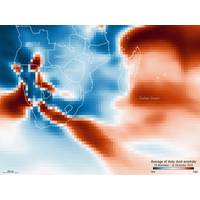
blown over the Indian Ocean from South Africa.This saw phytoplankton levels at three times the level normally expected at the time of year it occurred, spreading from southeast of Madagascar into the wider Indian Ocean for three weeks longer than normal.These marine algae form the basis of the marine food chain and help to remove carbon dioxide from the atmosphere by using it to grow then being eaten or dying and falling as organic matter to the seafloor.NOC co-author Dr. Fatma Jebri, said, "Our study shows how African desert dust being blown over and deposited onto the ocean surface was key in triggering
Using Ocean Robots to Dive into Offshore Wind Farm Wake Effects
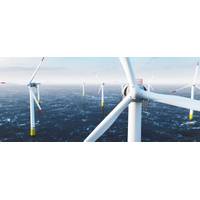
today you’re increasingly likely to see offshore wind turbines gently turning on the horizon.These giant structures are supplying an increasing amount of the UK’s electricity mix (<20%), but they could also be mixing up how marine systems function, including the very basis of the oceanic food chain.To find out if they are, ocean robots (known as gliders) have been quietly patrolling an area of the North Sea, downwind of a major wind farm, off Scotland’s east coast.Their task is to gather vast amounts of data, from the seabed to surface, that will allow scientists to build an underwater
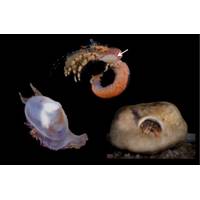
New Discoveries: Three Tiny Species Added to South Africa’s Spectacular Marine Life
(Pseudionella pumulaensis).Long-term efforts to identify new species like these guide effective conservation. They help to ensure that critical habitats are protected.These three newly described species may seem small and insignificant individually. However, small species make up the foundation of the food chain and play vital roles in nutrient cycling and in promoting biodiversity.The walking spongeFirst, there’s Suberites ambulodomos, or the “walking sponge”. This animal forms a unique partnership with hermit crabs. It settles on the tiny shell of a very young hermit crab. As the sponge
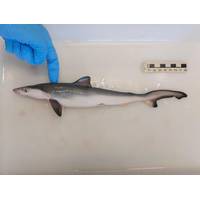
Sharks in Brazil Test Positive for Cocaine
of sharks, since the liver plays a role in the development of embryos."The scientists collected the samples between September 2021 and August 2023 as they monitored environmental impacts of pollution on marine life.Because sharks were predators, Hauser-Davis said they were central figures in the food chain and were considered "sentinel species" that could provide early warnings about environmental threats to humans.The scientists did not list what effects cocaine and other recreational drugs might have on sharks, although other studies have shown brown trout can become addicted to methamphetamin
 August 2026