HII USV Reaches 30% Completion, On Track for 2026 Sea Trials
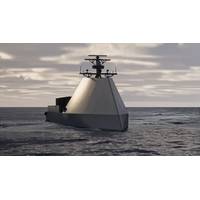
that construction of a prototype of ROMULUS, the company’s new unmanned surface vessel (USV) family, has reached 30% completion. The vessel remains on schedule for sea trials in the fourth quarter of 2026.During the visit, HII leaders toured the shipyard with build partners Breaux Brothers and Incat Crowther, and reviewed progress on hull construction, integration of the HII’s Odyssey Autonomous Control System (ACS), and outfitting work.ROMULUS USVs are designed to meet the current and emerging requirements of the U.S. Navy, U.S. Marine Corps, joint forces and allies. They deliver high-endurance
USVs Getting Smarter, Faster and More Flexible
mission readiness. Designed for speeds exceeding 25 knots, the 190-foot vessel is capable of a minimum range of 2,500 nautical miles carrying 4 x 40 foot ISO intermodal containers on the payload deck. ROMULUS 190 is being developed in partnership with Breaux Brothers, Beier Integrated Systems, and Incat Crowther.The Odyssey ACS software suite has demonstrated performance on more than 35 USV platforms with over 6,000 operational hours in U.S. Navy, U.S. Marine Corps, U.S. Coast Guard, and international allied programs. Odyssey’s intuitive interface and enhanced, customizable features generate the
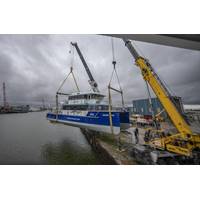
New Vessel Launched for Lake Superior Research Institute
vessel for the Lake Superior Research Institute (LSRI) at the University of Wisconsin-Superior.Described as a "floating classroom", the 65-foot aluminum catamaran Sadie Ann has been will support the university’s on-water education and research in the the icy waters of Lake SuperiorThe Incat-Crowther-designed vessel is 24-feet wide with a maximum capacity of 49 passengers and eight crew. A reinforced hull will allow operation in light winter conditions and the 4.6-foot draft will be operable in nearshore areas. The main deck features two large state-of-the-art laboratories &ndash
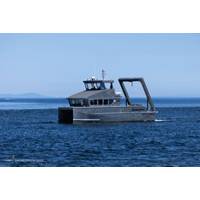
US National Lab Takes Delivery of First Hybrid Research Vessel
RV Resilience, a new hybrid research vessel designed by Incat Crowther and built by Snow & Company in Seattle, has been delivered to the U.S. Department of Energy’s Pacific Northwest National Laboratory (PNNL).RV Resilience is the Department of Energy’s first hybrid electric-diesel research vessel. The 15-meter aluminum catamaran will help PNNL sustainably expand its research activities in the Sequim Bay region of Washington state.RV Resilience’s 28 m2 main deck is equipped with an A-Frame, boom crane and movable davit in addition to a foldable swim platform. Designed to support
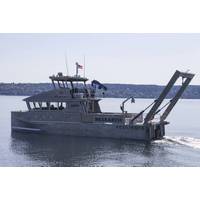
Snow & Company Delivers Hybrid Research Vessel Resilience to PNNL
Seattle shipbuilder Snow & Company announced it has delivered the newly built plug-in hybrid research vessel Resilience for the Pacific Northwest National Laboratory.The first and only hybrid vessel in the Department of Energy's (DOE) fleet, the 50-foot aluminum catamaran was designed by Incat Crowther with propulsion integration provided by Pacific Power. Hybrid propulsion is accomplished by joining twin Volvo Penta marine engines, and two Danfoss motor-generators. Power is stored using a Spear Trident battery system.The power and propulsion setup allows the vessel to operate in a zero-emission
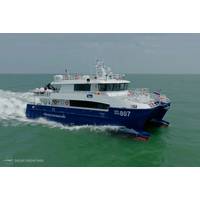
New Research Vessel Delivered to Thailand’s DMCR
Thailand’s Department of Marine and Coastal Resources (DMCR) has taken delivery of a new state-of-the-art research vessel. Designed by Incat Crowther and built by Thai shipbuilder Seacrest Marine, the 25-meter catamaran will be used by the DMCR to patrol Thailand’s coastal environments and monitor the nation’s fisheries and marine resources.Based the Incat Crowther 25 design, the vessel has a range of innovative features and equipment to help its crew monitor and protect sensitive coastal areas while having minimal impact on the environment.Designed to accommodate 12 crew and 16
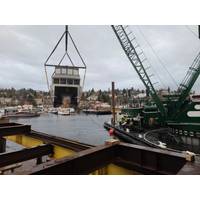
PNNL's New Research Vessel Launched
Snow & Company has launched a new 15-meter hybrid catamaran research vessel that will be operated by the Pacific Northwest National Laboratory.The plug-in hybrid research vessel, Resilience, will be delivered to the Department of Energy's (DOE) PNNL-Sequim marine research facility in 2024.The Incat Crowther designed vessel, equipped with both standard diesel engines and electric motors, will be the first hybrid vessel in the DOE fleet. The vessel will be powered by an advanced parallel hybrid-electric propulsion system, consisting of two Volvo Penta D8-510 main engines, capable of producing
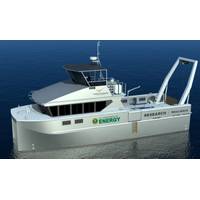
Shipbuilding: Work Starts on 50-ft. Hybrid Research Vessel
Snow & Company of Seattle started construction of a 50-ft. hybrid research vessel for the Department of Energy's Pacific Northwest National Laboratory.Dubbed RV Resilience, the boat is designed by Incat Crowther with propulsion integration provided by Pacific Power. Hybrid propulsion will be accomplished by joining twin Volvo Penta D8-510 (374kW) marine engines, and two Danfoss Editron 20kW motor-generators. Power is stored using a Spear Trident battery system. This combination allows the vessel to operate in a zero-emission “quiet” state, which is more effective for marine research
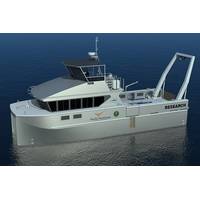
Danfoss to Power US' New Hybrid-electric Research Vessel
the DC grid, power and energy management systems, electric PM-motors and PM-generators, and compact and lightweight inverters and DC/DC converters. Danfoss’ Editron division will supervise the project execution, including engineering, project management, sea trials and onboard training.The Incat Crowther-designed hybrid research vessel project is being funded by the U.S Department of Energy’s Water Power Technologies Office, as part of a $7.1 million marine energy infrastructure fund awarded to seven projects across five Department of Energy’s national laboratories.Erno Tenhunen,
 February 2026