
HII USV Reaches 30% Completion, On Track for 2026 Sea Trials
© HII
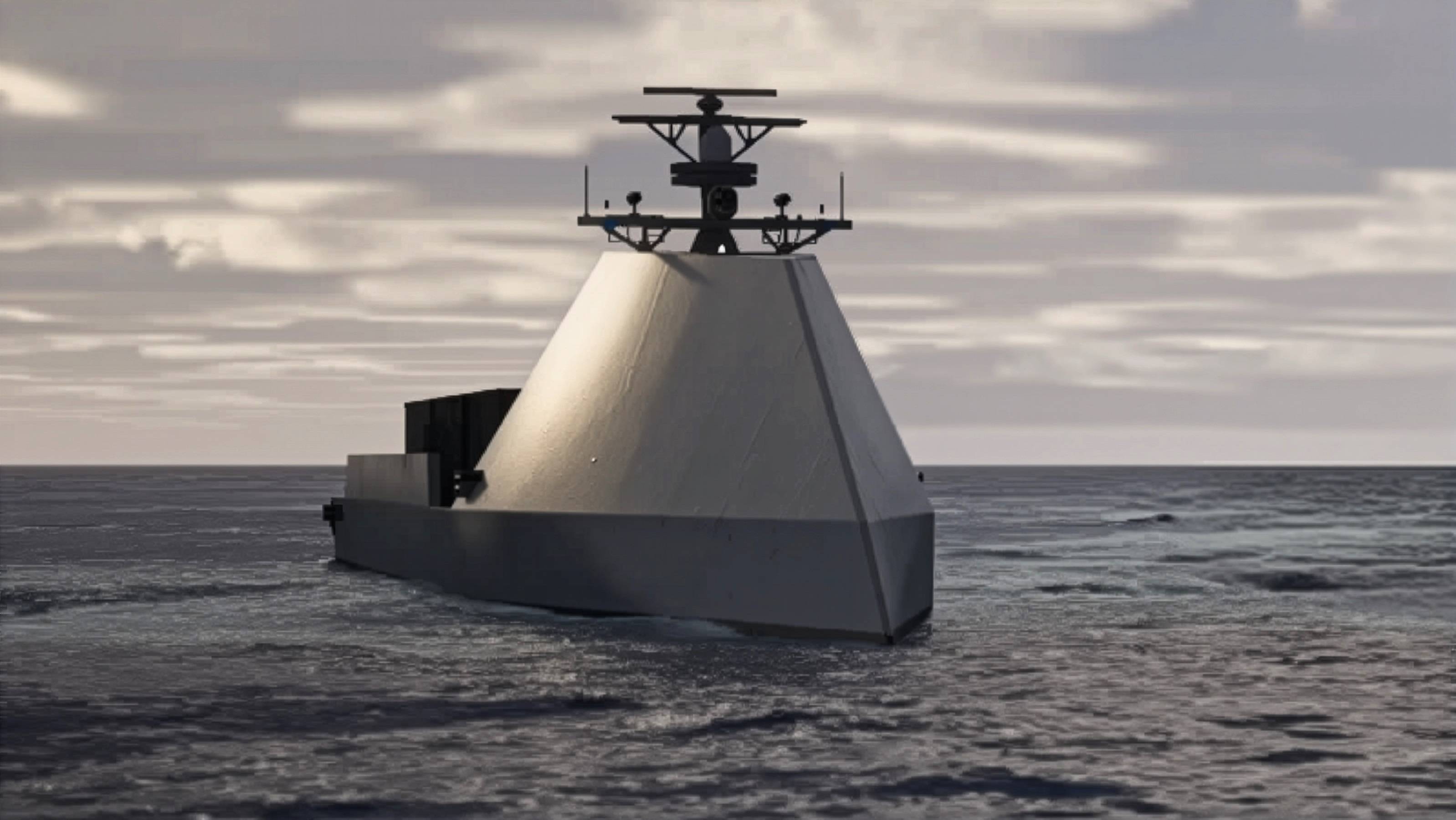
HII executives toured Breaux Brothers Enterprises in Loreauville, Louisiana, and announced that construction of a prototype of ROMULUS, the company’s new unmanned surface vessel (USV) family, has reached 30% completion. The vessel remains on schedule for sea trials in the fourth quarter of 2026.
During the visit, HII leaders toured the shipyard with build partners Breaux Brothers and Incat Crowther, and reviewed progress on hull construction, integration of the HII’s Odyssey Autonomous Control System (ACS), and outfitting work.
ROMULUS USVs are designed to meet the current and emerging requirements of the U.S. Navy, U.S. Marine Corps, joint forces and allies. They deliver high-endurance, sustained open-ocean autonomy with a focus on lethality, cost efficiency and scalability.
The family of USVs will support missions including intelligence, surveillance and reconnaissance, counter-unmanned air systems, mine countermeasures, strike, and the launch and recovery of unmanned underwater vehicles (UUV) and unmanned aerial vehicles (UAV).
Paired with HII’s REMUS UUVs, ROMULUS extends undersea reach and supports a scalable dual-domain force package built for distributed maritime operations.
This ROMULUS prototype is the first in HII’s modular, AI-enabled ROMULUS USV line. The ships are engineered for rapid, repeatable production and high endurance at sea. With speeds over 25 knots and a range of 2,500 nautical miles, all ROMULUS USVs are designed for mission flexibility across global theaters.
ROMULUS is built around Odyssey ACS, HII’s proven autonomy suite used across more than 35 USV platforms and over 750 REMUS UUVs in 30 countries. Odyssey enables sustained open-ocean autonomy, multi-agent swarming, modular payload integration, and manned-unmanned teaming. ROMULUS platforms will also feature integrated capabilities from Shield AI, Applied Intuition, and C3 AI for enhanced autonomous performance and lifecycle sustainment.
The Odyssey software suite’s open-access, government-aligned architecture enables rapid integration of new sensors, payloads and third-party autonomy technologies. It allows industry, government and academia to test and refine capabilities, ensuring ROMULUS evolves in step with emerging naval concepts of operations.
In November, HII and Shield AI announced that they have successfully completed the first major test of their integrated autonomy solution aboard HII’s ROMULUS 20 USV, marking a key step toward operational deployment of the AI-enabled ROMULUS fleet.
ROMULUS is being developed with support from HII’s Dark Sea Labs Advanced Technology Group.





 August 2026