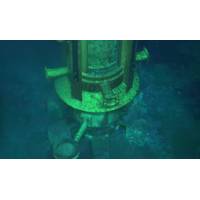
2H Offshore Initiates Second Phase of Wellhead Fatigue JIP
2H Offshore has launched the second phase of its Measurement-based Wellhead Fatigue joint industry project (JIP), which aims to improve riser, wellhead, and conductor fatigue estimates and make drilling operations more reliable and efficient.In the first phase of the project, 2H collaborated with nine major operators to gather and analyze field measurements from ten drilling campaigns in the Gulf of Mexico and the North Sea. The data covered a range of environments, water depths, soil characteristics, riser and wellhead configurations, and vessel types. Findings from the analysis verified that
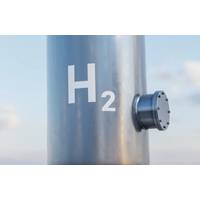
Hydrogen Pipelines: DNV Launches Phase 2 of H2Pipe Project
DNV said Monday it was launching the second phase of H2Pipe, a joint industry project (JIP) aiming to develop a new code for the design, re-qualification, construction, and operation of offshore pipelines to transport hydrogen—either pure or blended with natural gas.DNV’s Hydrogen Forecast to 2050 anticipates that over 50% of hydrogen pipelines globally (and as much as 80% in some regions) will be repurposed from existing natural gas pipeline networks, as it is expected to cost less than 35% of new builds."A large-scale deployment of hydrogen transport through pipelines requires the
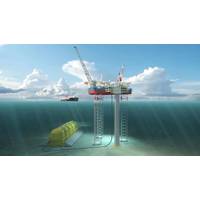
ABS, NOV Collaborating on 'Pioneering' Subsea Storage Solution
technologies, allowing the storage on the seabed of all type of fluids whether it is for the oil and gas industry, as an all-electric enabler, or e-fuels such as e-methanol and liquid ammonia for the rapidly growing shipping industry. "We are thrilled to collaborate with ABS on this JIP, together with Equinor, Shell, The Research Council of Norway and The Net Zero Technology Centre towards qualifying the subsea storage technology that will enable a safer and low-emission future and contributing to the global greenhouse gas reduction strategy for both the energy and shipping industry
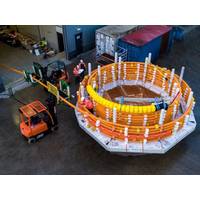
Emergency Response Plans: Strohm's TCP Flowlines for Woodside's Scarborough Offshore Gas Field
The TCP Flowlines would be laid on the seabed to connect the manifolds, facilitating the comingling of kill fluid to a relief well.This is the first time TCP has been chosen for this application. Offshore Oil: Thermoplastic Composite Pipes Have Much Lower Carbon Footprint Compared to Steel Pipelines, JIP ShowsStrohm will deliver TCP Flowlines with each spooled onto storage and installation baskets which can be lowered to the seabed from a local Inspection, Maintenance and Repair (IMR) vessel of opportunity.Strohm VP Middle East & Asia-Pacific, Fabienne Ellington said: “Having recently
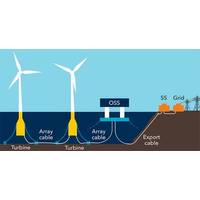
DNV and 25 Partners Launch JIP for Floating Offshore Wind Substations
Energy industry expert and assurance firm DNV has partnered up with 25 industry giants in a Joint Industry Project (JIP) aimed at enhancing technology development for floating offshore wind substations, with particular attention to how export cables and topside equipment tolerate movements of a floating substructure. The objective is to align industry best-practice allowing for accelerated technology development and to close gaps in available substation standards enabling scaling of floating offshore wind with an acceptable level of commercial, technical, health, safety and environmental risks.
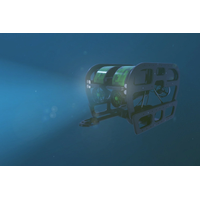
SWiG's Wireless Acoustic Standard to Improve Comms Between Offshore Vessels & Subsea Vehicles
Vehicles (AUVs).According to the organization, its new standard, SWiGacoustic, provides a simple acoustic protocol that satisfies interoperability requirements, "aiding seamless communication between platforms."R&D consultancy Sagentia Innovation manages SWiG as a joint industry project (JIP). The JIP is a collaboration of 28 members including major energy operators and subsea service providers and integrators as well as specialist instrumentation companies.The JIP, SWiG says, creates space for industry players to work together on technical matters related to subsea wireless technologies
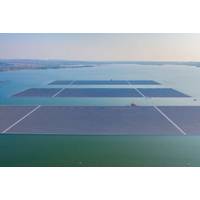
Floating Solar Potential is Huge, But Not Without Challenges, DNV Says
, which can be an issue for the utility-scale renewables industry. "FPV players are at best relying on inconsistent and diverse procedures and adjacent codes adopted from other sectors, which may hinder the industry’s capacity to rapidly scale up," DNV said.Recommended Practices and JIPsTo tackle the issue, DNV has spearheaded a joint industry project involving 24 of the sector’s leaders to develop the world’s first recommended practice (RP) on the design, development, and operation of FPV systems, and the RP was introduced in 2021 as the first step on the path towards
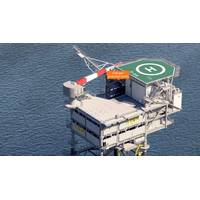
Carbon Capture & Storage: A New Lease of Life for Submarine Pipelines?
and pure hydrogen transport in 16-48-in. pipelines, installed or for installation via J-lay, S-lay and reel-lay, with the goal of developing a recommended practice (RP) as a supplement to the existing offshore pipeline standard (DNV-ST-F101), similar to an RP for CO₂ pipelines.“The objective of the JIP is to develop a Guideline for Design, Construction and Operation of hydrogen Pipelines which will be a supplement to the DNV Pipeline Standard,” said Jan Fredrik Helgaker, project manager on the project. “For C-Mn steel pipelines, components and associated welds, it is well recognized
Strohm, Petronas Partner Up to Commercialize Thermoplastic Composite Pipes
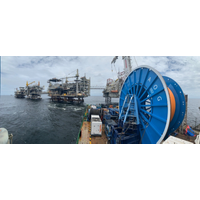
flowlines, Strohm explains, an added benefit is the reduction in pressure drops and improvement of multiphase flow conditions, thanks to a smooth bore, bonded pipe, immune to any gas permeation risks.Offshore Oil: Thermoplastic Composite Pipes Have Much Lower Carbon Footprint Compared to Steel Pipelines, JIP ShowsFor jumpers, Strohm adds, a particular edge is the elimination of offshore metrology requirements, which has a considerable impact on the cost and schedule risk associated with vessel standby and onshore rigid spool fabrication."A logical step forward from the single jumper application is
 February 2026