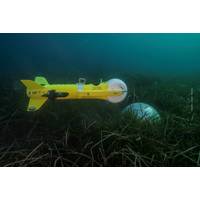
Exail Receives Order for Several Hundred Mine Neutralization Drones
Exail has received an order for several hundred K-STER mine neutralization drones, destined for several navies. The new order, worth around €40 million ($47 million), is the second largest order for K-STER drones ever recorded, just after the €60 million order received in 2024.The K-STER drones are used in the last phase of a mission to neutralize the underwater threats previously identified by the other drones of the UMIS demining system. They are “consumable” drones that are destroyed when the mine is neutralized.Exail now has a backlog of more than 1,000 autonomous drones and
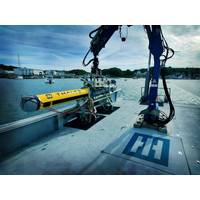
Thales, HII Partner to Develop Autonomous Undersea Mine Countermeasure Capabilities
with HII’s next generation REMUS 620 medium unmanned underwater vehicle (UUV).The integration demonstrates the compatibility of Thales’ multi-aspect synthetic aperture SAMDIS 600 sonar with HII’s modular, long-endurance REMUS 620 UUV. Together, the systems deliver advanced autonomous mine detection, classification, and imaging, offering naval forces and partners around the world enhanced capability for undersea security, mine countermeasures, and subsea infrastructure monitoring.The exercise, completed at the end of August at the HII Pocasset facility (Massachusetts, USA), marks a
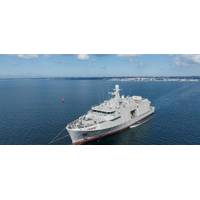
First Dutch Navy Mine Countermeasure Vessel Starts Sea Trials
The Vlissingen, the second of the series of mine countermeasures vessels (MCM) of the Belgian-Dutch rMCM program, first intended for the Royal Netherlands Navy, has commenced sea trials.The specialized and cyber secured by design MCM vessels are the first to have the capability to embark and launch a combination of surface drones (themselves 12-metre, 19- tonne vessels), underwater drones and aerial drones.The mine countermeasures vessels will use a mainly autonomous system for detection, classification, identification and neutralization of mines This approach with an unmanned integrated system
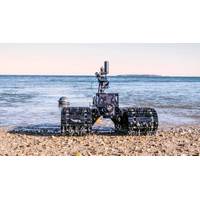
Greensea IQ to Supply Crawler to U.S. Marine Corps
of Itasca, IL, for the delivery of a customized Bayonet 250 Amphibious Underwater Ground Vehicle for the U.S. Marine Corps’ Littoral Explosive Ordnance Neutralization (LEON) project.Designed for operations in both shallow water and surf zones, the Bayonet 250 provides autonomous capabilities for mine and explosive threat neutralization.The Bayonet 250 exceeds the stringent mission criteria of the LEON project, a critical component of the Marine Corps’ robotic revolution strategy for operating in global littorals, enhancing safety for personnel while increasing operational efficiency
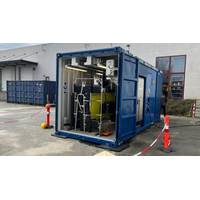
Forcys and Cubedin Partner on Mine Countermeasures Technology
Underwater defense technology company Forcys and modular infrastructure company Cubedin have announced a strategic partnership to provide rapidly deployable modular mine countermeasures (MCM) solutions.Forcys integrates solutions from Chelsea Technologies, EIVA, Sonardyne, Voyis and Wavefront Systems. It will harness these capabilities to deliver highly customizable, interoperable, and containerized solutions for complex naval missions.At the core of this integration is Forcys’ MCM-in-a-box, designed and developed by EIVA. The 20-foot Cube module solution features EIVA’s remotely operated
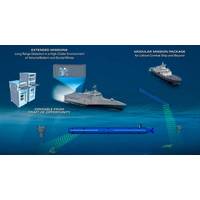
Getting to the Bottom of the Navies' Mine Warfare Challenges
To find the mine warfare challenge with the highest degree of difficulty, start at the bottom.Lurking unseen below the surface, naval mines pose a serious problem. They’re cheap, relatively easy to deploy and can inflict heavy damage against even the most sophisticated warships. They can be hard to detect and difficult to counter. What you can’t see can hurt you. And the most difficult mines to find and eliminate are bottom and buried mines. Navies have developed ships to hunt for mines in the water column so they can be avoided or destroyed, use influence sweeps to

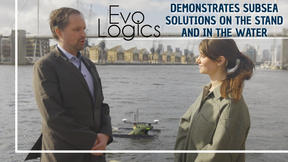
 February 2026