Ensuring Reliable Navigation for Tactical Divers
Source: Blueprint
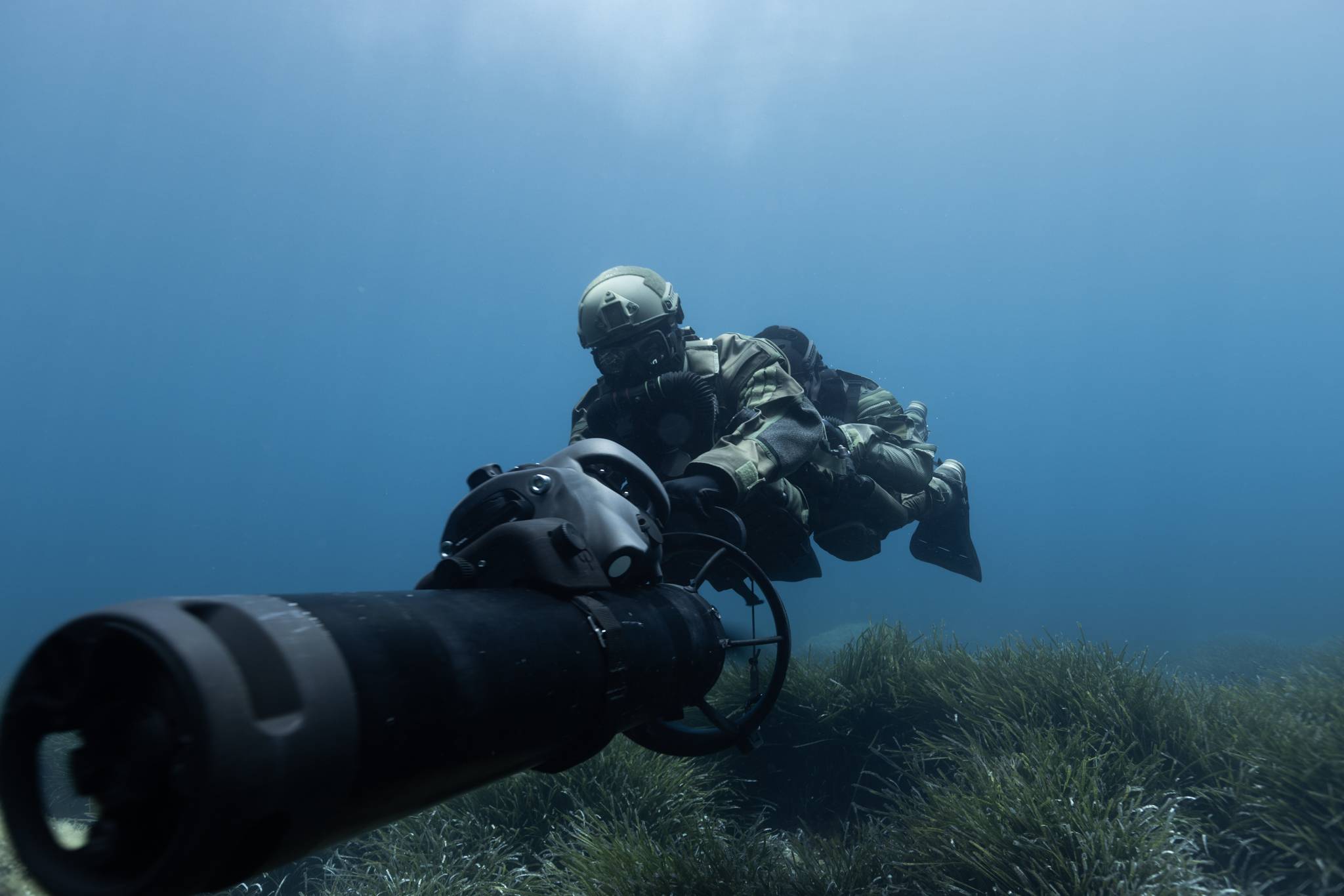
Diver navigation has long presented a challenge. Ensuring diver safety is crucial, and the consequences of not having reliable navigation and position information are far greater for missions using divers than ROVs or other uncrewed systems. UK-based Blueprint Subsea’s Artemis diver navigation systems are engineered to give operators confidence and control in such situations.
Accurate positioning and dead-reckoning navigation capabilities are essential for maintaining situational awareness and keeping divers safe during long-duration underwater missions. Blueprint relies on Nortek’s DVL technology as part of these diver navigation systems to provide accurate velocity information in challenging underwater environments.
The Artemis systems are deployed primarily by two specialist groups in the defense space: Explosive Ordnance Disposal (EOD) divers and combat swimmers. EOD divers must locate, identify, and investigate underwater ordnance and mines. For these divers, precise navigation and positional awareness are critical to safety and mission success. Combat swimmers rely on Artemis to execute covert insertion and extraction missions, navigating accurately to designated targets and returning undetected.
As part of the Artemis navigation system, the DVL measures velocity relative to the seabed. When integrated into the navigation system, this makes dead-reckoning navigation possible, providing navigation information for divers even in the absence of satellite signals As James Colebourn, Technical Sales Engineer at Blueprint Subsea, explains, “Once GPS drops out, the unit seamlessly switches to the DVL, just as any remotely operated vehicle (ROV) would, enabling accurate underwater navigation until the diver resurfaces.”
Blueprint offers a variety of Artemis systems, each equipped with sensors and a DVL according to mission needs. The ArtemisPRO, their most advanced navigation system designed for military and Special Forces divers, uses Nortek’s DVL 1000. The ArtemisSX, which can be used as a diver handheld or paired with a diver propulsion vehicle, uses the DVL 500 Compact. Finally, the ArtemisELITE, which pairs the navigation system with SUEX diver propulsion units and requires the longest range, uses the DVL 500.
Close collaboration with Nortek engineers at the Nortek’s headquarters in Norway, as well as local technical support from Nortek’s team in the United Kingdom helped Blueprint refine its designs through continuous feedback and testing.
The underwater domain is evolving at an unprecedented pace, and underwater vehicles can perform an increasing number of jobs historically performed by divers. Yet, despite these advancements, the team at Blueprint firmly believes that divers will remain indispensable.
“Robots can do many things, but some missions still require people in the water,” Colebourn notes. “There will always be tasks that demand human judgment, adaptability, and touch.”
To ensure safety and capability of these divers, technology like Blueprint’s DVL-aided diver navigation system will be crucial. Using robotic systems in conjunction with divers will reduce risk and improve efficiency, without sacrificing the human experience and skill that comes with specialized divers.
Blueprint and Nortek aim to continue their collaboration to meet the needs of divers and operators to execute challenging and sensitive missions. Reliable underwater navigation from systems like the Artemis is non-negotiable for these users, and is only made possible by advanced navigation sensors like Nortek DVLs.


 August 2026