
EU Funds OceanEye Initiative

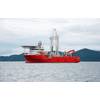
© Montri / Adobe Stock
The European Commission has expanded the EU's role in ocean observation by adopting OceanEye.
This initiative aims to position the EU as the world's leading provider of ocean intelligence by contributing to 35% of the global ocean observing system by 2035 and securing 35% of the market for ocean observation technologies.
The ocean covers 70% of the Earth's surface, yet only 5% has been explored. Ocean observation is critical for ocean protection and restoration, climate forecasting, blue economy activities such as fisheries and aquaculture, offshore energy, and shipping, as well as maritime security and defense.
Four pillars will guide the EU's approach—at EU level and globally—to translate these objectives into tangible outcomes: better governance for a more unified European approach; global leadership through an international alliance and partnerships; the European Digital Twin of the Ocean, innovation and industry growth; and engaging society and building skills.
EU ocean observation faces fragmentation. OceanEye aims to bridge the gaps through a structured governance approach, improving coordination between Member States, research bodies and industry, and supporting the EU's contribution to the global ocean observing system. Structured governance will help to align investments and priorities, making EU ocean observation more strategic, reduce inefficiencies and duplications in data collection, and filling existing gaps. The details will be set out in the proposal for an Ocean Act at the end of this year.
The initiative foresees a European Digital Ocean System that will include existing European services like Copernicus Marine Service, EMODnet, WISE Marine, and WISE Freshwater, creating a single-entry point for high-quality ocean data and marine knowledge. This system will also include the European Digital Twin Ocean, set to be fully operational by 2030, enabling real-time monitoring and predictive modelling for policy and industry.
The EU will launch an International Alliance to strengthen the Global Ocean Observing System addressing critical gaps in under-monitored regions in the Southern Hemisphere, the Arctic, deep sea, and coastal areas for instance.
Under the current Horizon Europe Programme, the Commission will invest €50 million to strengthen the EU's contribution to the Global Ocean Observing System and an additional €12 million to support resilient global ocean data systems.
The European Digital Twin Ocean - a virtual representation of the ocean, enabling seamless access to marine data, will be available as a public service to Europeans and the rest of the world.
OceanEye will also support the development and deployment of new technologies, including sensors, autonomous systems, and AI, and will accelerate their transition from research to market.
Finally, OceanEye also aims to foster public-private partnerships, improve access to finance for startups, and align research with market needs. An additional €30 million under the current Horizon Europe program will support key innovations through a European Innovation Council thematic challenge on ocean observation technologies.
OceanEye will make ocean observation and more widely ocean challenges and opportunities more visible and relevant to society by linking them with culture, education, and skills development.
To this end, the Commission will launch a New European Bauhaus Ocean, Coastal and Island Communities Lab to explore creative ways to present ocean data and to raise awareness on the ocean - through public installations, museum exhibitions, and collaborations with artists and designers.
In addition, a dedicated OceanEye label will be introduced, clearly identifying all contributing infrastructure.
Achieving OceanEye's goals will require substantial investments, with significant funding needed for in-situ monitoring, digital tools, and research.
At EU level, the Commission is mobilizing available resources and existing instruments in support of the OceanEye initiative.
In total, the Commission will invest €92 million from the Horizon Europe program to kickstart OceanEye:
€50 million – strengthening the EU's contribution to the Global Ocean Observing System
€12 million – Supporting resilient global ocean data systems to improve data sharing and accessibility.
€30 million – Boosting innovation through the European Innovation Council.
At national and international level, the Commission is calling on Member States, third countries and other partners such as philanthropies and private organizations to join the International Alliance by increasing their support for ocean observation, ensuring stable funding for improved long-term observation series.
These commitments may include mobilizing financial resources, providing access to observation capacities (such as observation vessels, sensors, drones and submarine cables), investing in and/or providing access to observation and digital infrastructures, dedicating human and technical capacity to the Intergovernmental Oceanographic Commission (IOC) or Global Ocean Observing System (GOOS), and making relevant data available.







 August 2026