
NOAA Predicts Moderate Harmful Algal Bloom for Western Lake Erie
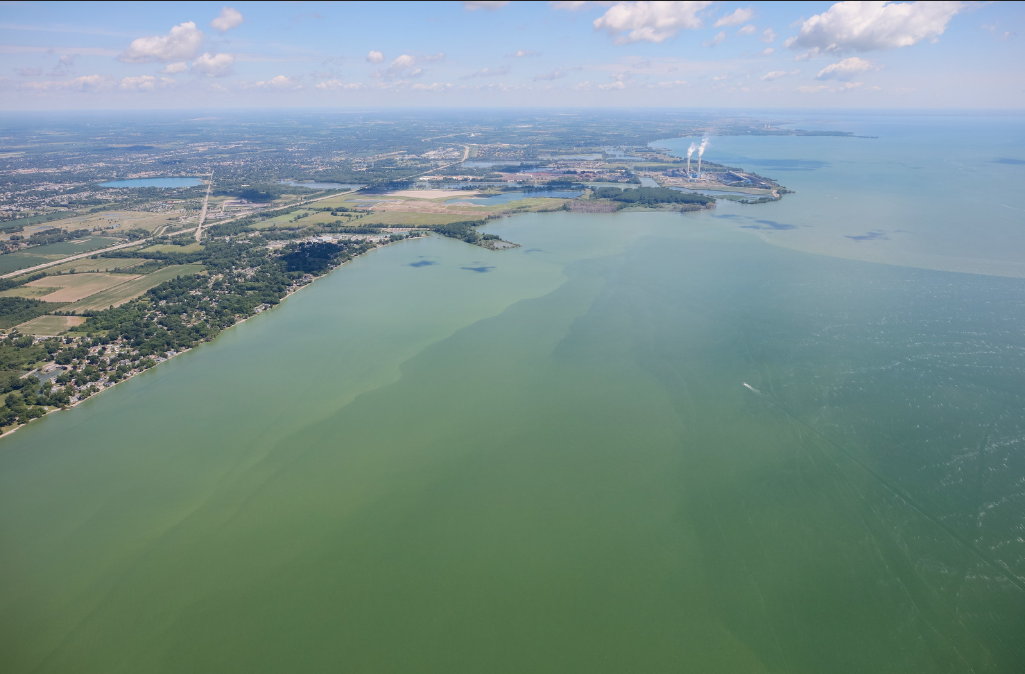
An aerial photo of the green waters of harmful algal bloom in western Lake Erie, July 20, 2020. (Image credit: Courtesy of Zachary Haslick, Aerial Associates)
NOAA and its research partners are forecasting a moderate harmful algal bloom (HAB) in western Lake Erie this summer. This year’s bloom is expected to measure 3.5 on the HAB severity index, with a potential range of 3 to 4.5.
“Toxic algae affect not only the health of people and Great Lakes ecosystems, but they can negatively impact local and regional economies by preventing people from fishing, swimming, boating and visiting the shoreline,” said Nicole LeBoeuf, assistant administrator for NOAA’s National Ocean Service. “NOAA’s Lake Erie harmful algal bloom forecast is designed to provide timely, science-based information to water managers and public health officials as they make decisions to protect their communities and visitors.”
The HAB severity index is based on the bloom’s biomass (the amount of algae) during the peak 30 days of the bloom. Moderate blooms have an index of 3 to 5, while an index above 5 indicates more severe HABs. Blooms over 7 are particularly severe, with extensive scum formation and persistent bloom coverage affecting the lake.
NOAA expects to see a visible bloom by mid-July. The bloom’s timeline will depend on the frequency of high winds in September, which cannot be predicted this far in advance. Most of the bloom will remain in areas of the lake’s western basin. The central basin of the lake is usually unaffected until later in the season, although localized blooms may occur around some of the rivers after summer rainstorms.
Lake Erie HABs consisting of cyanobacteria (i.e. blue-green algae) are capable of producing microcystin, a known liver toxin that poses a risk to human and wildlife health. Such blooms can sometimes require cities and local governments to add more treatment to drinking water and close beaches.
The size of a HAB is not necessarily an indication of how toxic it is. Each algal bloom is unique in terms of size, toxicity and ultimately its impact on local communities. NOAA continues to develop new tools to detect and predict how toxic blooms will be.
NOAA will issue a seasonal forecast update in late July based on observed nutrient loads from the Maumee River watershed into the western basin.
 A bar graph of the 2026 predicted bloom severity for Lake Erie as compared with previous years. The wide orange bar at right is the likely range of severity for this season, based on the limits of the forecast uncertainty (3-4.5; moderate bloom). (Image credit: NOAA/Heidelberg Univ./Univ. of Michigan/NCSU/)








 August 2026