Marine Technology News Search
Search term • "advanced navigation"
Create an email alert for "advanced navigation"
Black Laser Learning Contracted to Update Navy Training Programs
Black Laser Learning, Inc. is set to provide critical training updates through live seminars and training DVDs to Navy sonar operators with the latest techniques required for the Navy’s newly-upgraded UUV systems. Changes and modifications to the U.S. Navy’s UUV (unmanned underwater vehicles) system sonars require updated training programs for Navy operators. Black Laser Learning Inc., (BLL) a company that has provided sonar training to the Navy for over 10 years…
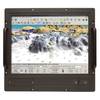
Comark’s Shipboard Applications Display Passes MIL-STD-901D Shock Testing
Comark Corporation completed full environmental testing of its latest version of the MDU19PC ruggedized COTS computer including MIL-901D grade-A lightweight shock test. The MDU19PC is an all-in-one display and computer designed and tested to meet military requirements for shipboard applications including propulsion, machinery control and ECDIS navigation. The panel is NEMA 4 rated when panel mounted and is available with an array of options including touchscreen…
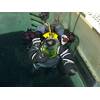
OceanWorks Upgrades Italian Navy Vessel
OceanWorks International delivered a system upgrade for the first of the Italian Navy’s three Atmospheric Diving Systems (ADS). After its previous refurbishment in 1999, the first Italian Hardsuit was returned to OceanWorks International for the latest configuration upgrade. The upgrade to the Quantum II configuration offers improved operational, maintenance and training features including more powerful SAAB Seaeye SM7 thrusters and a completely redesigned and upgraded electronics…
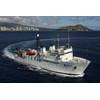
U.S. National Ocean Service 2014 Budget Request
The FY 2014 President's Budget Request for the National Ocean Service (NOS) amounts to $529.2M. The National Ocean Service (NOS) observes, measures, assesses and manages coastal, ocean and Great Lakes areas and provides science-based services to inform decision making, thereby positioning America's coastal communities, economies and ecosystems for the future. This budget request represents a critical step toward reestablishing balance across investments in NOAA's missions.
Subsea Technology and the New Routes to Residency
Efforts to increase remote capability often go hand in hand with increasing ROV residency. But exactly what form residency takes is diverging. Elaine Maslin takes a look.Dial back the clock five years and there was a movement towards an idea dubbed subsea resident remotely operated vehicles (ROVs). The idea, in simple terms, is that you increase ROV availability and reduce cost and carbon emissions by having the vehicle permanently based subsea in underwater garages.

Bayonet Ocean Vehicles Debuts Product Range at UDT
Bayonet Ocean Vehicles, a new company, launched at Undersea Defence Technology (UDT) in Rotterdam last week, using the platform to debut its new line of amphibious crawling vehicles the Bayonet 150, 250 and 350.Deployable from land or water independent of weather, the new Bayonet crawlers have been designed to transit along the ocean floor as well as on land; capable of working the surf zone, at ocean depths of up to 100 meters…
XLUUV: If You Build It, They Will Buy
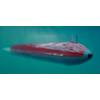
In August, 2021, after years of delays, cost overruns, and rising tensions, the Australian government canceled a A$90 billion order with France’s Naval Group for 12 conventionally powered submarines intended to replace the Royal Australian Navy (RAN)’s aging fleet of six Collins-class attack subs. Overnight, the future of the RAN’s undersea warfare capability was cast into uncertainty. The very next month…
MIT Studies Underwater Navigation Powered by Sound
New approach could spark an era of battery-free ocean exploration, with applications ranging from marine conservation to aquaculture.GPS isn’t waterproof. The navigation system depends on radio waves, which break down rapidly in liquids, including seawater. To track undersea objects like drones or whales, researchers rely on acoustic signaling. But devices that generate and send sound usually require batteries — bulky, short-lived batteries that need regular changing.
Shipbuilder Austal USA Partners with USV Firm Saildrone
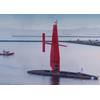
Shipbuilder Austal USA and has formed a strategic partnership with Saildrone, Inc to build cutting-edge, autonomous uncrewed surface vehicles.The partnership ensures that production of the autonomous and uncrewed Saildrone Surveyor will accelerate to meet the growing demand of the U.S. Navy and other government customers for the cutting-edge solution for maritime domain awareness, hydrographic survey, and other missions requiring persistent wide area coverage.

USVs Eye Offshore Wind Opportunities
Use of USVs in offshore wind has started to become a norm; in pre-survey and post-construction, with O&M on its way. How much more could be done?The use of USVs in the offshore industry has come a long way since they first started making an appearance in the 2010s. After some tentative steps, companies like XOCEAN have come in and blazed a trail, not least in offshore wind.This has largely been for standard multibeam and sub-bottom profile surveys.
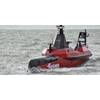
Fugro's New USV to Chart Waters Off South Australia
Fugro will use its new uncrewed surface vessel (USV) to chart the waters of South Australia’s Gulf St Vincent and Investigator Strait as part of the Australian Government’s HydroScheme Industry Partnership Program (HIPP).The Dutch-based offshore survey services company will carry out the 998 km2 survey will be conducted on behalf of the Australian Hydrographic Office (AHO), which will use the data to update nautical charts for safer navigation.

The Troubled History of Protecting Marine Assets
The history of protecting marine assets is a tale of endless perseverance. From the moment humans have put infrastructure in the water, it has been damaged by other humans. Despite incredible advances in technology and installations, incidents still occur at an unacceptable rate. The types and volume of marine assets have exploded since the 1850s when the first submarine telegraph cables were laid.
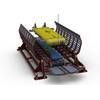
Kraken Gets $3m Funding for ThunderFish XL Development
Kraken Robotics will receive a $2,909,891 non-refundable financial contribution from the National Research Council of Canada’s Industrial Research Assistance Program (NRC-IRAP). The funding will be received over a 26-month project period and will be used to support the development of Kraken’s seabed resident ThunderFish XL Autonomous Underwater Vehicle (TFXL AUV).Building from the previous development efforts of the ThunderFish Alpha AUV…
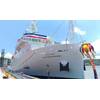
MacArtney LARS for Fifth Asia Pacific Research Vessel
MacArtney completed its order of a launch and recovery (LARS) system for Taiwan National University, the fifth Ocean Research Vessel (ORV) in the Asia Pacific region to date. MacArtney Asia Pacific provided the full launch and recovery system solution for the new vessel R/V New Ocean Researcher 1 (ORV 1), including slip rings, cables and docking heads. The 1,000 GT RV was completed on July 21, 2020.Behind ORV 1 is the CSBC Corporation…
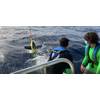
NOAA, Scripps Partner on Unmanned Systems
NOAA’s Office of Marine and Aviation Operations and Scripps Institution of Oceanography at the University of California San Diego are partnering to improve how unmanned systems (UxS) are used to collect important ocean observations and augment NOAA’s operational capabilities.The 10-year agreement provides a framework for Scripps and OMAO’s new Unmanned Systems Operations Program to collaborate on specific projects to further UxS research…
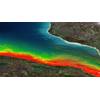
TCarta Opens Canadian Affiliate Office
TCarta Marin announced the formation of TCarta Canada based in Ottawa, Ontario. Offering the complete line of TCarta satellite-derived bathymetry (SDB) services and Trident SDB Toolbox software, the affiliate office is a partnership between TCarta Marine and Prof. Anders Knudby, a well-known marine geospatial researcher and consultant in Canada.Simultaneously, TCarta Canada announced its first contract…
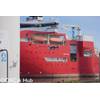
R&D: Robotics Advances Inside the ORCA Hub
Many of the more advanced mechanics of robotic systems are being developed as part of the Offshore Robotics for Certification of Assets (ORCA) Hub in Edinburgh. It’s a publicly funded project led by the Edinburgh Centre for Robotics (Heriot-Watt University and the University of Edinburgh), in collaboration with Imperial College London and the Universities of Oxford and Liverpool. We spoke with some of their specialists.First of all, what is robotics?
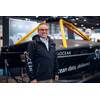
CTO in Focus: “Stop, Listen & Think” - One-on-One with Shepard Smith, XOcean
From his nearly three-decade career at NOAA to hiking the Appalachian Trail, Shepard “Shep” Smith brings a broad base of experience and expertise to his new post as Chief Technology Officer of XOcean. We checked in with Smith for his insights on technical drivers in the ocean exploration space, as well as what to expect from XOcean in the coming years.Shep, to start us off, please give an overview of your 28-year career at NOAA.I was with the Commissioned Officer Corp part of NOAA.
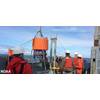
NOAA Awards $41 Million for Ocean Observing
The National Oceanic and Atmospheric Administration’s (NOAA) U.S. Integrated Ocean Observing System (IOOS) Office on Tuesday announced 11 new five-year cooperative agreements that support the continued growth, expansion, and modernization of our nation’s climate, coastal, ocean and Great Lakes observing capabilities. In the first year, NOAA will distribute $41 million to cover efforts along U.S. national and territorial waters and coasts."More than 40% of the U.S.

New MPA Guide Maps Out Ways to Effectively Protect 30% of Ocean by 2030
A novel scientific framework to consistently understand, plan, establish, evaluate and monitor ocean protection in Marine Protected Areas (MPAs) developed by an international team of scientists including Ellen Pikitch, PhD, of the School of Marine and Atmospheric Sciences (SoMAS) at Stony Brook University, is published in Science. The results of a decade of collaborative research, the guide comes at…

 February 2026