All American Marine Builds University of Texas Marine Science Institute Research Vessel


-
 © All American Marine
-
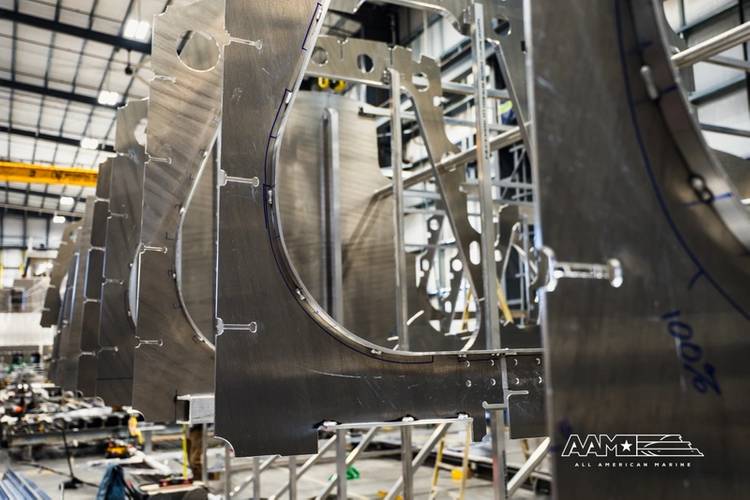 University of Texas Frames. © All American Marine
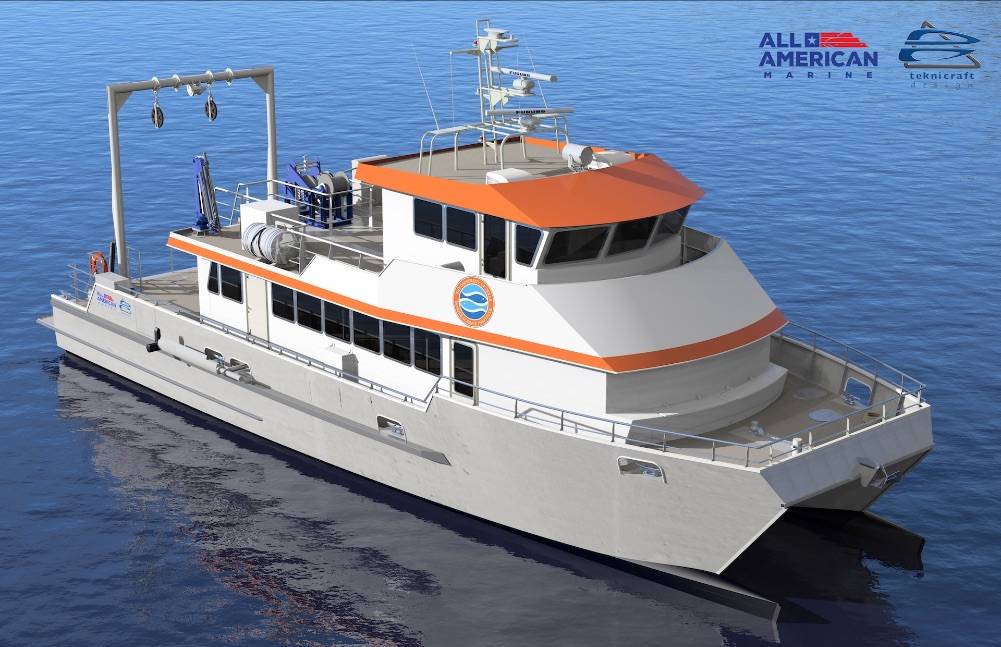
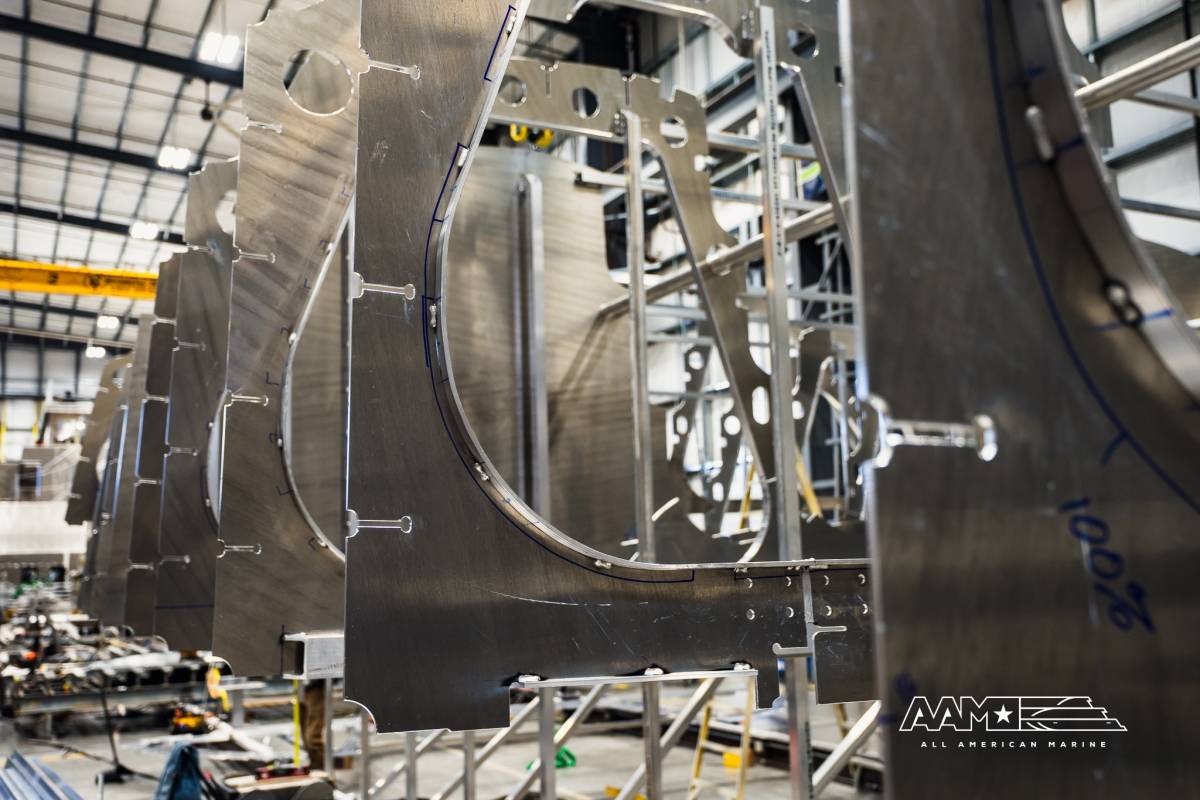
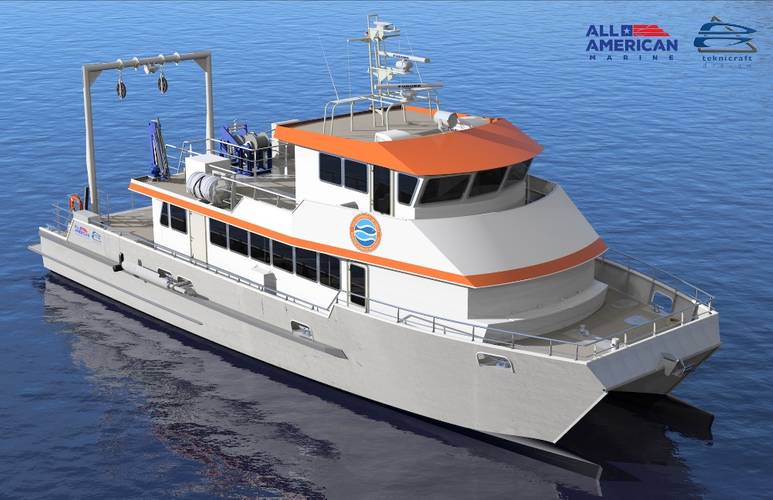
All American Marine (AAM) has begun construction on a next-gen 78’ x 26.7’ aluminum catamaran research vessel for the University of Texas Marine Science Institute (UTMSI). The vessel is being built on Teknicraft Design’s multi-purpose research platform and is designed to support scientific research, survey, and teaching missions throughout the Gulf of Mexico, including offshore operations up to 150 nautical miles from shore.
Purpose-built for multi-mission flexibility, the twin-engine, propeller driven vessel will support a broad range of scientific operations including coastal and offshore ecology research, seismic surveys, gravity coring, water chemistry analysis, fisheries surveys, and undergraduate and graduate instruction. The platform integrates an adjustable hydrofoil system, modular deck equipment, and dedicated wet and dry laboratory spaces to accommodate evolving research requirements across diverse operating profiles.
Powered by twin 803hp CAT C18 Tier 3 diesel engines delivering cruising speeds of approximately 20 knots and fuel-efficient survey speeds as low as 3 knots. Fuel capacity is 1,600 gallons, allowing for long range missions, and the vessel will be inspected to USCG Subchapter T standards. The vessel is defined by Teknicraft’s hydrofoil-assisted aluminum catamaran hull, delivering stability at cruising and survey speeds, reduced resistance, and superior offshore efficiency. The adjustable hydrofoil system actively manages lift and drag, resulting in a smoother ride, lower fuel consumption, and consistent performance across a wide range of operating conditions. The resultant vessel is the most fuel-efficient hull in its class. The vessel is designed to carry up to 30 scientists, students, and crew on day trips, and up to 14 personnel on extended offshore missions.
Operations will include near-shore research based out of Port Aransas, Texas, as well as multi-day expeditions across the Gulf of Mexico. These missions will span near-coastal waters to deep-water environments, including the Texas shelf, the Mississippi, Trinity, and Sabine River Deltas, Salt Dome, and the Flower Garden Banks.
To support this work, the vessel is outfitted with a suite of scientific systems that allow researchers to collect water samples, study marine life, map the seafloor, and conduct geophysical surveys. Specialized equipment—including sampling systems, nets, seismic instruments, and coring tools—can be installed or removed as needed, allowing the vessel to be quickly reconfigured between research programs while maximizing time on the water.




 August 2026