ASL Environmental Science, Open Ocean Robotics Collaborate on Autonomous Monitoring
ASL Environmental Sciences has announced a new collaboration with Open Ocean Robotics, as part of the Air-Sea Ocean Monitoring System (ASOMS) project partially funded by Canada's Ocean Supercluster. As part of this joint effort, ASL's Acoustic Zooplankton Fish Profiler (AZFP) has been integrated into Open Ocean Robotics' solar-powered surface vehicle, the DataXplorer, to unlock new possibilities in autonomous ocean monitoring.The AZFP is a calibrated, scientific echosounder that is often deployed on moorings, providing a multifrequency time series lasting 12 months or longer. Combining
ASL and Sofar Ocean Engage in Marketing, Distribution Partnership
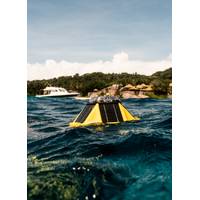
ASL Environmental Sciences Inc. has announced a new strategic marketing and distribution partnership with Sofar Ocean, bringing innovative oceanographic solutions to Canada and Alaska. This collaboration strengthens ASL’s position as a trusted supplier of advanced ocean monitoring technologies while enhancing Sofar’s reach in northern markets.At the center of this partnership is the Sofar Spotter Platform a compact, solar-powered metocean buoy that delivers real-time data on waves, winds, sea surface temperature, barometric pressure, and more. Rugged yet portable, the Spotter Buoy connects
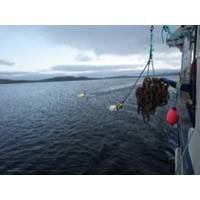
ASL Environmental: Tidal Currents Study Underway in Newfoundland and Labrador
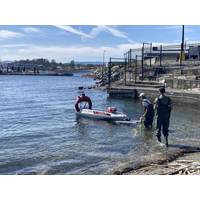
ASL Environmental Sciences Inc. announces the successful completion of an initial multi-week study to measure tidal currents in collaboration with the Nunatsiavut Government and Oceans North. This initiative aligns with the Nunatsiavut Energy Security Plan to explore clean, renewable energy solutions for coastal communities and reduce dependence on diesel-generated electricity.Current transect surveys were initially carried out with Acoustic Doppler Current Profilers (ADCPs) over the broader study area. ADCPs were then deployed on moorings at three strategic locations within the Rigolet Narrows
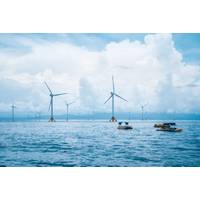
ASL to Work on Metocean Data for Offshore Wind Project in Atlantic Canada
ASL Environmental Sciences has secured research and development subcontract from Ireland-based Gavin & Doherty Geosolutions as part of a metocean data needs assessment for the development of offshore wind projects in Atlantic Canada for Natural Resources Canada.The primary objective of the work is to identify all types of metocean data needed to enable successful offshore wind project development in Atlantic Canada.Following a review of existing datasets, and a dataset gap analysis, ASL will be making recommendations for specific appropriate measures to collect necessary datasets. The analysis
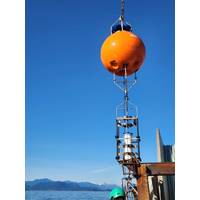
ASL Concludes Metocean Survey for Canada’s Gas Transmission System
ASL Environmental Sciences has completed a six-month metocean survey for FortisBC Energy as part of its ongoing operations and maintenance activities supporting its stewardship of the Vancouver Island’s gas transmission system.Wave buoys and subsea current profilers were deployed from December 2023 to June 2024, with a mid-program servicing trip in March 2024.All subsea equipment and wave buoy mooring anchors were successfully recovered, with full recovery of all datasets. The field program measured directional waves and subsea currents at six individual moorings deployed at three strategic
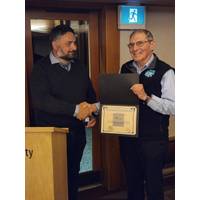
ASL’s Fissel Named a Fellow of CMOS
half of the Northwest Passage.In 1977, he joined Arctic Sciences Ltd. as a founding partner and Director of Oceanography, leading a 1977 physical oceanographic study of Lancaster Sound. Over the next 45 years, David played a major role in the evolution of Arctic Sciences Ltd. and its successor ASL Environmental Sciences Inc. which is a major contributor of products and expertise to Canadian and world markets for environment knowledge and services. During this period, his formal title varied to reflect current balances in his scientific, administrative and leadership interests and responsibilities
Dr. Matthews named 2022 Acoustic Zooplankton Fish Profiler (AZFP) Award Contest Winner
ASL Environmental Sciences announced Dr. Philip Matthews as the winner of the sixth annual Acoustic Zooplankton Fish Profiler (AZFP) early career scientist award contest. Dr. Matthews is an Associate Professor in the Department of Zoology at the University of British Columbia (UBC) and runs the Comparative Respiratory Physiology and Biomechanics laboratory.Dr. Matthews will be using a multi-frequency AZFP to understand the physiology and ecology of the deepest diving insect in the world—the Chaoborus edulis of Lake Malawi in southeastern Africa. He will be leading a team of two UBC graduate
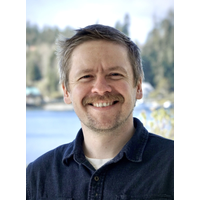
ASL Hires Chawarski as Biological Oceanographer
ASL Environmental Sciences Inc. announced the appointment of Julek Chawarski to the position of Biological Oceanographer. Chawarski contributes nearly a decade of experience in fisheries science, with expertise in forage fisheries and biological oceanography in coastal and deep ocean ecosystems. He will be responsible for developing consulting services for ASL's ocean monitoring clients and will develop new tools for hydroacoustic studies of aquatic ecosystems.Previous to his appointment at ASL, Chawarski completed a Masters in Marine Biology at the University of Maine. During his studies he
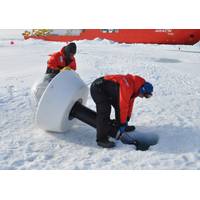
EcoLight AZFP Buoy to Monitor Light and Under-Ice Zooplankton
structure and biochemical functioning of the Arctic marine environment. The consequences of changes in light penetration impact phytoplankton blooms and in-ice algal growth and this in turn impacts feeding opportunities throughout the food web.A key instrument integrated into the ABES is an ASL Environmental Sciences Acoustic Zooplankton Fish Profiler (AZFP) . This instrument provides high spatial and temporal resolution and can monitor the presence and abundance of zooplankton and fish within the water column by measuring acoustic backscatter returns at multiple ultrasonic frequencies.The buoy
 February 2026