Follow the Money
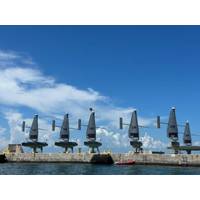
and develops USV C2 technology); Austal USA (builds Saildrone's Voyager USV); and Fincantieri Marine Group (will build Saildrone's Spectre USV). Boeing, a broader defense prime, builds the Orca XLUUV in California, with HII assisting hull assembly in Virginia.Partnering with HII and Raytheon Technologies, major commercial shipbuilder Bollinger has supplied nine 12-meter semi-autonomous aluminum MCM USVs to the U.S. Navy and has a further 18 MCM USVs under contract, out of a total planned final inventory of 48 MCM USVs.Several commercial shipyards have partnered with the growing number of venture-backed

Come In, the Water’s Just Fine: How the UK Maritime Innovation Hub Embraces Innovation, Not Just Regulation
intelligence (AI). "In terms of decarbonization, there are a lot of shore-based projects that are coming through for the electrification of ports and vessels, but also looking at alternative fuels—how those will be used and how they can be more efficient—and energy efficiency technologies like carbon capture or wind assist. Those are at a volume that we didn't expect," Slater said. A surprising new angle is the rapid increase in discussions around nuclear power."We've had more inquiries around AI in the last few months than we expected. That's why the UKMIH'
Saltenna Demonstrates Cable-Free Radio Links for Subsea Communication in Recent Paper
and performance under different environmental conditions.The study does not establish that surface-plasmon RF communications can replace existing underwater systems. Instead, it identifies a promising propagation mechanism that merits further investigation and comparison with alternative wireless technologies. The authors also propose additional experiments to improve understanding of the observed phenomena and clarify the mechanisms behind the extended propagation distances.The paper was presented at IEEE UComms 2026 in Sestri Levante, Italy, and added to IEEE Xplore on Oct. 15. It also lays out follow-on
OMIL Offshore to Supply HydroSurv REAV USVs in Spain, Portugal
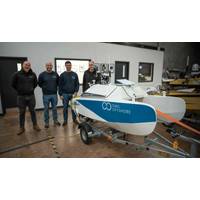
Spanish marine technology company OMIL Offshore has strengthened its portfolio of marine and subsea technologies through an exclusive Iberian Channel Partnership with HydroSurv, bringing the UK company's full range of REAV (Rapid Environmental Assessment Vessel) uncrewed surface platforms to customers across Spain and Portugal.Under the agreement, OMIL Offshore will market, demonstrate, supply and provide first-line support for the entire REAV portfolio, giving customers access to commercially proven USV technology backed by local expertise and technical support.The collaboration brings together
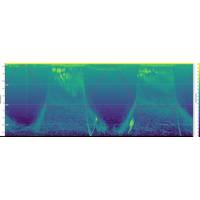
Echoview Launches New Version of Acoustic Data Software
more efficiently and extract greater value from their data.Key highlights of Echoview 17:Expanded support for Tritech Gemini and other formatsEchoview 17 introduces support for Tritech Gemini (*.glf) files, adding another widely used imaging sonar format to Echoview's extensive range of supported technologies. Compatibility with other acoustic and ancillary data has also been extended, allowing researchers to bring more of their existing datasets into a consistent analysis workflow.For Kongsberg EK80 data, passive data can now be separated automatically from active pings recorded by the same transducer
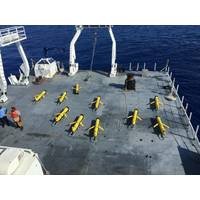
From CONOPS to Kill Chains: Building the Architecture of Subsea Dominance
, but the same might be said for the evolution of undersea warfare. What began years ago as broad, visionary concepts of operation (CONOPS) has given way to a rapid proliferation of increasingly capable autonomous systems. The next phase is now underway: moving from a collection of concepts and technologies toward integrated, distributed kill chains. The following vignettes illustrate how these emerging architectures might come together across five mission sets.ANTI-SUBMARINE WARFARE (ASW)A maritime patrol aircraft (MPA) arrives on station. Scattered throughout the region are littoral battlespace

Maritime AI and Logistics Startups Win ZEBOX Competition in Vietnam
Vietnam.The event marked the first joint initiative between ZEBOX and FPT following the announcement of their partnership, as well as the first Asia-Pacific edition of Challenge for Impact.Founded in 2018, ZEBOX operates across six regions and connects startups with corporate partners to develop technologies for maritime, logistics and other industries
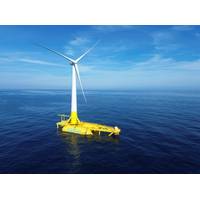
DemoSATH Floating Wind Project Enters New Phase with Japanese Partner
Saitec Offshore Technologies and Japan's Kansai Electric Power Company (KEPCO) have agreed to extend operations at the 2 MW DemoSATH floating offshore wind demonstrator in Spain through 2027, with Japanese construction company Kumagai Gumi joining the project as a new partner.The three companies have signed a cooperation agreement to continue operating the floating wind turbine at the BiMEP open-sea test site off the Basque coast, shifting the project's focus towards research, technology optimization and testing for future commercial developments.Kumagai Gumi will contribute expertise in

Exail Q3 Revenue Rises 21%
French underwater drone maker Exail Technologies on Wednesday posted third-quarter revenue of €121 million ($134,60 million) euros, up 21% organically, driven by its maritime robotics and navigation systems business.Order intake rose 15% year-on-year to €97 millionNavigation & Maritime Robotics revenue jumped 24% to €99 millionAdvanced Technologies revenue fell 7% to €26 million on a reported basisIt, however, grew 12% organically, helped by photonics solutions, which benefited from strong demand for specialty optical fibers, modulation solutions, lasers and
 August 2026