
Comms and Control
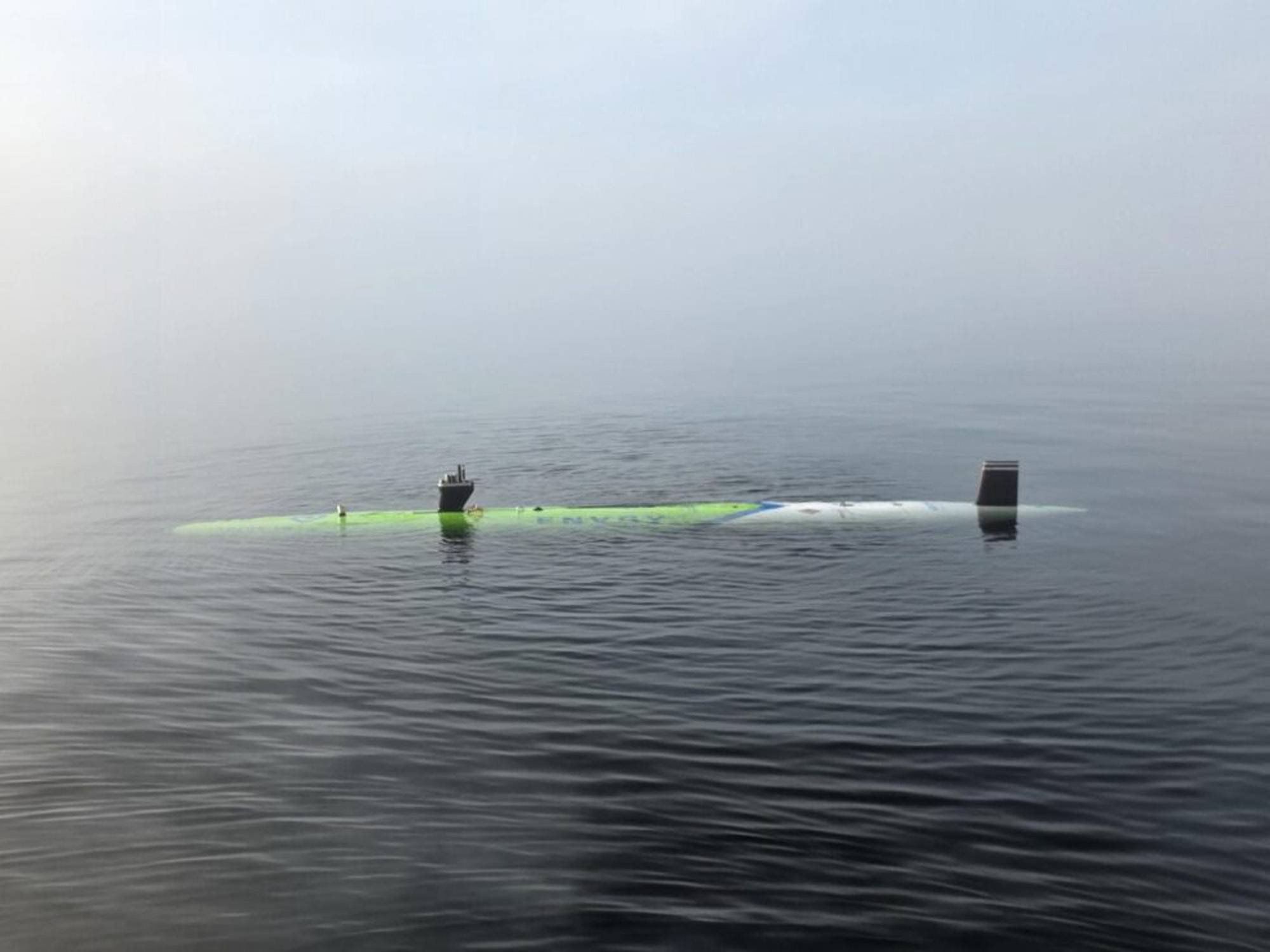
Credit: Cellula Robotics
In 2025, ecoSUB Robotics and Sonardyne delivered a breakthrough in autonomous underwater operations by demonstrating seabed mounted aided navigation and autonomous AUV launch — a capability that pushes the boundaries of what subsea systems can achieve.
The companies developed seabed nodes that combine Sonardyne’s Compatt 6 acoustic communications with a passive ultra-short baseline (USBL) system to create fully autonomous subsea launch points capable of lying dormant for extended periods. Each node houses an ecoSUB AUV within a dedicated launch tube, remaining in hibernation until activated acoustically or by a defined trigger.
Once awakened, the ecoSUB AUV brings the node online, releases itself and flies from the launch tube. The AUV begins its mission without GNSS, instead receiving precise acoustic position updates from the node at ranges up to 600 meters. With a network of four nodes, this architecture scales to wide area coverage and coordinated multi-AUV response.
In June 2026, during the UK Smart Sound Connect Subsurface demonstration, ecoSUB and Sonardyne showed this concept in a real operational environment. “The demo showed how seabed mounted aided navigation can be used but also how ecoSUB platforms can exploit this infrastructure, showing the significant potential for this type of autonomous subsea operation,” said Iain Vincent, Director and General Manager at ecoSUB Robotics.
The Smart Sound Connect Subsurface project, led by the University of Plymouth with Plymouth Marine Laboratory (PML), saw platforms from ACUA Ocean, ecoSUB Robotics, Seaber and Sonardyne working together above and below the surface.
During the demonstration, both the University of Plymouth’s Seaber AUV and an ecoSUB AUV navigated simultaneously using only the seabed node array. At the surface, a PIONEER USV from ACUA Ocean tracked and controlled an ecoSUB AUV using a Sonardyne Ranger 2 Gyro USBL positioning system. The USV also wirelessly harvested data from a permanently deployed Sonardyne Origin 600 acoustic Doppler current profiler, and marine software engineering firm Marine AI demonstrated the ability to continue navigating, even when GNSS drops out, using Sonardyne’s SPRINT-Nav.
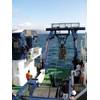
 Seaber Yuco and ecoSUB Robotics being deployed from Sonardyne’s Echo Explorer at the Smart Sound Connect Subsurface demonstration. Credit: Sonardyne
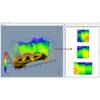
 From PML’s remote operations center, visitors were able to view live feeds, showing tracking and data telemetry from the AUVs and Sonardyne’s Origin 600 ADCP to the PIONEER USV. Credit: University of Plymouth/Plymouth Marine Laboratory
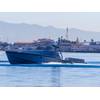
 A PIONEER USV from ACUA Ocean at the Smart Sound Connect Subsurface demonstration. Credit: ACUA Ocean
Two of the biggest challenges working with marine robotics are inter-operating multiple platforms, surface and subsea, in a multi-organization environment, said Aidan Thorn, Business Development Manager, at Sonardyne. “We showed how this can be done in a live environment – complete with an audience in PML’s remote control center.”
Seabed navigation nodes using passive USBL shifts the “intelligence” of the positioning system from the surface to the seabed, where it can support small fleets of AUVs that don’t need significant navigation and communication packages, he says.
As subsea vehicles, seabed systems and surface platforms are asked to operate farther from support vessels, remain deployed for longer and carry more capable payloads, energy availability is central to mission planning, system design and operating cost. NautiGEN, a maritime hydrogen power company formed by Cellula Robotics, has developed fuel cell systems to extend endurance beyond battery power. The architecture separates the fuel cell power plant from the stored hydrogen and oxygen that feed it, allowing mission energy to be increased through storage. For manufacturers and integrators, this offers a more flexible route to balancing endurance, payload energy, range and mission availability. Initial applications include subsea vehicles, static seabed power systems and surface uncrewed systems.
The technology base has already been demonstrated in a subsea environment. The fuel cell system powered a Cellula Robotics’ Envoy AUV through a more than 2,000 kilometers fully submerged mission over 385 hours of continuous operation, including over 4,000 non-linear maneuvers. The demonstration was achieved using the hydrogen fuel cell technology developed with Infinity Fuel Cell and Hydrogen, Inc.
On announcing a memorandum of understanding with Integer Technologies, Alex Johnson, Director of Products at Cellula Robotics, highlighted the need for system awareness and mission confidence in long-range undersea operations. The agreement establishes a cooperative framework to layer Integer’s DIGIT COMMAND operator software with Cellula’s mission control software for its UUV platforms. DIGIT COMMAND is a multi-agent mission manager designed for shoreside operators that feeds existing command and control with a decision-support layer across all operations. Integer’s DIGIT Mission Assurance Platform fuses high-fidelity digital twins with real-time environmental forecasting so that operators can assess, coordinate and adapt mission plans. By integrating real-time sensor data with physics-based models, platforms can adapt automatically to evolving threats.
“The next generation of defense technology will be defined by software that can anticipate, not just respond,” said Duke Hartman, Integer CEO. “From platform-level introspection to global fleet orchestration, DIGIT provides the software architecture to win the fight. It represents a fundamental shift toward mission-aware technology, giving operators and autonomous systems the foresight to make confident decisions to deliver successful mission outcomes.”
Florida Atlantic University (FAU) is advancing subsea communication technology with a one million dollar grant through the AUKUS Maritime Innovation Challenge, a defense innovation initiative supported by Australia’s Advanced Strategic Capabilities Accelerator, the United Kingdom’s Defense and Security Accelerator and the United States Defense Innovation Unit.
The project, led by FAU’s Center for Connected Autonomy and Artificial Intelligence (CA-AI) in collaboration with Hydromea, aims to develop a next-generation underwater communication and networking system designed to help autonomous underwater vehicles, seabed sensors and maritime operators share information more quickly, reliably and securely.
“Today’s underwater communication systems typically force operators to choose between range and speed,” said George Sklivanitis, Ph.D., principal investigator at FAU. “Acoustic communication signals can travel long distances but offer limited bandwidth, while optical communications can transmit data quickly but only over short distances.”
The FAU-Hydromea solution will combine both technologies into a single programmable platform. Long-range acoustic links will provide resilient command-and-control communications, while high-speed visible-light links will enable rapid data sharing among nearby autonomous vehicles and sensors. The system will be capable of adapting to changing underwater conditions and maintaining connectivity even in congested or contested environments.
 George Sklivanitis, Ph.D., principal investigator at FAU. Credit: FAU
The researchers anticipate the technology will provide a pathway toward future operational deployment for allied maritime forces while supporting broader applications in scientific research, environmental monitoring and offshore industries.



 August 2026