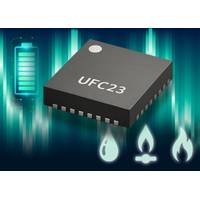
ScioSense Launches UFC23 Ultrasonic Flow Converter for High-Precision, Ultra-Low-Power Smart Metering
measurement with external platinum sensors for heat meters and hot-water systems.Since the UFC23 supports multiple designs, manufacturers can reuse the same sensor across different product families. Typical applications include smart water and heat meters, smart gas meters, water heaters, pump control systems, and smart faucets.“UFC23 addresses a clear requirement in the metering market for a high-precision, ultra-low-power ultrasonic flow converter that fits modern system architectures. It enables manufacturers to pair ScioSense analogue and timing performance with their chosen host microcontroller
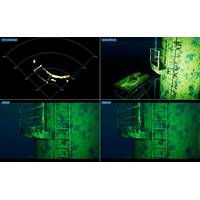
SeaBot Maritime, GRi Simulations and Frontier Robotics Feature Human-AI Autonomous Maritime Training Platform
missions are identical. Environmental variables such as sea state, current, turbidity and sonar noise can be adjusted to reflect real offshore conditions, with dynamic tether modelling and collision detection adding further operational realism.VROV supports live integration of external autonomy control systems, creating both a sophisticated training environment and an autonomy validation test bed. During the project, Frontier Robotics integrated its autonomous navigation software into the simulator, moving from small-scale physical tank testing to expansive virtual ocean environments. The integration
SeaBot Maritime, GRi Simulations, Frontier Robotics Deliver Human-AI Autonomous Training Platform
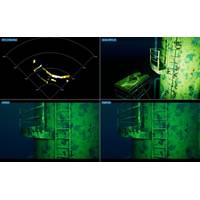
missions are identical. Environmental variables such as sea state, current, turbidity and sonar noise can be adjusted to reflect real offshore conditions, with dynamic tether modeling and collision detection adding further operational realism.VROV supports live integration of external autonomy control systems, creating both a sophisticated training environment and an autonomy validation test bed. During the project, Frontier Robotics integrated its autonomous navigation software into the simulator, moving from small-scale physical tank testing to expansive virtual ocean environments. The integration
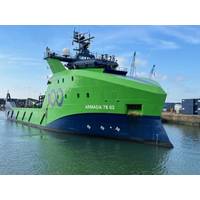
"No Find, No Fee" Search for MH370 to Commence
cockpit came roughly 40 minutes after takeoff, when the captain signed off with the words, “Good night, Malaysian three seven zero,” as the aircraft entered Vietnamese airspace. Shortly afterward, the plane’s transponder was switched off, making it invisible to civilian air traffic control systems.Military radar later showed the aircraft deviated sharply from its planned route, turning back across northern Malaysia and Penang Island before heading northwest into the Andaman Sea. It then turned south, after which all contact was lost.Satellite data from Inmarsat suggested the aircraft
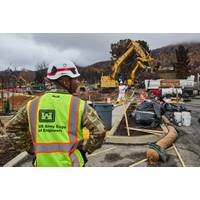
USACE's Major General Jason Kelly & Modernizing America’s Waterways
funding is essential, Kelly is equally focused on innovation. “We have to modernize the system for this day,” he says, “and set conditions for a more favorable future.”Key modernization initiatives include:Lock Control Modernization: A major push is underway to update control systems, integrate digital dashboards, and leverage modern automation. “I need to take advantage of today’s technology to buy down operating and maintenance costs,” Kelly says.Digital Twins: USACE is increasingly using digital replicas of physical assets to simulate performance and
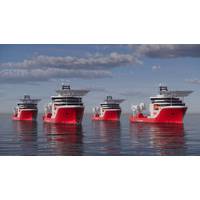
Kongsberg Maritime Secures LARS Contract with Sea1 Offshore
sea states. The systems are designed with a compact and modular approach, making them easy to integrate on different vessel types while maintaining high durability and minimizing downtime.The inclusion of hydraulic power units with frequency control reduces emissions and energy consumption. Advanced control systems provide precise and responsive handling, enabling safe and accurate operations for complex subsea tasks
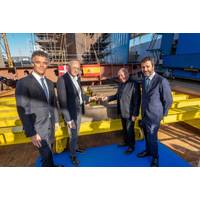
Freire Shipyard Celebrates Keel-Laying of Dana V Research Vessel
between biology, physics, and climate, as well as geological conditions of the seabed and water column.To support these missions, the Dana V will be equipped with advanced systems ensuring high-quality data collection and documentation. Its instruments include sonars, sound velocity meters, trawl control systems, and other specialized marine research equipment
AI is Boosting Operational Autonomy
missions with limited adaptability. However, advancements in hybrid localisation techniques, multi-modal sensor fusion, and AI-driven decision-making are pushing the boundaries of autonomy, enabling autonomous underwater systems to adapt dynamically to complex underwater environments.”Control systems bridge the gap between decision making and physical execution, and they are increasingly incorporating AI-based frameworks that enable real-time adaptive behaviour by processing multi-modal data from navigation systems.Traditional rule-based systems have been effective in predictable scenarios
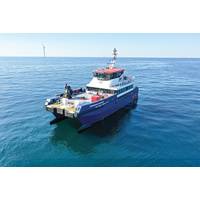
Robosys Automation Secures Offshore Wind Vessel Retrofit Contract
Robosys Automation, a leader in maritime autonomy, vessel control systems, and smart shipping solutions, has announced that it has secured a new contract to retrofit a 26-meter Damen 2610 Fast Crew Supplier (FCS) Twin Axe High Speed Support Vessel (HSSV), with its flagship VOYAGER AI advanced maritime autonomy software.The vessel, built in 2015 to Lloyd’s Register classification standards, is powered by twin Caterpillar C32 engines with direct drives and is equipped with an Alphatron autopilot, Böning control system, Bosch Rexroth ship controls, and a Hydrosta
 February 2026