Pioneer Consulting to Support FISH West 2 Submarine Cable System
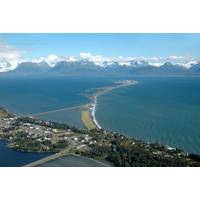
Pioneer Consulting, the submarine fiber optic telecommunications consulting and project management company, is currently under contract with Cordova Telecom Cooperative, Inc. (CTC) to supervise the engineering and design phase of its planned FISH West 2 submarine cable system. Part of CTC’s “Fiber Internet Serving Homes” (FISH) projects, FISH West 2 will connect the Alaskan cities of Seward and Homer, with branching units to Seldovia, Port Graham, and Nanwalek. Approximately 340 km in length, FISH West 2 will extend high-speed broadband service to remote communities that lack
OPTICS11 Expands OptiArray Product Line
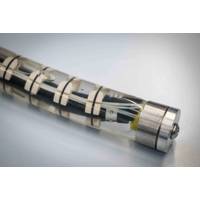
OPTICS11, a provider of passive fiber optic acoustic subsea sensing, announced an expansion of its OptiArray product line. The Dutch Ministry of Defence has ordered its fully operational containerized towed array systems that can be deployed onto variety of vessels. This allows anti-submarine (both crewed and unmanned) sensing technology to be deployed quickly, simply and cost-effectively.OptiArray, the fiber-optic-based towed array, is built using fiber optic hydrophone technology to deliver underwater detection for anti-submarine warfare and maritime surveillance. Unlike conventional electrical
Nauticus Robotics Seeks Ocean Sensing Opportunities with Aquanaut Platform
, and critical infrastructure protection. This presents an opportunity for autonomous subsea robotics to support the deployment and long-term operation of continuous ocean sensing infrastructure, creating a new class of persistent underwater monitoring capabilities. Recent advances in distributed fiber optic sensing, autonomous robotics, artificial intelligence, and subsea communications are enabling continuous ocean monitoring at a scale and cost that was previously impractical.Nauticus Robotics is currently participating in multiple collaborative proposal efforts with government agencies, commercial
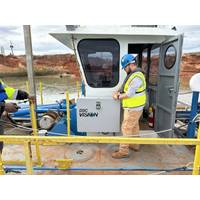
Digging Deeper: Challenges and Trends in the Dredging Industry
, as post-Panamax ship sizes have increased, requiring ports and harbors to deepen channels. “Maintaining ever deeper channel depths requires dredgers to dig deeper and deeper, removing overburden material, originally considered as protective to buried pipelines, power transmission lines and fiber optic cable runs,” said Lou Nash, general manager at Measutronics. “As a result, dredge cutterheads, clamshell crane and excavator buckets are, by necessity, operating in close proximity to submerged hazards unseen (and in some cases unknown) by the machine operator.”Incidents can
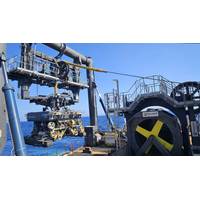
Pharos Offshore Group Successfully Completes Mediterranean Trenching Project
, awarded by Next Geosolutions for the Saipem Bouri Gas Utilisation Project (BGUP).Using its high-performance jet trencher, Q1000, Pharos has successfully completed the subsea postlay trenching of both the 14-inch Raw Gas Sealine and the 10-inch Export Gas Sealine. Each pipeline included an associated fiber optic cable (FOC), which was also trenched as part of the scope. Pharos worked in partnership and close collaboration with Next Geosolutions and Rana Subsea to deliver the project, with equipment mobilized onto the support vessel Olympic Delta
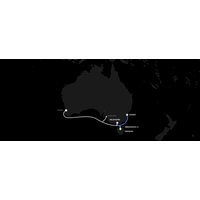
Firmus, SUBCO to Build Bernacchi-1 Subsea Fiber Option Connection
Firmus and SUBCO announced a landmark agreement to build a new submarine fiber optic cable connecting Tasmania to mainland Australia, significantly expanding the state's digital capacity and supporting the next generation of AI infrastructure. The new cable, to be named Bernacchi-1 in honor of pioneering Tasmanian-raised scientist and Antarctic explorer Louis Bernacchi, will connect Tasmania into SUBCO's SMAP cable system between Sydney and Melbourne.Underwritten by Firmus, this represents a major private-sector led investment in Tasmania's digital infrastructure, that will be for
The Politics of a Subsea Data Cable Link to Antarctica
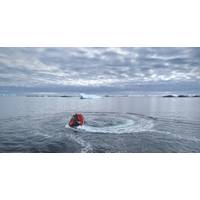
Antarctica is the only continent without a fiber-optic connection.The technology required to get one there is available, but the creation of such infrastructure raises geopolitical questions, including its potential military use, say researchers from Germany.The US National Science Foundation has plans to build a subsea data cable link from New Zealand or Australia to its McMurdo research base in Antarctica. There’s been no update on the project under the current administration, and research funding has been cut to the Foundation, perhaps casting the plan in doubt.There’s another project
From Trials to Cable Lay: SMD Quantum ROV Set for Fleeming Jenkin Integration
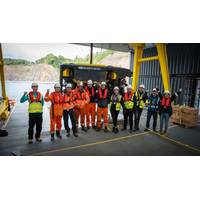
renewable energy transmission, the vessel has a cable carrying capacity of 28,000 tons, making it the largest cable-laying vessel in the world.Fleeming Jenkin is equipped with three cable carousels—two 11,000-ton turntables above deck and one 7,500-ton turntable below deck—along with two fiber optic tanks, enabling the vessel to bundle and lay up to five cables simultaneously, with combined carousel capacity described by Jan De Nul as double that of any other cable-laying vessel currently on the market.On the aft deck, the vessel features a cable laying chute for shallow-water operations
Underwater Infrastructure Security Project Launched in Norway
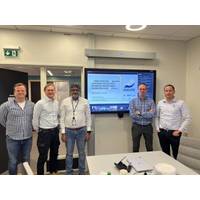
limited monitoring approaches.INSURE will address this challenge by developing a cost-effective, long-range, and continuous monitoring solution based on Distributed Acoustic Sensing (DAS), combined with advanced signal processing, machine learning, and multi-source data fusion. By transforming existing fiber-optic cables into real-time sensing systems and analyzing underwater acoustic intelligence with vessel tracking data, INSURE enables early threat detection, precise geo-localisation, and predictive risk assessment.This provides actionable, real-time decision support for first responders and maritime
 February 2026