Inyanga's 30MW Tidal Project to Feature AI-Powered Marine Life Detection
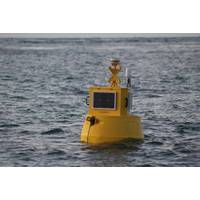
HydroWing, the tidal energy division of Inyanga Marine Energy Group, has awarded Ecodetect a contract to provide AI-powered marine wildlife monitoring systems for its 30 MW tidal stream energy project at Morlais in Wales.The technology will use underwater cameras, sonar and artificial intelligence to detect marine wildlife interactions around offshore renewable energy infrastructure, allowing operators to respond to potential environmental risks in real time.Ecodetect's surface and seabed-mounted sensors will collect data that its AI systems will process to distinguish marine wildlife, including
Follow the Money
designs (aluminum, carbon fiber, composites); AUVs use cylindrical/torpedo pressure hulls (aluminum, titanium, composites) with hydrodynamic shells, ballast/trim systems, and flooded sections.PropulsionCombustion engines, electric motors, sails, solar, or buoyancy engines (gliders) with battery storage for energy conversion. Propellers, water jets, or thrusters for propulsion. Rudders, fins and thrusters (plus elevators for AUVs) for vectoring.Navigation & guidanceUSVs use GPS/GNSS, IMU, and DVL. AUVs lack underwater GPS, so rely on INS, DVL, depth sensors, acoustic positioning (USBL/LBL), and terrain-re
SubSea Craft Expands US Presence with GTS Partnership
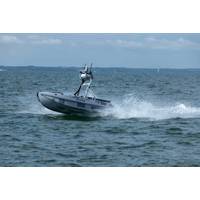
SubSea Craft (SSC) continues to expand its U.S. presence through a collaboration with Global Technical Systems (GTS), enhancing its ability to manufacture, integrate and scale autonomous maritime systems for U.S. customers.The partnership combines SSC's expertise in autonomous maritime technology with GTS's engineering and manufacturing capabilities, enabling the scalable production of autonomous maritime systems while strengthening SSC's ability to deliver at pace, expanding technical expertise in Virginia Beach, and supporting a resilient US-based supply chain.As SSC continues to expand

Come In, the Water’s Just Fine: How the UK Maritime Innovation Hub Embraces Innovation, Not Just Regulation
Marine technology advances driven by rapid innovation represent commercial and scientific opportunities, but also an evolving oversight challenge for regulators that must find a balance between progress, safety and international guideline compliance. For the United Kingdom, this responsibility falls to the Maritime and Coastguard Agency (MCA), which has created the UK Maritime Innovation Hub (UKMIH), a function designed to bring innovators and regulators together early in the development process.The UKMIH covers four areas, including decarbonization, Maritime Autonomous Surface Ships (MASS), digitizatio
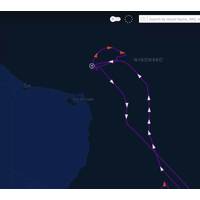
Top Five Maritime Threats Across the Gulf - Windward
attacks on commercial tankers, with threats now extending to subsea communications infrastructure, offshore support vessels and coastal facilities. An October 22 intelligence report from Windward Maritime identifies five developments that illustrate the widening scope of the conflict and its implications for commercial shipping, energy transportation and regional infrastructure.Iran Threatens Subsea Communications CablesIran's Islamic Revolutionary Guard Corps (IRGC) has identified subsea internet cables crossing the Strait of Hormuz as potential targets. On October 19, IRGC spokesman Hossein Mohebbi
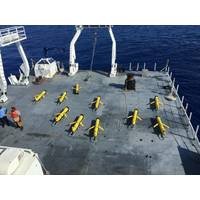
From CONOPS to Kill Chains: Building the Architecture of Subsea Dominance
In Ernest Hemingway’s novel The Sun Also Rises, Mike Campbell describes his progression toward bankruptcy as happening “gradually, and then suddenly.”Hemingway may have been portraying financial troubles, but the same might be said for the evolution of undersea warfare. What began years ago as broad, visionary concepts of operation (CONOPS) has given way to a rapid proliferation of increasingly capable autonomous systems. The next phase is now underway: moving from a collection of concepts and technologies toward integrated, distributed kill chains. The following vignettes illustrate
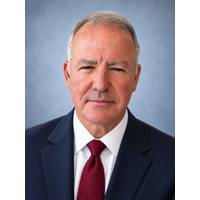
Matthew Zirkle Appointed CEO of SubSea Craft US
SubSea Craft (SSC) has appointed Matthew Zirkle as Chief Executive Officer of SubSea Craft USA, marking a step in the company's continued expansion across the United States. The announcement comes at a pivotal time for SSC as the company accelerates its expansion across the United States. The appointment also supports SSC's broader international expansion as the company continues to grow across key allied markets such as Australia.Zirkle brings leadership experience across defense, maritime industry and business operations, having held President and CEO roles within the defense sector and
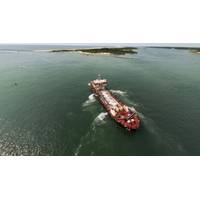
Dredging is Building the Next Generation of Northeast and Mid-Atlantic Ports
to tell. Major channel projects have been completed. Ports are investing in new capacity. The U.S. Army Corps of Engineers (USACE) and its partners are advancing more work across the region. At the same time, maintenance dredging keeps the channels that the private sector dredging industry built open for business.That progress is easy to see in Virginia. In February 2026, dredging was substantially completed on the Port of Virginia’s $450 million harbor and channel improvement project. The port now has a 55-foot-deep commercial shipping channel, the deepest on the East Coast (for now). Earlier
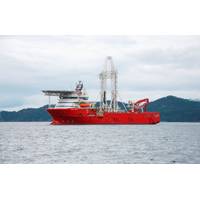
Fugro, EirGrid Complete Marine Surveys for Irish Offshore Wind Link
EirGrid has completed its 2026 marine and coastal survey campaign for Ireland's Powering Up Offshore – South Coast program, with Fugro carrying out investigations to support the development of grid infrastructure for approximately 900 MW of offshore renewable energy.The campaign involved almost 70,000 hours of survey work across 2,337 kilometers of maritime area, gathering environmental, geophysical and geotechnical data to inform future offshore energy infrastructure, according to announcements from EirGrid and Fugro.The surveys will support engineering, environmental and planning assessments
 August 2026