Surveys, Offshore Energy Inspections Leverage Autonomous Technology
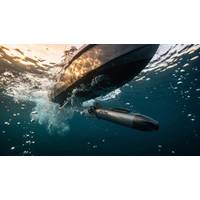
to grow. Bubble Robotics has received pre-seed funding for the development of its fleet of intelligent robotic systems capable of operating continuously at sea for months, without the need for human intervention. Today, says CEO Jean Crosetti, offshore operations rely on vessels, crews and heavy equipment costing up to $100k per day. Yet, the industry faces a structural workforce shortage, with 600,000 additional professionals needed by 2030 in the energy sector alone.Bubble’s thesis is simple: offshore operations should not require humans at sea. Instead of episodic, vessel-based missions
US Coast Guard Outlines Commercial Dredge Fishing Safety Risks, Recommendations
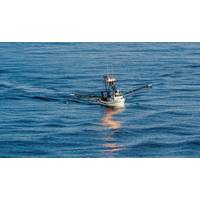
assessments or to help connect fishermen to appropriate third-party resources.The Coast Guard strongly recommends that operators of CFVs be aware of the following items when commercially fishing:Vessel StabilityVessels must be properly balanced and free from overloading, particularly when handling heavy equipment such as dredges that often result in high off-center weight during operations. Routine maintenance, thorough inspections, and strict adherence to loading limitations are essential to ensure vessel safety and operational integrity.Mariners are encouraged to consult the following resources on
Evolving Strategies for Subsea Cable Security
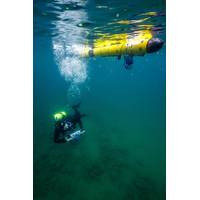
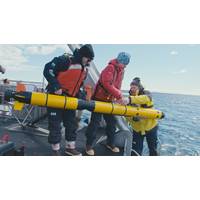
skilled manipulation tasks because the manipulators themselves aren't agile enough."Beyond their superior dexterity, humans excel at recognizing objects underwater. But humans working underwater can't perform complex computations or move very quickly, especially if they are carrying heavy equipment; robots have an edge over humans in processing power, high-speed mobility, and endurance. To combine these strengths, Miller and her team are developing hardware and algorithms for underwater navigation and perception — two key capabilities for effective human-robot teaming.As Miller explains
Researchers Improving Collaboration Between Divers and AUVs
skilled manipulation tasks because the manipulators themselves aren't agile enough."Beyond their superior dexterity, humans excel at recognizing objects underwater. But humans working underwater can't perform complex computations or move very quickly, especially if they are carrying heavy equipment; robots have an edge over humans in processing power, high-speed mobility, and endurance. To combine these strengths, Miller and her team are developing hardware and algorithms for underwater navigation and perception — two key capabilities for effective human-robot teaming.As Miller explains
Saab Acquires Swedish Pressure Vessel Company
Saab has become the new owner of Deform AB in Degerfors, Sweden.Deform is a forming company with four main business areas: pressure vessels, protection, heavy fabrication, and heavy equipment. The company specializes in hot and cold forming of various types of metallic materials. The business started in 1907 and has been called Deform since 1987. The company currently has 37 employees.The acquisition strengthens the security of supply for the Swedish defense industry.Deform has a long and close relationship with Saab as a supplier of specialty parts for Saab’s submarine production and is an
EIVA Responds to Asia-Pacific Demand for Unexploded Ordinance Surveys
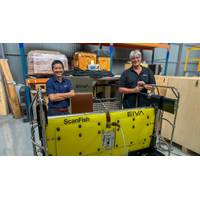
their offices in Singapore as the increasing offshore wind market drives up demand for unexploded ordinance (UXO) surveys.For seabed survey companies operating in the APAC region, shipping times will be reduced by several weeks compared to when shipping out of EIVA offices in Denmark. In addition, heavy equipment can be shipped via sea-freight rather than air-freight for a more cost-effective solution, while keeping shipping times reasonable. EIVA’s team there will be able to offer servicing for the ongoing rental jobs.“Our customers operating in Asia have emphasized the importance of making
Glosten Tapped toDesign new Research Vessel for KAUST
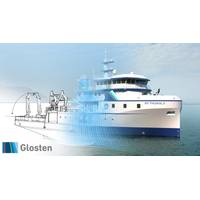
range of oceanographic missions, including seawater, sediment, and biological sampling to the full depth of the Red Sea, approximately 3000 meters.At 50 meters long, the vessel will be significantly larger and offer a greater range of operational capabilities. The deck will be designed to deploy heavy equipment and sophisticated instrumentation for multiple disciplines, including geoscience, bioscience, marine science, and oceanographic research interests. The RV will be equipped with an advanced positioning system to enable deployment of long-duration remote and autonomous vehicles as well as geoscience
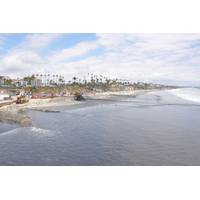
Oceanside Harbor Dredging Begins
. The sand buildup creates a shallow depth in the inlet and can result in breaking waves that are potentially hazardous to navigation.Safety measures during the operation include a delineated pathway along the beach for moving equipment, posted signs, flagmen and a lead spotter vehicle for transiting heavy equipment. Environmental safety measures also are being implemented, including water quality monitoring and protections for western snowy plover and California grunion.The Corps and the City of Oceanside remind residents and visitors to use caution on the beach in and around the pipe and vehicles
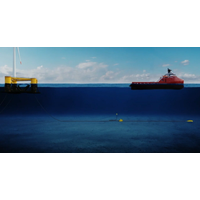
VIDEO: Vryhof's Mooring Solution Eliminates Need for Winches
, Vryhof has now come up with a verb "stevadjusting" to describe what the tech does: "chain adjustment, pre-tensioning of moorings and easy connection or disconnection of anchor lines."The entire operation takes place subsea and does not require the use of winches or other heavy equipment on the platform being moored, Vryhof said, meaning that the bollard pull of the vessels involved in the operation does not need to be prohibitively high. "Modest installation or maintenance vessels have sufficient capacity to get the job done. The use of this subsea chain adjustment

 August 2026