USCG: Revisions to NVIC 01-89 Change 1 Underwater Survey Guidance – UWILD Considerations
old may qualify for UWILD with certain conditions and CG-CVC endorsement.Third-Party Oversight:Unclassed ITVs operating under a TSMS can use their TPO to verify UWILDs without mandatory Coast Guard presence. Simplified documentation applies, and both the TPO and OCMI must be notified.Harmonization:DD/ISE dates may now align with Load Line (LL) inspections for unclassed vessels.Technology Use:ROVs equipped with advanced cameras and lighting may improve visibility in marginal conditions.All other UWILD policy requirements remain unchanged.Click here to download NVIC 01-89 Change 1 – UNDERWATER
Mills Joins Cellula Robotics as CCO
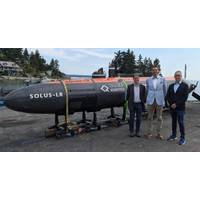
Cellula Robotics appointed Richard Mills as its new Chief Commercial Officer. Mills has more than 16 years in the autonomous underwater vehicle (AUV) industry. Mills began his career in the subsea industry with International Submarine Engineering (ISE) Ltd. in Vancouver, Canada, then spent a decade leading Kongsberg Marine Robotics' sales team.Mills has been an active member of the Society of Underwater Technology's Panel on Underwater Robotics and a life member of the Marine Technology Society. He has volunteered as a technical reviewer for the IEEE OES Oceans conference for over a
ISE Integrates XL UUV with Subsea Docking System
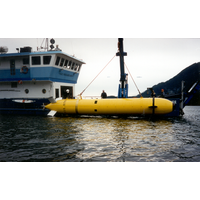
International Submarine Engineering Ltd. (ISE) announced the launch of our Revolutionary Subsea Surveillance Team, featuring the integration of our XL UUV and Subsea Docking System. This pairing offers unprecedented range and endurance, making surfacing optional, Canada-based ISE said.According to ISE, its docking system revolutionizes the management of autonomous underwater vehicles (AUV) at sea, eliminating the need for challenging and potentially hazardous recovery operations. The ISE dock enables seamless data transfer and recharging while the AUV remains submerged at depths up to 200 meters.
Japan Honors Autonomous Ship Initiative at Innovation Awards
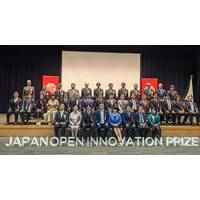
in the Joint Technological Development Program for the Demonstration of Fully Autonomous Ships under the MEGURI 2040 fully autonomous ship project administrated by the Nippon Foundation.The MEGURI project is part of the Designing the Future of Full Autonomous Ships (DFFAS) Consortium, which comprises 30 companies in Japan. As members of the consortium, the four companies provided technology and experience so far cultivated in the technological development of maritime autonomous surface ships (MASS). ©NYKLast year, the consortium successfully conducted a trial simulating the actual
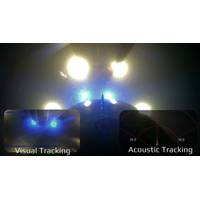
Beneath the Waves: Keep Your AUV Safe by Docking Subsea
Find out about ISEs experiences with getting its Explorer class AUV to dock autonomously during it’s recent sea trials.The atmosphere on the bridge of ISE’s vessel Researcher is tense. All mission checks are complete; conditions are optimum for docking; everything looks good. The vehicle, a 5-meter-long Autonomous Underwater Vehicle (or AUV), is on mission underwater. Updates from the AUV are now limited to acoustic chirps every 30 seconds and everyone is waiting anxiously. Will it succeed?Whenever an AUV is sent underwater to test new systems it is an exciting time, and for the ISE team
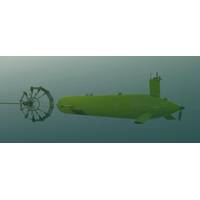
ISE Completes Phase 1B of Autonomous AUV Docking Test
International Submarine Engineering Ltd. (ISE) reports that it has successfully completed the second stage in the autonomous dock prototype project. This project is a joint project between Dalhousie University and ISE with funding provided by Innovation for Defence Excellence and Security (IDEaS).The dock provides a platform for an AUV to autonomously latch onto while remaining subsea. Once latched, the AUV can then charge its batteries and download the data for the operators. Then once that is complete, the AUV can unlatch and begin its next mission. This essentially eliminates the risks of launching
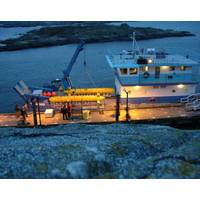
Exploring Under The ice (& Keeping your AUV in one piece)
December 2019 marked the one-year anniversary since University of Tasmania sent ISE built AUV nupiri muka to Antarctica as part of the Antarctica Gateway Partnership. While there it successfully completed many survey missions under the Sørsdal glacier. What better way to celebrate this accomplishment than to send it back for a victory lap this year!Under ice missions can be notoriously difficult, and ISE has built up a wealth of experience in the 25+ years since it began sending vehicles to the polar regions. In addition to the most recent Antarctica mission, ISE’s AUVs have been to the
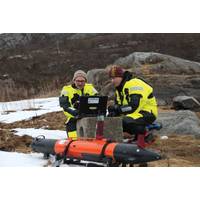
The “Disruption” in AUV Trends
;t see with your eyes.”Martin Ludvigsen, an NTNU professor of marine technology and manager of the AMOS applied underwater laboratory, or AUV Lab, confirms that years of theoretical work creating “data-driven mission plans” for AUVs are now paying off. In September, an AMOS research cruise reached 82.5 degrees North latitude — just short of the North Pole — and deployed a “data-sniffing” AUV. It was the moment Ludvigsen says he realized AUV use in research had turned a corner.Remote missionsThe AMOS team, however, wasn’t the first to launch an AUV beneath
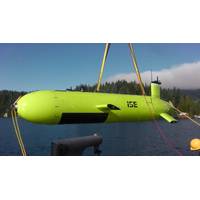
ISE Sells 6000m-rated AUV to China
Canadian underwater systems and robotics manufacturer International Submarine Engineering Ltd. (ISE) announced it has sold its latest ISE Explorer autonomous underwater vehicle (AUV) to China Ocean Mineral Resource R&D Association (COMRA). This ISE Explorer AUV is the first rated for operations at 6,000 m depth.The modular design of the ISE Explorer enables it to carry multiple payloads in its spacious, swappable, and customizable payload section including Multibeam Echosounders, Sidescan Sonars, Sub-bottom Profilers, Synthetic Aperture Sonars, High Definition Cameras and Laser Systems, CTDs and

 December 2025