MTS, SUT to Honor Marty Klein with Capt. Don Walsh Award for Ocean Exploration
; Marty’s innovations have revolutionized oceanographic surveys and underwater searches. His groundbreaking work has made significant strides in marine technology, providing critical tools for the discovery and exploration of our oceans while also inspiring generations of ocean engineers. Justin Manley, President of MTS, said, “Marty Klein exemplifies the spirit of this prestigious award. His significant and continued innovation in our field, along with his unwavering dedication to mentoring young people, have left an indelible mark on the marine technology community. MTS is proud to

Speaker Line-Up for Catch the Next Wave’s Return at Oi24
Centre•Protecting the Earth’s Living SystemsRestoring the Ocean - Professor Helen Findlay, Biological Oceanographer, Plymouth Marine Laboratory•The Future Evolution of Key Enabling TechnologiesSensors - Jyotika Virmani, Executive Director, Schmidt Ocean InstituteRobotics - Justin Manley, President, Marine Technology SocietyAnalytics, Digital Twins and Artificial Intelligence - Professor Mike Wooldridge, Department of Computer Science, University of Oxford.There will also be sessions for Q&A and networking within the CTNW conference agenda.Diving deep into the critical and
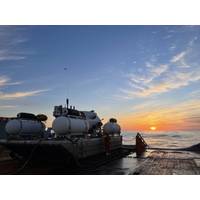
After Titanic Sub Disaster, Industry Faces Scrutiny
path OceanGate chose to take."Professionals in this industry are sitting at home right now and holding their heads, and saying to themselves, 'What a mess, how do we explain this to the world, how do we differentiate between what most of us do and what OceanGate did?" Ketter said.Justin Manley, president of Marine Technology Society, said the OceanGate incident could lead to increased oversight, but that "the high seas are inherently not regulated."Dives in international waters, where no country can impose its law, would remain unaffected."It's not that the
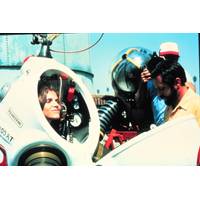
Marine Technology Society Celebrates 60th Anniversary
next generation of marine technologists, we are forming a bridge and establishing a route for young professionals to further their progress in marine technology,” said Ostrander.“The Marine Technology Society is stronger than it has ever been in its long history,” said MTS President Justin Manley. “In addition to the long-standing pillars in the industry, the membership includes young, innovative professionals on the upslope of their careers, and students just embarking on their life journeys,” said Manley. Manley also stated, “The financial foundation is stable and
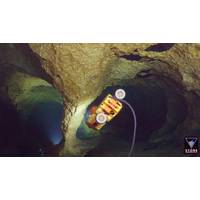
Untethered Vehicle Tech Continues to Advance Autonomy
a route/mission plan, and managing sensors. The next level is advanced autonomy including reactive behavior, collision avoidance, and mission tasks such as following a pipe. The highest level of function is adaptive autonomy for actions such as proactive behaviors, on-board decision making, and adjusting mission outcomes. This culminates in a perspective of nested capabilities, including deep learning, machine learning, and true artificial intelligence.EIVA’s Antonio Felipe Siva presented “Visually Aided Navigation and Automated Subsea Inspection Using Deep Learning and Computer Vision&rdquo
Environmental DNA Emerging in the Ocean Science Community
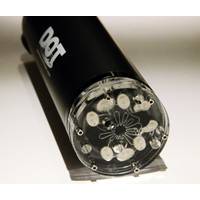
There is a new buzzword in the ocean science/sensing community. The word is eDNA, an abbreviation for environmental DNA. This refers to DNA that can be extracted from environmental samples without first isolating any target organisms. In the maritime community such samples are taken from water. All living organisms leave traces of DNA in their environments which is an indicator of their presence over time. This DNA is released into the environment through the biological process of living animals or by the decomposition of dead organisms. eDNA is a complex mixture of traces that enables the
Good Undersea Vehicles Come in Small Packages
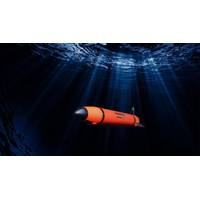
The holiday season has just passed, and many may have heard the phrase, “good things come in small packages.” Does this hold true for today’s undersea vehicles? Indeed it does. One of the most striking recent trends in the field is the proliferation of compact and affordable, yet highly effective, undersea vehicles. The past decade has seen new remotely operated vehicles (ROVs) and autonomous underwater vehicles (AUVs) produced that are easily carried and deployed by one person. Capitalizing on developments in circuitry, sensors, and batteries inspired by the consumer electronics
ADCPs & DVLs: Recent Tech Developments
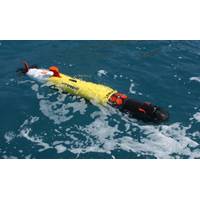
All seagoers know the ocean moves. Some thrive on riding the wind and waves while some hang on and look for a rail downwind with a bit of green in their face. But measuring the movement of the water, or of objects through the water, is a key aspect of many ocean technologies and applications. It is possible to use a principle of sound waves called the Doppler effect to measure motion in water. A sound wave has a higher frequency, or pitch, when it moves to you than when it moves away. You hear the Doppler effect in action when a police car siren speeds past with a characteristic increasing intensity
OceanObs’19: Innovation Expanding Ocean Observations
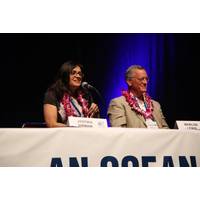
The aspirations included addressing fisheries and ecosystem-based management practitioners, the maritime sector, national and local authorities, search and rescue, public and private sector researchers, and the public in general.The Breaking Waves, Breaking Barriers Panel at OceanObs’19. Photo: Justin ManleyTo address these goals, the OceanObs’19 organizers built the conference around seven themes: Ecosystem Health & Biodiversity, Climate Variability & Change, Water Food & Energy Security, Pollution & Human Health, Ocean Hazards & Maritime Safety, Discovery, and the Blue

 February 2026