Rising expectations: A deep dive on underwater vehicles
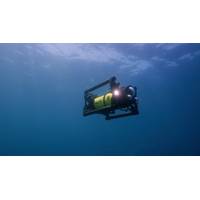
2021-2023 SoAR (Squads of Adaptive Robots) project, which coordinated a large-scale survey and exploration mission designed, monitored and adapted in real-time by an intelligent “Autonomy Engine.” The SoAR fleet consisted of ecoSUB's Autonomous Underwater Vehicles (AUVs), the National Oceanography Centre's Auto-Hover 1 hover-capable platform, and Sonardyne’s REAV-60 Unmanned Surface Vehicle (USV) “Decibel.”ecoSUB AUV. Cedit: ecoSUBDuane Fotheringham, president of the Unmanned Systems group in HII's Mission Technologies division noted that the scale of underwater
The Coldest Place in the Universe
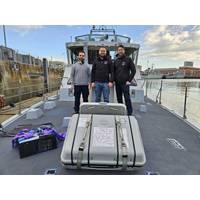
open sea conditions. During the trials, the cold-atom clock operated continuously, providing precise timing without a correction from GNSS, despite being exposed to continuous pitch and roll of the vessel.Aquark has conducted the first underwater test of its AQuest cold atom trap onboard the National Oceanography Centre Autosub Long Range autonomous underwater vehicle. Credit: AquarkAquark also conducted the first underwater test of its AQuest cold atom trap, a key component of AQlock, in dynamic conditions onboard the National Oceanography Centre Autosub Long Range autonomous underwater vehicle. The
New Deep-Sea Coral Found on Nodules Targeted for Mining
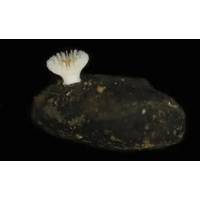
An international research team led by Dr. Guadalupe Bribiesca-Contreras from the National Oceanography Centre (NOC) and Senckenberg scientist Dr. Nadia Santodomingo have discovered a new species of deep-sea coral that lives attached to polymetallic nodules – the same mineral-rich rocks that are the focus of growing international interest for deep-seabed mining.The coral, Deltocyathus zoemetallicus – now described in a new study published in the “Zoological Journal of the Linnean Society” – was found more than 4,000 meters below the surface in the Clarion–Clipperton
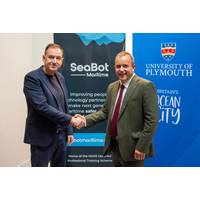
SeaBot Maritime, University of Plymouth Sign MoU to Advance Marine Autonomy Collaboration
into South West England through a new partnership with the University of Plymouth. As an international leader in Flag State-recognized Remote USV Operator training, SeaBot Maritime has successfully trained maritime autonomy professionals across the Solent region in collaboration with the National Oceanography Centre, University of Southampton, the Royal Navy, and the Royal Marines. This expansion marks the next phase of growth for SeaBot Maritime and strengthens the network of autonomous maritime professionals across the UK. SeaBot Maritime and the University of Plymouth have signed a Memorandum
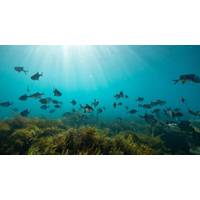
Fugro, Ocean Visions Team Up for Ocean-Based Carbon Removal Tech
by providing a transparent, evidence-based approach to environmental review.The two-year project will involve designing, refining and testing a framework that can be applied across a range of mCDR strategies.Joining Fugro on the project are U.S.-based Integral Consulting and the UK’s National Oceanography Centre.The final framework will be openly accessible and is expected to serve as a critical tool for researchers, regulators and communities evaluating whether and how to host mCDR projects, with the completed framework expected to be published in 2027.Carbon removal is increasingly seen as a
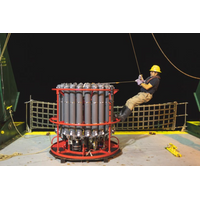
An Unintentional Iron Fertilization Experiment
. Development of sensors to measure iron would represent a major leap forward.”In other phytoplankton and climate change news, a fleet of ocean robots has been deployed to explore the depths of the Labrador Sea as part of a year-long experiment led by scientists from the UK’s National Oceanography Centre. They are studying the ocean processes that help remove carbon dioxide from the atmosphere and store it in the deep sea
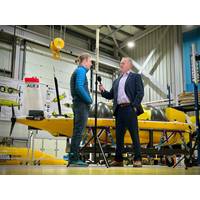
Inside the NOC Robotics Center
Much innovation in subsea robotics starts in academia, and the National Oceanography Centre in Southampton, UK, is a global leader with a fleet of more than 40 systems and 60 engineers and scientists. Alex Phillips, is the Head of Marine Autonomous Robotic Systems (MARS) at NOC, and Marine Technology recently caught up with him in his workshop to discuss key drivers in the evolution of efficient, effective underwater autonomous systems.Question: Alex, can you give us a brief career background and your role here at NOC?ALEX:I'm a naval architect by training. I thought I would go and design yachts
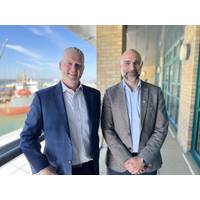
John Siddorn, CEO, National Oceanography Center
geopolitical volatility, understanding the ocean — Earth’s largest and least explored environment — is no longer a scientific luxury; it's a global imperative. At the helm of one of the world’s premier marine research institutions is John Siddorn, Chief Executive, National Oceanography Centre (NOC), who discussed with Marine Technology Reporter from his office overlooking the Port of Southampton, the people, the priorities and the assets of NOC to effectively, efficiently and safely explore the world’s oceans.Appointed CEO in 2023, John Siddorn brings more than three
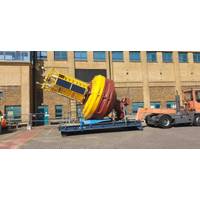
NOC Expedition Marks 40 Years of Abyssal Science Project
A scientific expedition led by the UK’s National Oceanography Centre (NOC) will mark four decades of cutting-edge science at one of the world’s deep ocean scientific research sites this summer.Setting sail today (May 30), from Southampton, onboard the Royal Research Ship (RRS) James Cook, this intensive, 25-day expedition will focus on the Porcupine Abyssal Plain Sustained Observatory (PAP-SO), 800 km from Land’s End in the Northeast Atlantic Ocean.Started in 1985, at 4,850 m depth, it is the world’s longest running time series of life on an abyssal plain-–areas of flat
 February 2026