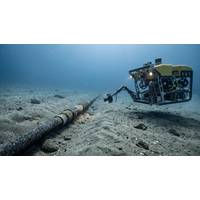
NATO Allies Disrupt Russian Subsea Cable Sabotage Exercise
subsea infrastructure including pipelines, power cables and telecoms cables to map their location, an activity known as drifting.Last year, drifting in the North Sea rose 52% to 13,079 vessels from the previous year, data from maritime risk analytics firm Windward showed, while activity in the South China Sea region jumped 88% to 18,401 vessels.It's not illegal to survey infrastructure in international waters but security experts see such extensive mapping as preparation for sabotage.The activity and suspected interference with some cables prompted new initiatives launched in January last year
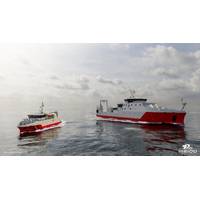
BRIN Taps Shipbuilder PIRIOU for Research Vessel Pair
ocean resources. Indonesia is also set to host the Ocean Impact Summit 2026 in Bali later this year.The project is financed with the support of the French Development Agency (AFD).The future ORV will enable BRIN to conduct offshore scientific campaigns throughout Indonesian waters and the Natuna Sea (South China Sea). Designed for multidisciplinary missions, the vessel will enhance Indonesia’s capabilities in hydrography, physical and chemical oceanography, marine geology and geophysics, sediment sampling, physicochemical water characterization, scientific analysis, and the observation of marineecosystem
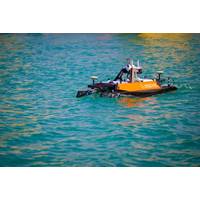
A Double-Sided Trident: Dual-Use Environmental Data Underpins Subsea Defense
before, the ocean depths remain largely opaque, with entire swaths of the seabed uncharted. The consequences of incomplete environmental awareness can be severe. In 2021, the USS Connecticut, a U.S. Navy Seawolf-class nuclear-powered attack submarine, struck an uncharted seamount while transiting the South China Sea, injuring 11 crew members and causing extensive damage. (Nearly five years later, Connecticut remains in drydock under repair, with a return to service scheduled for September, 2026.) In 2005, the USS San Francisco struck an unchartered seamount off the coast of Guam, resulting in multiple

Methane Hydrate Mining Could Soon Become Economically Viable
In October 2025, the flame used in the lighting ceremony for China's 15th National Games was sourced from methane hydrate, or combustible ice, harvested from a depth of 1,522 meters in the South China Sea.Symbolic of the rising interest in methane hydrate as an energy source, the move coincides with increasing attention from researchers in Asia and around the world.Gas hydrates are a crystalline solids that look and act much like ice but contains huge amounts of methane. They exist in marine sediments or in association with Arctic permafrost and are not stable at normal sea-level temperatures and
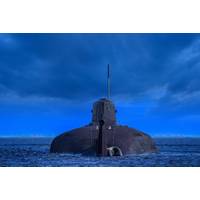
China Mapping Ocean Floor Ready for Submarine Warfare
Chinese vessels have also mapped waters around Hawaii, one of America's other regional military hubs; examined an underwater ridge north of a naval base in Papua New Guinea to which the U.S. recently gained access; and scouted around Christmas Island, an Australian territory on a route between the South China Sea and a vital Australian submarine base.China's efforts extend further. It has mapped large swaths of the Indian Ocean, a critical route for Chinese imports of oil and other resources from the Middle East and Africa."China has some key vulnerabilities when it comes to dependencies on
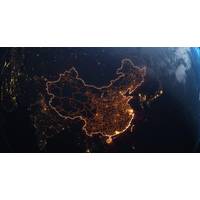
China Maps Ocean Floor as It Builds Submarine Warfare Capability
Chinese vessels have also mapped waters around Hawaii, one of America's other regional military hubs; examined an underwater ridge north of a naval base in Papua New Guinea to which the U.S. recently gained access; and scouted around Christmas Island, an Australian territory on a route between the South China Sea and a vital Australian submarine base.China's efforts extend further. It has mapped large swaths of the Indian Ocean, a critical route for Chinese imports of oil and other resources from the Middle East and Africa."China has some key vulnerabilities when it comes to dependencies on
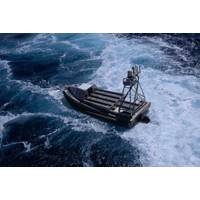
New Year, New Gear: Threats, Modularity, and Agility to Drive Subsea Defense in 2026
Annapolis-based Oceanetics.Critical Underwater Infrastructure DefenseRecent subsea incidents continue to underscore the vulnerability of critical underwater infrastructure (CUI) and the growing need for systematic protection. Repeated disruptions to submarine cables and pipelines in the Baltic Sea, South China Sea, and Red Sea have exposed how contested the seabed has become. In response, NATO announced Operation Baltic Sentry in January, 2025 to enhance vigilance and deterrence in the Baltic Sea. Similarly, in December 2025 the United Kingdom launched Atlantic Bastion, a broad initiative aimed at strengthen
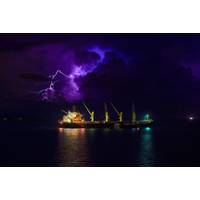
Study: Low Sulfur Fuel Reduces Lightning, May Increase Temperatures
Cuts in sulfur emissions from oceangoing vessels have been tied to a reduction in lightning stroke density along heavily trafficked shipping routes in the Bay of Bengal and the South China Sea, according to new research from the University of Kansas (KU).Previous studies had found frequent lightning along shipping routes over the Bay of Bengal before a 2020 IMO rule capped sulfur in fuel used by oceangoing ships, leading to a roughly 70% drop in sulfate emissions in the Bay of Bengal.“I think there are two reasons for this,” said lead author Qinjian Jin, assistant teaching professor of
Phoenix Assists US Navy with Aircraft Recovery in the South China Sea
Naval Sea System Command (NAVSEA) Supervisor of Salvage and Diving (SUPSALV) with the successful recovery of an MH-60R helicopter and an F/A-18F Super Hornet fighter aircraft. The two aircraft went down within 30 minutes of each other during routine flight operations off the USS NIMITZ (CVN-68) in the South China Sea on October 26, 2025. All crew members survived and were rescued.Phoenix personnel traveled to Singapore and mobilized search assets aboard Anchor Handling Tug Supply (AHTS) vessel of opportunity (VOO) and recovery assets aboard Construction Support Vessel (CSV) VOO. Once on site in the South

 August 2026