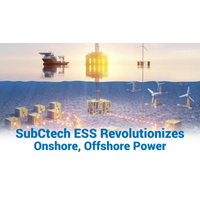
SubCtech ESS Revolutionizes Onshore, Offshore Power
SubCtech’s Li-Ion Energy Storage Systems deliver clean, reliable subsea energy, powering ROVs, AUVs, and subsea infrastructure — reducing CO₂ emissions and OPEX for sustainable marine operations. Designed for longevity and safety in harsh offshore environments. The safe way to cut costs.
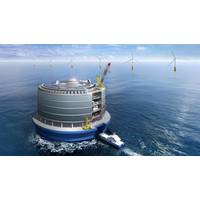
NYK, Partners to Develop Renewable Energy-Powered Floating Data Center
mini-float installed as a disaster countermeasure.On a mini-float, spanning 25 meters in length and 80 meters in width, installed off Osanbashi Pier in Yokohama City, the partners will test an offshore floating data center fully powered by renewable energy generated by solar power and battery energy storage systems.Based on the results, the partners will explore further developments in the waterfront and sea areas of Yokohama port.The demonstration project will involve installing a container-type data center, solar power generation equipment, and battery energy storage systems on a mini-float.The project
Marine Batteries: Sunlight Acquires Lehmann Marine
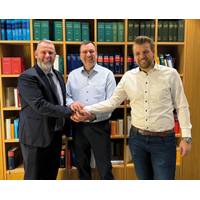
in Lehmann Marine.“This partnership is a transformational step for both companies,” said Alexander Lehmann, Managing Director of Lehmann Marine. “Partnering with Sunlight gives us a powerful ally to scale our production and meet the increasing demand for safe and effi cient energy storage systems in the maritime sector.”"This strategic investment underscores Sunlight’s commitment to identifying high-value opportunities in the energy storage sector," said Labros Bisalas, CEO of Sunlight Group. "By joining forces with Lehmann Marine, we are positioned at the
US Harbor Craft: Measuring Opportunity for Zero Emissions
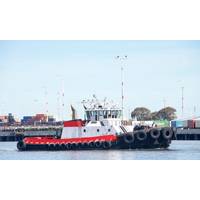
;often on a case-by-case basis to meet the given needs of a specific vessel and its operational profile.“In the short-sea and inland segment, the most suitable zero-emission options include renewable based hydrogen, hydrogen-based fuels and renewable electricity stored in battery energy storage systems,” Lewis said. “All the options have advantages and disadvantages, chief among which is the cost and availability of zero-emission fuel, the certification that a fuel is truly zero-emission and the availability of infrastructure and equipment to produce, distribute and convert zero-emissio
Verlume and SeaTwirl Ink MoU
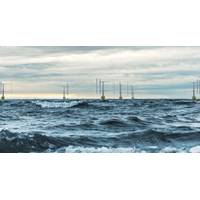
using renewable power and seabed based energy storage and intelligent energy management. The target is to enable commercial sales of bespoke systems using the companies’ combined technologies as a solution.Richard Knox, CEO, Verlume said, “As a company, we have designed our subsea energy storage systems to be agnostic to any renewable power input and we believe that through integration with SeaTwirl’s unique floating wind power technology, we will jointly be able to provide large capacity systems for clean power delivery across a range of assets and use cases in the subsea environment
Verlume Reports 'Significant Growth' in 2023
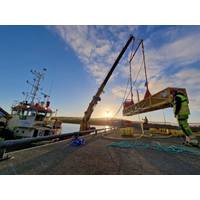
sales, the Verlume team is growing with a current headcount of 30 professionals seven position openings.In terms of sales, the business won a significant contract from offshore wind developer and operator RWE. Verlume will partner with RWE to engineer and integrate Halo subsea battery energy storage systems, incorporating Axonn intelligent energy management technology. These will be deployed within the 760MW wind farm OranjeWind in the Dutch North Sea.Verlume’s subsea energy storage and Axonn solutions are intending to explore the applicability of these technologies for system integration
Energy @ Sea: Powering Up in the Blue Desert
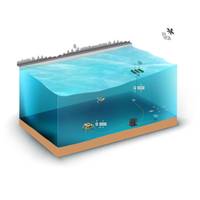
and storage include increasing pressure at depth—but IIASA sees this as an opportunity to be harnessed instead. Research scholar Julian David Hunt explained the Buoyancy Energy Storage Technology (BEST), which can be used to store intermittent energy.The concept is based on pumped energy storage systems, which usually consist of floating platforms near wind farms and a motor/generator on the sea floor. “BEST consists of anchoring a cube made of a series of segmented pipelines with air or hydrogen inside to the deep sea (between 3,000 to 6,000 meters deep),” Hunt explained. &ldquo
Subsea 7, FLASC Get BEIS Grant for PowerBundle Offshore Energy Storage System
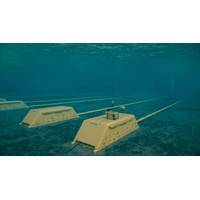
(BEIS) to further develop an innovative offshore energy storage system.Funding has been awarded as part of the Longer Duration Energy Storage (LODES) Competition. The competition recognizes the transition to increasing wind-generated renewable energy, which presents growing opportunities for storage systems that support a secure, flexible, and reliable electrical power supply.The PowerBundle concept will combine FLASC’s proprietary Hydro-Pneumatic Energy Storage (HPES) technology and Subsea 7’s subsea pipeline bundle technology, resulting in a scalable and robust offshore energy storage
DNV Grants AiP for Odfjell Oceanwind's Floating Wind Foundation Designed for up to 15MW Turbines
WindGrid module, using hybrid technologies and energy storage for uninterrupted power supply to installations not connected to a larger power grid. The WindGrid module has been designed and optimized by Siemens Energy based on its experience in Oil and Gas and Grid applications to enable energy storage systems, including the BlueVault™ battery energy storage and BlueDrive converters. DNV has previously verified that MOWUs with WindGrid may contribute with up to 60-70% reduced emissions compared to power generation from gas turbine generators alone.An Approval in Principle (AiP) is an independent
 August 2025