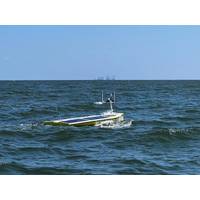
USV Provides Near Real-Time Deep Ocean Current Observations
A new way to monitor previously hidden, but disruptive, deep ocean currents in near-real-time has been proven by a recently completed uncrewed technology collaboration in the US Gulf of Mexico. In a science-industry first, marine technology companies Sonardyne and SeaTrac Systems used advanced sensors and uncrewed surface vehicles (USVs) to deliver science-ready deep ocean current data on the Gulf’s Loop Current System, direct to scientists’ desks in near real-time.The project, commissioned and in collaboration with the University of Rhode Island (URI), opens the door to reliable
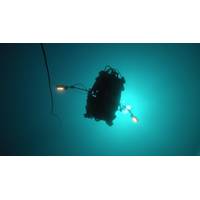
Voyis Discovery Camera Integrated with Deep Trekker REVOLUTION ROV
during trials in Tobermory, Ontario. Both teams worked together to test the ROV capabilities for piloting and inspection, with the Discovery Camera."We are excited to achieve this successful integration with Deep Trekker's REVOLUTION ROV, representing a significant stride in Canadian technology collaboration," said Chris Gilson, CEO at Voyis. "Together, we are pushing the limits of imaging technology and creating solutions that empower professionals to navigate and explore the underwater world with unmatched clarity."Sam Macdonald, managing director at Deep Trekker, said, "
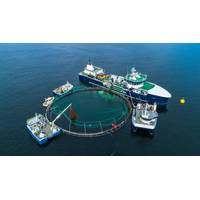
COVE, IGNITE Sign 'Fish Tech' MOU
opportunities.Based in Yarmouth and Pictou County, Nova Scotia, IGNITE is a technology incubator that offers a full range of services to its tenants and memberships that provides a direct link between the region’s business community, start-up ventures and educational institutionsCOVE is a technology collaboration center that serves pre-commercial start-ups, ocean technology firms of all sizes, traditional marine supply chain companies, and academic collaborations with industry.On Thursday, May 21, the COVE Ocean Connector will feature host speaker Doug Jones, CEO at IGNITE

Ocean Energy: A Surge Coming in 2020
Ocean Energy Systems (OES) was launched in 2001 as a technology collaboration program of the International Energy Agency (IEA). It was created in response to increased ocean wave and tidal current energy activity primarily in Denmark, Portugal and the United Kingdom. The organization today consists of 25 members including specialists from government departments, national energy agencies, and research and scientific bodies. OES Chair Henry Jeffrey explains why the outlook for ocean energy advances looks particularly positive for 2020.In recent months OES has recorded major progress across the ocean
Offshore Energy Outlook for 2020
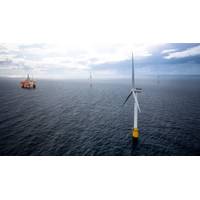
goes on and on.The shift is undoubtedly a global one, but nowhere is it better showcased than in the North Sea. While those working in the region are already among the most experienced and technologically advanced in the world, a recent report from PwC and Oil & Gas UK finds that innovation and technology, collaboration between operators and the supply chain, and partnership models are crucial to the changing of the guard presently underway, especially as a number of new low carbon solutions continue to gain traction.The report, Turning the Tide – the Transformation of the North Sea, published

OES: Surge in Tidal Energy in 2020
of performance metrics for ocean energy development. This will be of high value to technology developers, investors and funders. We expect to see many more advances that are positive in 2020 with large investments being made by governments around the world."The OES was launched in 2001 as a technology collaboration program of the International Energy Agency (IEA). It was created in response to increased ocean wave and tidal current energy activity primarily in Denmark, Portugal and the United Kingdom. The organization now consists of 25 members including specialists from government departments, national
OneSubsea Awarded Chevron Master Agreement
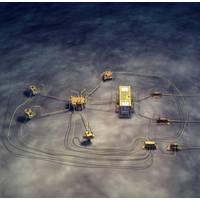
custom catalog of equipment will also include innovative technologies that meet Chevron’s project requirements, including high-temperature projects or high-pressure projects requiring equipment that can withstand up to 20,000 psi, the company added.“We look forward to continuing our technology collaboration with Chevron to optimize project efficiency and reduce cycle times in its future Gulf of Mexico subsea projects, from concept through life-of-field services,” said Don Sweet, president, OneSubsea.The equipment in the OneSubsea catalog includes multiphase boosting systems and flowmeters
Unmanned Warrior: The Science behind the Systems
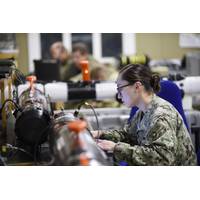
Office of Naval Research reserve component, is leading this remarkable team. She has been instrumental in planning this exercise with our UK hosts and was invited to be the overall joint Commend Element for the Unmanned Warrior exercise—a unique honor. International science and technology collaboration improves U.S. and coalition interoperability. Now, perhaps more than ever, this work has the important outcome of strengthening relationships with some of our long-standing allies. The lessons learned, on both the technical and operational sides, will be invaluable for informing
Aker Solutions, DNV GL Enter Frame Agreement
Aker Solutions has awarded DNV GL a global frame agreement to pave the way for better technology collaboration, more efficient project execution and considerable cost savings. The frame agreement covers the following business segments: Subsea, Umbilicals, Engineering and Maintenance, Modifications and Operations (MMO) in Aker Solutions’ business. "Finding smart solutions, innovating and streamlining the value chain is critical to address the cost issue in the industry," said Elisabeth Tørstad, Chief Executive of DNV GL - Oil & Gas. "The contract provides a

 February 2026