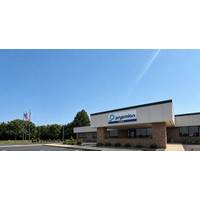
Prysmian Cable Manufacturing Expands North Carolina Facility
Prysmian, a provider of cable manufacturing, is investing over $1 billion and adding 385 jobs in an expansion of its facility in Catawba County, Governor Josh Stein announced today. Prysmian, headquartered in Milan, Italy, operates in over 50 countries and specializes in cabling solutions. Its North American headquarters are located near Cincinnati in Highlands Heights, Kentucky. The company currently employs about 680 people at its Claremont facility in Catawba County, a 1.2 million-square-foot manufacturing operation where it produces both the glass used inside fiber optic cables and the
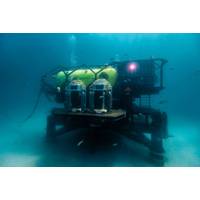
Unique Group Provides Subsea Engineering for Open-Ocean Human Habitat
and engineering, has successfully delivered the engineering, survey and infrastructure systems supporting Vanguard, the first open-ocean subsea human habitat deployed in United States waters in more than 40 years. Developed by ocean engineering firm DEEP and installed on the seabed at Tennessee Reef within the Florida Keys National Marine Sanctuary, Vanguard is designed to enable crews of up to four aquanauts to live and work underwater during extended scientific and operational missions.The project presented a subsea engineering challenge, creating infrastructure capable of supporting long-duration
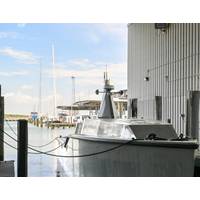
52-ft. ASV 'Mirage' Splashes
fleet, and is the latest milestone in a production model delivering autonomous vessels at speed and scale. According to Saronic, Mirage went from initial design to launch in under a year, and now begins on-water trials at the company’s privately funded test facility in Galveston, Texas, with the next hull already on the production line at the company’s Austin headquarters. “We launched our first Marauder four weeks ago, and today we’re putting another vessel in the water. This cadence is what our production model was built to deliver,” said Dino Mavrookas, Co-founder
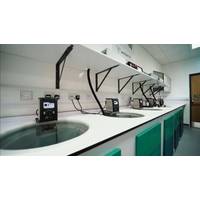
Oceanscan Offers Dedicated Subsea Calibration Service
Oceanscan has expanded its technical service offering with the launch of dedicated subsea calibration services, following the successful relocation to its new fully customized facility in Aberdeen earlier this year.The new service builds upon Oceanscan’s established calibration expertise and complements the company’s existing NDT calibration services, providing clients with a comprehensive solution for the calibration, verification and servicing of subsea, hydrographic and oceanographic instrumentation.Designed to support offshore energy, renewables, defense and marine survey operations
MARTAC Expands Across Western USA With Opening of San Diego Innovation Center
the ideal location for MARTAC’s next phase of growth. The new center will support a range of activities, including advanced engineering and systems integration, live-water demonstrations of MARTAC’s autonomous vessels, customer training and mission planning and collaborative development with defense and industry partners. The facility is expected to create new jobs in the San Diego area and further cement MARTAC’s position as a leader in the rapidly growing unmanned maritime systems market.MARTAC’s facility expansion comes at a time of accelerating demand for autonomous maritime
Fleetzero, Thoma-Sea, and Glosten Collaborate on Long-Duration USVs
Fleetzero, a U.S.-based developer of marine technology, has announced a collaboration with Thoma-Sea Marine Constructors, a leading U.S. shipbuilder, and Glosten, a Seattle-based global naval architecture and marine engineering firm, to accelerate the development and deployment of integrated autonomous vessel solutions for commercial maritime, government, and defense customers.The partnership brings together Fleetzero's Leviathan™ Battery Energy Storage System, propulsion technologies, and autonomy stack, with Thoma-Sea's domestic shipbuilding capacity and Glosten's vessel design
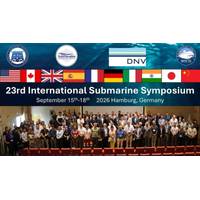
International Submarine Symposium Looks Ahead to Gathering in Hamburg for 2026
The World Submarine Organization (WSO) and Submersible Operators Group (SOG), in partnership with the MTS Submarine Committee and Det Norske Veritas (DNV), have announced the 23rd International Submarine Symposium, scheduled for September 15–18, 2026 at the International Maritime Museum and DNV Headquarters in Hamburg, Germany.This four-day symposium will bring together industry leaders, submarine operators, researchers, regulators, and innovators from around the world to explore advancements in submarine technology, operational best practices, and safety standards. Participants will gain
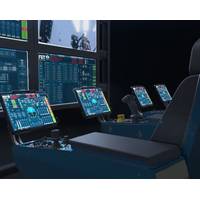
FET Launches Remote Control Station for Subsea ROV Operations
control platform released in 2025 and enables remote operations, live streaming of survey data and monitoring of ROV systems.The package includes FET Subsea advanced control chairs, Remote-Connect gateway enclosures and VisualSoft’s video streaming and network player technology. It can be supplied with new ROV systems or installed as an upgrade to existing systems operating with ICE Unity.According to FET, the system allows operators to control subsea operations remotely while maintaining system performance. The approach is intended to improve operational flexibility, enable access to specialist
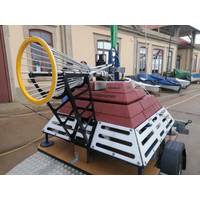
Automatic docking as an enabling technology for the operational autonomy of underwater systems
For a long time, the operational autonomy of underwater systems has been constrained by the inability to ensure persistent operations without direct human intervention. Autonomous Underwater Vehicles (AUVs), while capable of carrying out pre-programmed missions along the water column or on the seabed, have historically required physical recovery at the end of each operational cycle for energy recharging, data transfer and mission reconfiguration.This dependence on surface operations has represented one of the main bottlenecks in the development of long-term marine observation infrastructures, significan

 August 2026