
Microplastics in Oceans: NYK Hits the '100' Sample Mark
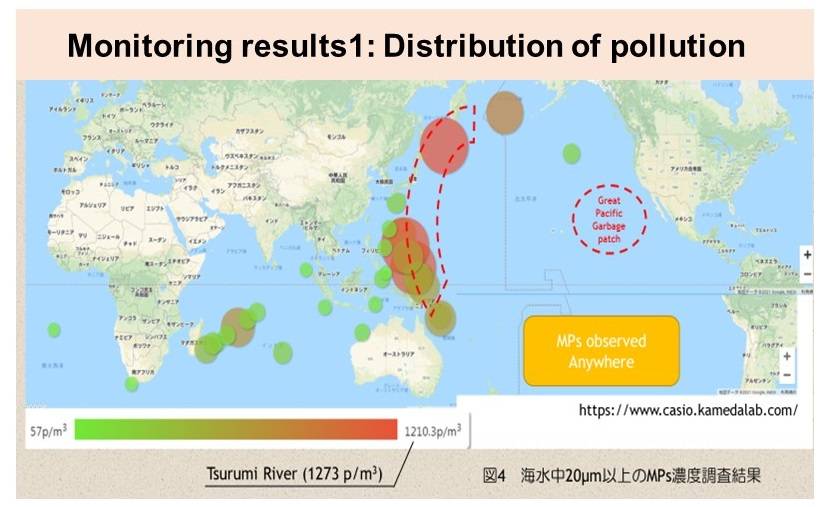
By measuring the concentration of microplastics in the samples, a pollution-concentration distribution has been created. Image Courtesy of Chiba Institute of Technology/NYK
NYK, conducting surveys since 2020, achieved 100 Samples at 100 locations on World's First Large-scale Survey of Microplastics in the Oceans
The samples collected will be analyzed in the laboratory of the Chiba Institute of Technology (CIT) to help study the composition and concentration of microplastics floating in oceans around the world.
On March 2020, NYK signed a memorandum of understanding with the CIT to use a ship to collect and analyze microplastics in oceans around the world in an effort to create a solution to marine plastic pollution, a global environmental issue. Microplastics are small particles less than 5 millimeters in diameter that are formed from plastic debris discharged into the ocean due to the effects of UV radiation and waves, and are feared to affect not only ocean pollution but also the ecosystem. In addition, due to its small size, it is difficult to collect, and the actual situation of contamination is still unclear.
Creating a Worldwide Microplastic Map
Since NYK started sampling from three vessels in March 2020, it has steadily expanded the number of vessels and achieved its goal of 100 samples at 100 locations, which we set together with Associate Professor Kameda of CIT throughout the year. The analyzed data will be integrated into the "Worldwide Microplastic Map" produced by CIT, and the sampling date and time, location information, meteorological and oceanographic data, etc. will be linked to the analysis results to create a platform that can be widely used by companies and researchers. We believe that by continuing our activities and accumulating analysis data, we will be able to identify the source of the discharge and conduct research related to its impact on the ecosystem.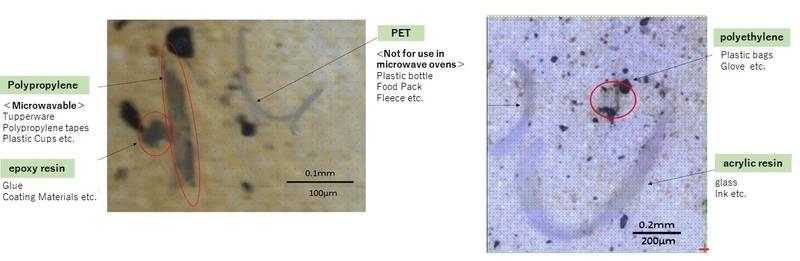 A wide variety of microplastics such as polyethylene, polypropylene, PET, and acrylic resins have been found in seawater collected from the ocean. Image Courtesy of Chiba Institute of Technology/NYK





 February 2026